The Work Operating System for AI-powered work
A live log of every job, task, subtask, and workflow inside the enterprise.
Find wasted potential, unlock hours, and know exactly where agents deliver impact.
Connect all agents, recommend the right one for each task, and capture the context to build new agents.
Measure ROI based on actual work changes, not agent promises.
Replaces static job architecture with a dynamic model for humans and agents that updates as roles shift.
Shows how AI will change jobs and what skills your workforce needs.
Redesigns how work gets done and tracks every change automatically.
Reejig
6 mins
Dec 4, 2025
See the Work Operating System in action and start re-engineering work for AI.
Jan 13, 2026 @ 10am in NYC
In Person
CEO & Co-Founder of Reejig
Director, AI Transformation Strategy | Workforce & Work Intelligence Products
Organizations across every industry are exploring ways to redesign work, improve efficiency, and responsibly adopt AI. One of the fastest-growing areas of transformation is the rise of AI agents — or as we like to call them, AI teammates.
To help people understand what’s possible and how to get started, we hosted a live workshop focused on building and deploying AI agents using no-code tools like Microsoft Copilot Studio. Many participants were new to agent building, so the session walked step-by-step through the foundations, the technology, and the real-world impact of introducing AI automation into HR and operational workflows.
Below is a comprehensive recap with the key insights, examples, and best practices we covered.
1. Identify the task: Employees repeatedly ask bonus questions—perfect for automation.
2. Add your source of truth: Link live SharePoint bonus policies so answers stay accurate.
3. Build in Copilot Studio: Create the agent, set guardrails, and connect your documents.
4. Give clear instructions: Define how it should answer and what it must not do.
5. Test real questions: Check both common and edge cases for accuracy.
6. Deploy in Teams: Publish the agent so employees can use it instantly.
That’s the fast path to a reliable, no-code Bonus Buddy agent.
One of the biggest misconceptions about AI is that it replaces entire roles. In reality, AI agents automate tasks, not skills. They act as digital teammates who can carry out repetitive, rule-based, time-consuming work — freeing humans to focus on strategic, creative, and relational tasks.

During the session, Siobhan Savage, CEO & Co-Founder of Reejig, emphasized that AI agents are now a critical capability for businesses preparing for the future of work. She highlighted increasing customer demand for use cases like a “Bonus Buddy” AI agent that handles bonus-related HR questions — an example with clear ROI and immediate practicality.
She also noted an important industry trend:
Microsoft is quickly becoming the dominant front-end for enterprise AI, while other vendors will increasingly serve as core data sources rather than delivery layers. This clarity matters for leaders mapping their AI strategy.
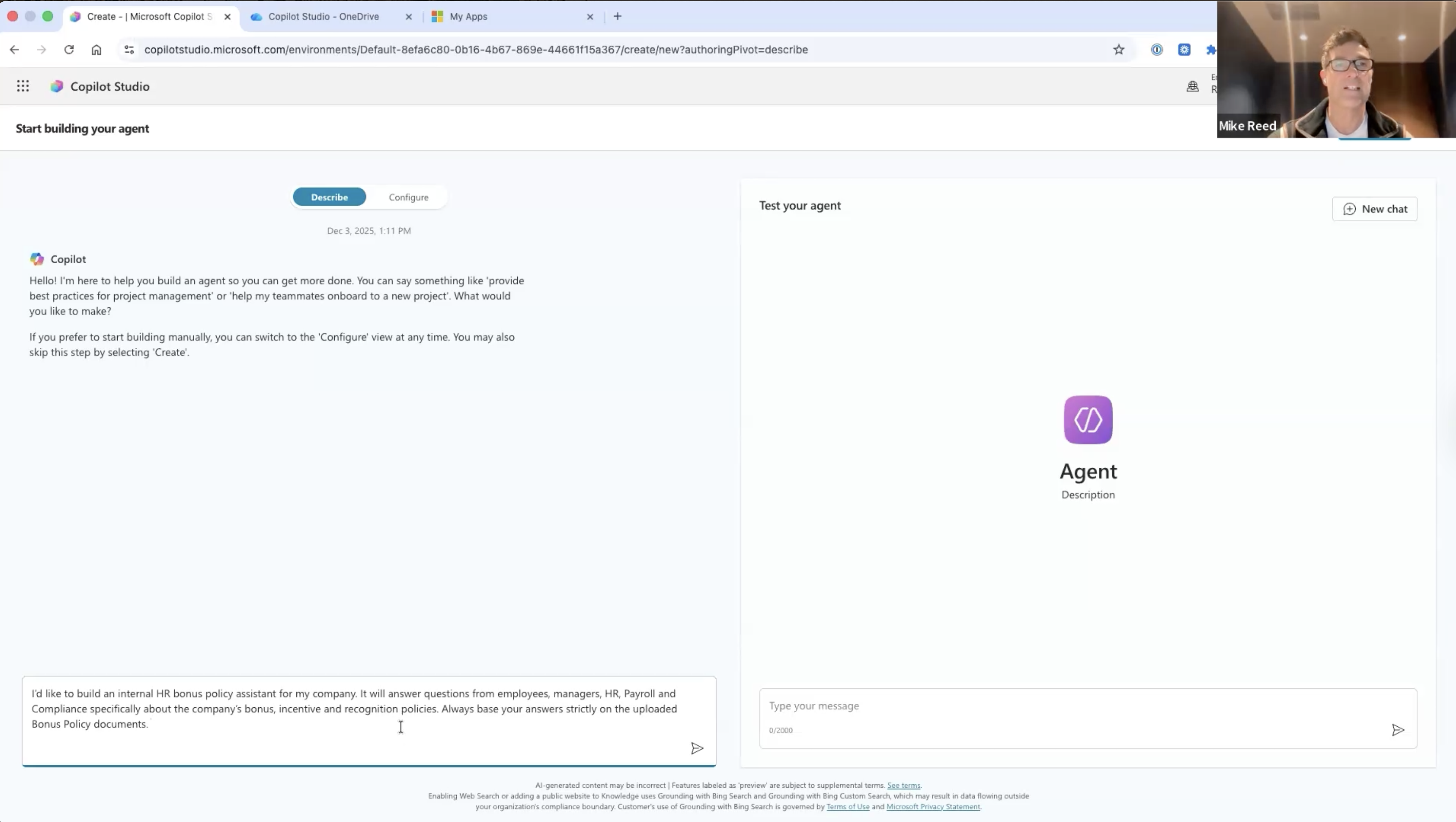
The session included a live demonstration showing how easy it is to create an AI agent without writing a single line of code. Using Microsoft Copilot Studio, Mike walked through the entire lifecycle of building an AI teammate called “Bonus Buddy.”
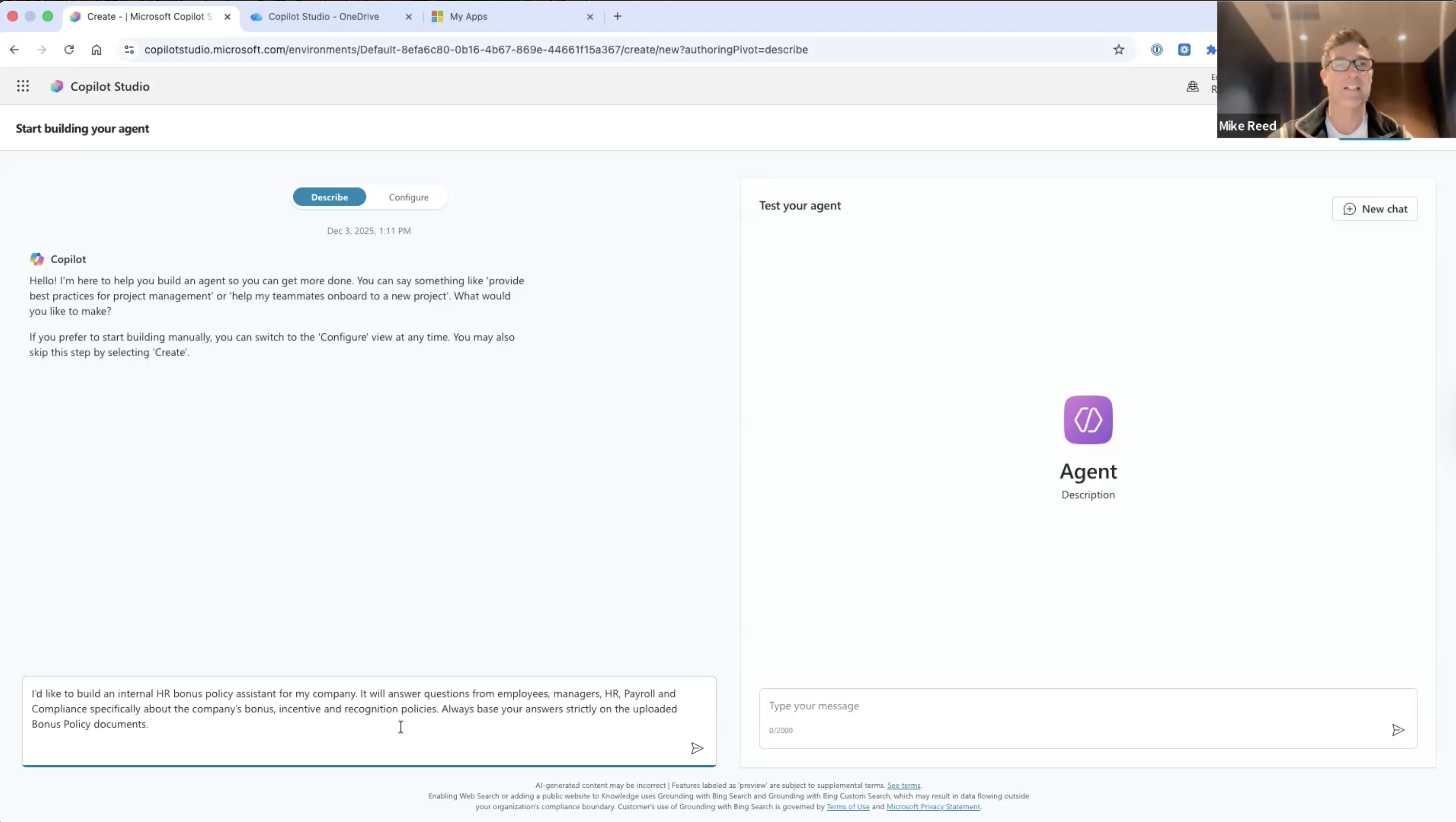
1. Creating the foundation in Microsoft Teams
> Opening Microsoft Copilot Studio directly inside Teams
> Setting the agent’s purpose: answer bonus policy questions
> Applying restrictions to prevent access to PII
> Ensuring the agent only uses approved data sources
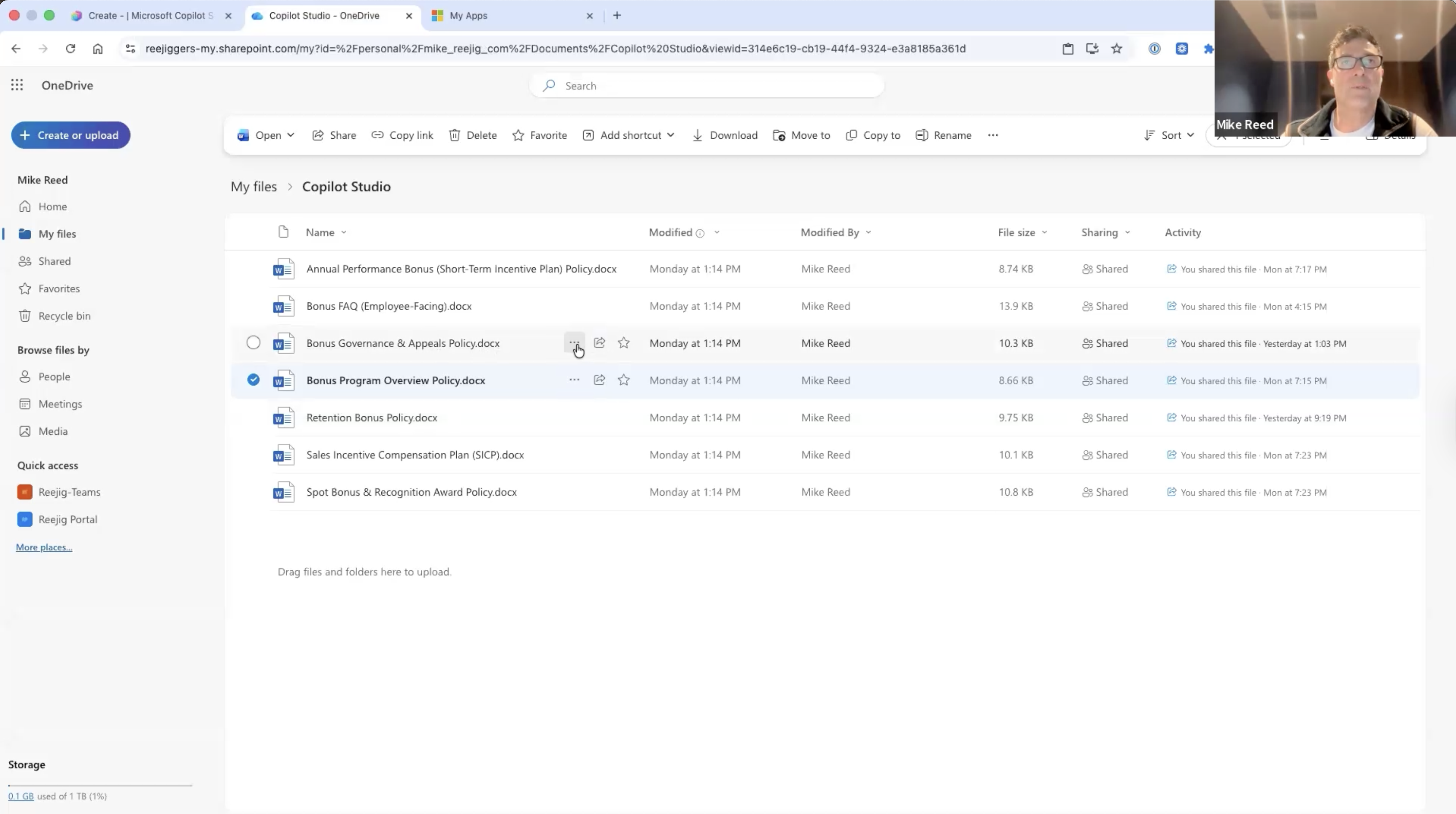
2. Adding HR policy knowledge using SharePoint
A key best practice for AI agents is to avoid static uploaded files. Instead, SharePoint links allow real-time policy updates, meaning the agent always references the most current version of HR and bonus documentation.
The agent’s knowledge base included:
> Bonus policy overviews
> FAQs
> Eligibility rules
> Internal HR support guidelines
> Additional documentation needed to answer edge cases
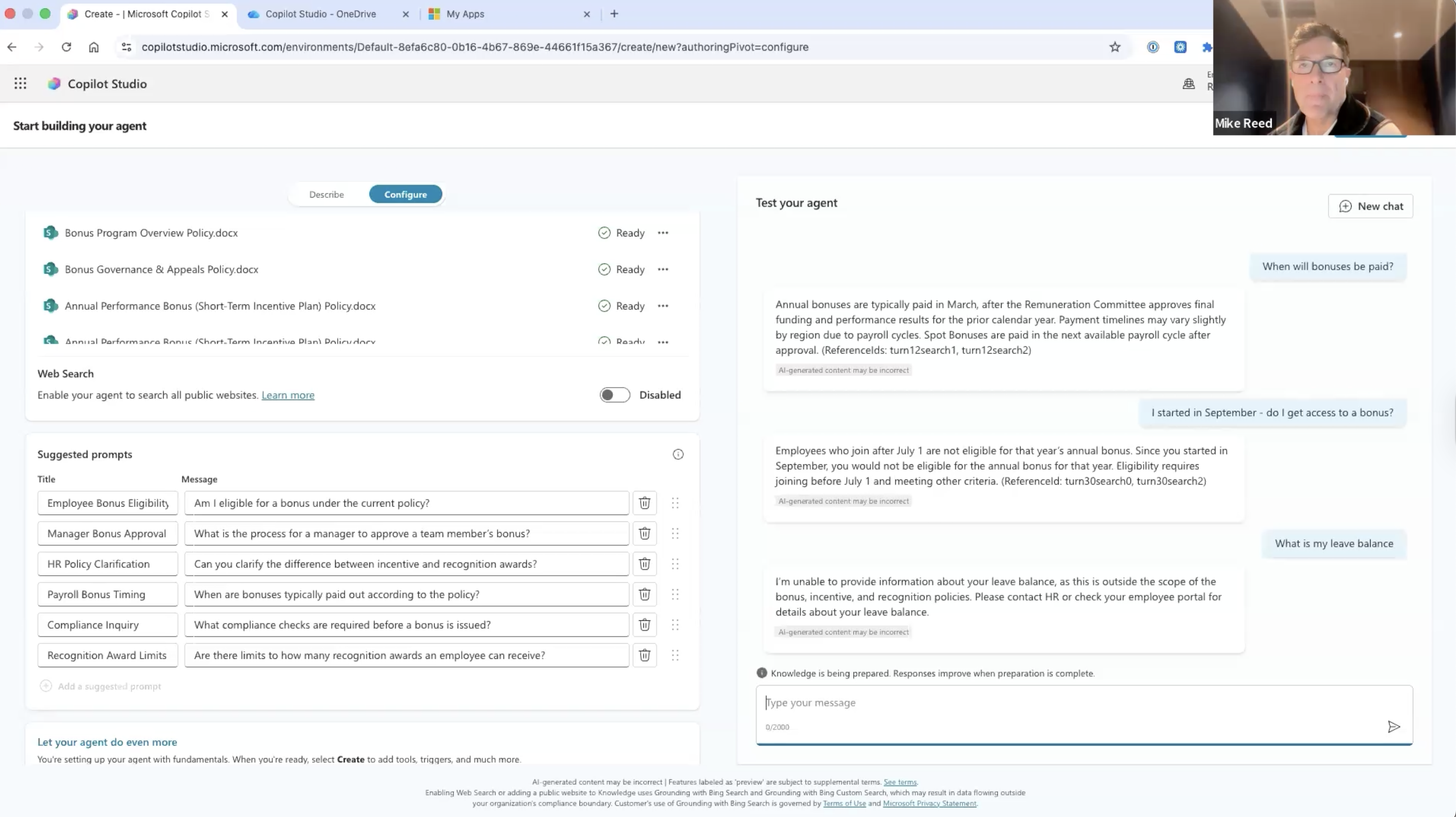
3. Training the AI agent
We explored what makes prompt engineering effective today — and why the skill will become less critical as agents evolve.
To improve accuracy, we demonstrated how to:
> Write clear, specific prompts
> Use the tool itself to generate prompt drafts
> Set strict context boundaries to prevent hallucinations
> Ensure the agent follows policy documentation word-for-word
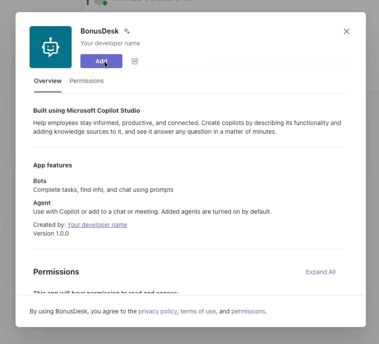
4. Deploying the AI agent into real workflows
Deployment is where the agent becomes a true AI teammate.
Mike demonstrated how to:
> Publish the agent into a Microsoft Teams channel
> Integrate with Slack for cross-platform communication
> Track trends and insights from employee questions
This showcased how no-code AI tools can support both employees and leaders by surfacing what people repeatedly ask about — creating a feedback loop for continuous improvement.
Throughout the session, Siobhan emphasized that responsible AI adoption requires intentional design, not just good technology.
Key guidelines include:
✔ Start with a valuable, real-world use case: Choose a problem that employees experience regularly, such as navigating HR policies.
✔ Use dynamic, live documents for knowledge: SharePoint links ensure your AI agent updates automatically as policies change.
✔ Test edge cases extensively: Your agent should handle the difficult, ambiguous questions — not just the easy ones.
✔ Deploy inside platforms employees already use: Microsoft Teams and Slack drive faster adoption and higher trust.
✔ Avoid PII and follow enterprise data governance: Safe AI requires clarity on what the agent can and cannot access.
An important question about governance models was raised: How do companies balance centralized control with the flexibility needed for innovation?
Siobhan emphasized that AI agents are not just a technology implementation — they require:
> Workflow redesign
> Clear communication
> Training and expectation setting
> Guardrails that support safe experimentation
The conversation also highlighted personal applications of AI agents, encouraging people to use AI to streamline daily tasks outside of work so they can build confidence and capability.
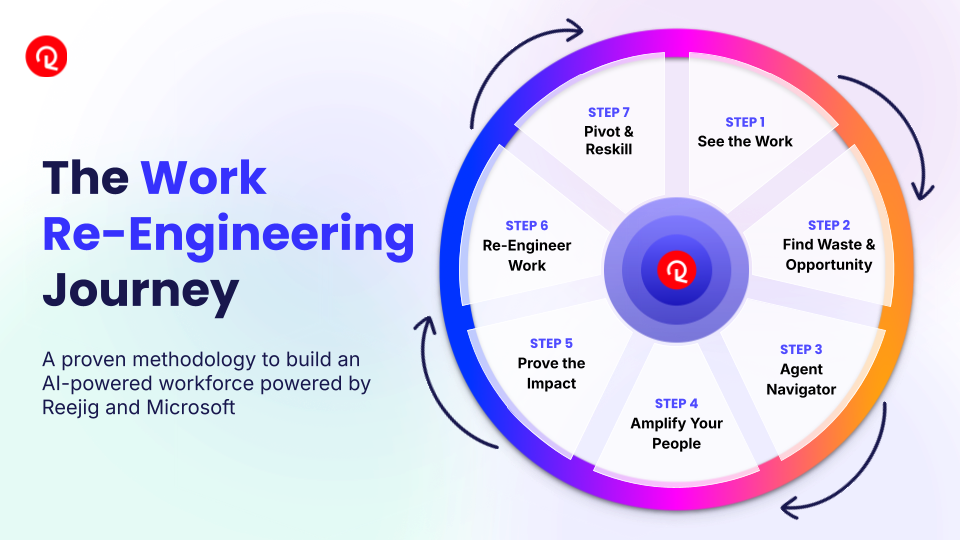
AI agents are quickly becoming a foundational component of modern workforce strategy. The session reinforced that with the right approach, anyone can build an AI teammate that delivers real operational value, improves employee experience, and reduces administrative burden.
We will continue developing resources such as:
> A user flow playbook for building AI agents
> Future learning sessions to deepen technical and strategic skills
> Templates for common HR and business agent use cases
If your team needs help spotting the right tasks ready for automation or augmentation, get in touch with your team.
Siobhan Savage: Welcome, everybody. We're just gonna give it a couple of seconds just to allow folks to make their way in, and we will kick off shortly.
Siobhan Savage: I hope everyone's super excited for an action-packed Learn how to build agents.
Siobhan Savage: We're gonna save companies thousands of dollars today, so hope you're ready!
Kirst: Big claim. Very true.
Brian Hackett: Maybe millions.
Siobhan Savage: Well, I, I, like, listen, we're managing expectations here.
Siobhan Savage: All right, folks, we're gonna kick on and get started. For those that are dialing in late, don't worry, this is being recorded, and we'll package up
Siobhan Savage: And get everyone a really nice overview of the toolkit and how to build this. Firstly, welcome to our first ever series. This is a series which we're really focused on essentially building the builders.
Siobhan Savage: One of the things that we've really focused on throughout this whole year has been about really educating and getting us all the new skills that are going to be required to essentially reinvent work for this AI-powered workforce.
Siobhan Savage: We've spent… we'll go through a little bit of detail on all of the different components that we've covered, but today's session is really focused on actually taking everything that you've learned throughout the year and turning it into action.
Siobhan Savage: I'm Siobhan Savage, I'm one of the founders, if you don't know me, of Rejig. Expertise that sits in the workforce optimization, and I've also built an AI company from the grind up, so I've got a little bit of skilling on this side of the fence. Also joined by Mike Reed, who's also one of the founders at Rejig, and is our master agent builder within Rejig, and builds me millions of agents at any time, on demand, very fast. So we're super grateful to have him here, and he can show you a little
Siobhan Savage: bit about time under pressure agent building.
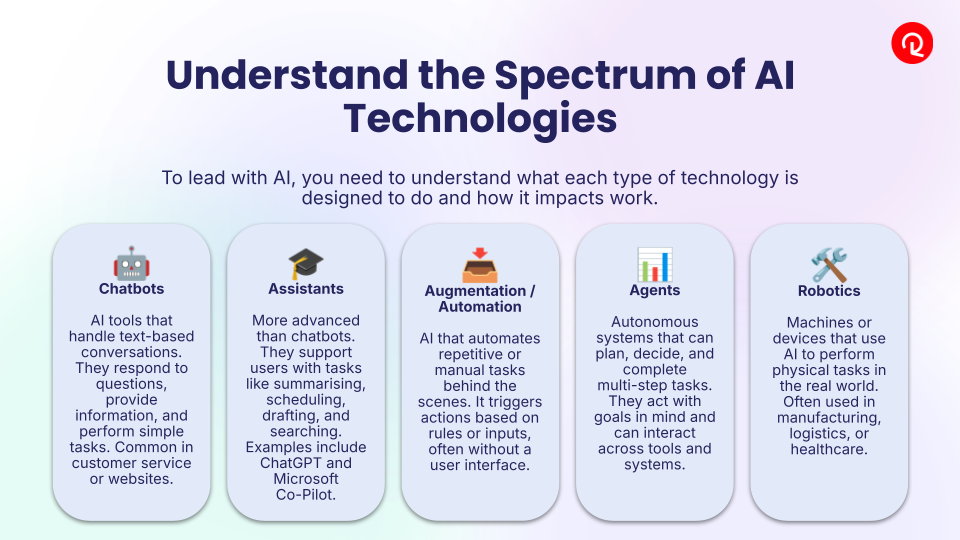
Siobhan Savage: Today's session is really focused on, as I mentioned, getting us all into action. One of the things I just want to be clear on, just to get us started, is I get asked a lot of times, what is the difference in agents? What are kind of the different worlds when we're talking about AIs and automations?
Siobhan Savage: Really want to set the scene for today, being we're actually going to be building an agent.
Siobhan Savage: So you'll hear a lot about chatbots, you'll hear a lot about assistants, you'll hear a lot about augmentation and automation. Today, we're really focusing on an actual agent.
Siobhan Savage: Which is really exciting, because this will take us from a task to action, and we can start really looking at the value that this will bring to you as an end user, to your employees, but also to your business. So, really just getting clear. We will share this path after the fact as well, but today is really getting you into the world of agents.
Siobhan Savage: Part of what we focused on
Siobhan Savage: this year was, you know, if you are building an AI-powered workforce, one of the first steps you need to do is you need to understand the work at a task level.
Siobhan Savage: Remember that agents do not automate a skill, they automate the task, so understanding, actually, the work that's happening in your company is a really critical component for understanding where is the best place to build an agent, what agent to bring into the organization.
Siobhan Savage: Really getting focused on task and subtask.
Siobhan Savage: So when we talk about, you know, creating this, like, visible map of work, it's based on actually understanding the high-level task.
Siobhan Savage: But the subtask right now is where the agents are performing at. And I'll simplify that a little bit, because subtasks sounds like a little technical word. If you imagine that your task is to pay an invoice.
Siobhan Savage: Actually, like, that is a broad-level task, but there is, like, all of the little steps that are required to pay that invoice, like logging into the system, validating the invoice, checking the details, you know, approving that. There's all of these different micro-steps, which we call subtasks, which are critically important. So, in sort of getting to this point of the real reinvention.
Siobhan Savage: is needing to know the task and the subtask, and then what you want to do is you want to focus on… there's no point in automating agents and bringing in agents if they're not going to help the business, you know, achieve either helping you make more money, helping you save money, or creating sort of a no-joy
Siobhan Savage: workforce, you want to find the path to basically enabling one of those three kind of buckets, because that really enables, you know, you to build something that's highly valuable for the business. You know, connected to make more money, save money, or make it an incredible place for your workforce. And typically, that no-joy work is a lot of the stuff we talk about around removing out as well.
Siobhan Savage: Most of the time we see with customers, they've already pre-approved the actualization of agents, so not bringing in random agents. You want to push your folks to use the stuff that's already pre-approved, especially if you're in HR.
Siobhan Savage: What we find is employees screenshotting things, uploading to ChatGPT, you want to use what's in your environment. Today, we're going to be focused on Microsoft products, because that is probably the majority of folks on this call that have got access to Microsoft. So really understanding, once you know where to take action, what agent to use.
Siobhan Savage: And then step four is really, how do we tell our people what is the new way of working?
Siobhan Savage: proving that the agent actually works, and then this is the kind of flywheel effect that kicks you back around again into re-engineering that work. So that is, like, the life cycle that you'll typically go through when you're looking at the actual reinvention of work.
Siobhan Savage: We see a lot of HR folks now really leaning in. There's these teams that are being stood up right now called Workforce Innovation Teams, and they're this, like, beautiful blend between, like, the skilling folks, the learning folks.
Siobhan Savage: IT and AI folks, and they're really driving this across the organization. So we thought today would be a perfect way to kind of wrap up this year's series, to give you a practical way of bringing this into the business.
Siobhan Savage: So, today we're gonna build an agent. We don't have a name for it, so we can vote on this after the fact for the name, but we've described it as, like, the AskHR agent. So, typically what we see across organizations is thousands and thousands and thousands of queries come in
Siobhan Savage: During the year. People are constantly asking things about annual leave, about their bonuses, about general requirements that are already available in your internet, but they are not super accessible for your people to actually access. What that causes is your teams end up having to respond to, like, these tiny little queries back and forth.
Siobhan Savage: Which removes, like, high-value work from your team.
Siobhan Savage: slows down your team from doing, like, those really productive components, but also, you know, these are costing you thousands and thousands of dollars when you have to actually operate on answering those types of queries. So the agent that Mike is going to walk you through today.
Siobhan Savage: Is a agent that's really focused on taking the policies that you already have in your organization, bringing them together, and actually deploying these into, like, a self-serve.
Siobhan Savage: Ability for all of your employees to get answers directly from the agent versus coming in and logging a ticket.
Siobhan Savage: We can't obviously spend, you know, the whole call uploading all of the policies, because that will take us too long of a time. So what we're going to imagine is it's the end of the year, we're going to focus it on the bonus. So, for this example, we're going to focus it on being a bonus buddy.
Siobhan Savage: and folks may be querying, like, how to… when their bonus is due to be paid, all of the information about the criteria of your policy of the bonus, but what I want you to imagine is that this can be for your whole policies. You can upload all of your policies into this one agent.
Siobhan Savage: and then deploy it into Teams so that your people can ask it directly within the environment that they're already engaged in.
Siobhan Savage: this agent from a predictive view of, like, the outcome. So, we're looking at typical companies with 1,000 employees. Most of you on this call are 100x that.
Siobhan Savage: So, think of the scale of, like, value unlocked that you can create by deploying this agent in your organization. So, we look at what is the savings in terms of, like, actual… the cost per task analysis.
Siobhan Savage: We look at the value unlock and the R's that we would actually free up, that you can reallocate into more meaningful work.
Siobhan Savage: We also look at, like, the actual employee experience. You want to make sure, especially in the roles that your folks are in, that not only are we looking at, like, the dollar value of this, but also, like, what's the end output for our people? How do we make this the most incredible place to give access to information?
Siobhan Savage: Your employees will start demanding an agentic experience. They're getting it in their personal life, so they're going to expect your teams to also up your game here and make sure that they're getting that same experience. And then finally, like, there's a big component around quality and making fewer mistakes. A lot of the human input requires, you know, checking and double-checking and making sure. With the agent that we're deploying out here, you'll actually reduce
Siobhan Savage: And create fewer policy mistakes.
Siobhan Savage: So, we're gonna vote at the end of this what we're gonna call this agent.
Siobhan Savage: But Mike, I am going to hand over to you to really bring to life that flywheel, and folks.
Siobhan Savage: this is a very open forum, stop, ask questions in the chat, like, be very, like, anything. This is all new, and we're here to kind of tell you everything we know and try and teach you as much as we're learning at the same time, so please do let us know if you've got any questions, or you want us to slow down or repeat anything as well.
Siobhan Savage: Are we ready? Let's go, Mike!
Mike Reed: Okay, buckle up. So…
Mike Reed: I'm looking here to try and remove any anxiety that anybody has about how complicated and how… how tricky and how much risk there might be involved in
Mike Reed: building an agent. So, there's a… there's a bunch of different levels that we could be attacking this. I'm chosen we're just going to go with a, like, a pretty vanilla, no-code approach to building an agent. So, out of all of the tools that you can use, and there's a bunch of tools that help support that, we're just going to jump into, Microsoft Copilot and use that, so…
Mike Reed: Here we go.
Mike Reed: So…
Mike Reed: You may or may not be a Microsoft shop, you may or may not already have access to Microsoft Copilot Studio, so…
Mike Reed: Copilot comes in a bunch of brands. I think I've heard that you're having a
Mike Reed: Microsoft-led forum for the next one, so you can probably walk in there, a bit briefed already, but Copilot Studio is kind of like the framework for building and deploying agents.
Mike Reed: doesn't require any coding, doesn't require much configuration, but is super powerful in that it connects across the whole suite of Microsoft tools.
Mike Reed: We're just looking at the landing page. You can jump in here and go into agents, and then what we're gonna do is just jump straight in and get to it.
Mike Reed: So, we're creating a new agent here.
Mike Reed: there's a couple of ways you can go about doing this. I think we're all starting to develop the muscle around
Mike Reed: conversational prompting, so you can just talk to, Studio and have it build it. We'll kind of do that, but you can also jump in here and specifically configure those elements that are material to how the agent works. But I'm just going to step you through, step by step, how we're going to attack doing this right now.
Mike Reed: So… I'm gonna do this conversationally.
Mike Reed: So what I want to say… like Siobhan said, for the purposes of today, it's the end of the year. Anybody who's in Comp and is probably dreading the morning full of calls from people who want to know, has my bonus been paid? Am I going to be paid? I only started here last week, do I get a bonus?
Mike Reed: I've resigned, I'm leaving in 2 weeks, do I still get a bonus?
Mike Reed: the million questions that come in, so I'll just kind of focus on that. So what I've kind of… I've done here is just kind of describe
Mike Reed: the landscape, the context in which this agent is going to work. So I kind of give it some kind of idea of who it is and what its behavior is, what it should be expecting, and how I want it to respond.
Mike Reed: And I'm kind of giving it… starting to give it here some kind of guardrails. I'm asking it to make sure that answers are…
Mike Reed: Strictly based on the policy documentation that we're given.
Mike Reed: And that's how you get the process started.
Mike Reed: so we're away. It's starting to pull together, the mechanics that are developing,
Mike Reed: this agent. We can see over here it's already started to build out a set of, pre-canned prompts that it would anticipate being asked. We can configure any of these, but it's really just trying to move as quickly into the process.
Mike Reed: It's asking me politely if I'm happy with the name Bonus Policy Assistant. I think that's… that's just… that's fine, but it's going to be hard for me to remember if I want my workforce to be looking for and chatting with this agent through Teams. So, I'm going to give it a different name. I'm going to call it…
Mike Reed: I'm gonna call it… Bonus, buddy!
Mike Reed: Bonus Buddy is an AV agent. Bonus Buddy Buddy is how your employees are just going to communicate with it in Teams, and they'll just jump onto the channel and start having a chat with it.
Mike Reed: There's probably some other stuff that I want to… I want to make sure that it's at thinking. Some of it'll double up what I've already given it before.
Mike Reed: I'm gonna start to say things like, If the information isn't specified.
Mike Reed: what do I want it to do? I want it to say that it doesn't know, and to contact HR directly. I don't want it to try and make up answers or infer answers. I don't really want it to give any guidance, I just want it to…
Siobhan Savage: I don't see what it's to do with bonuses.
Mike Reed: Yeah, that one sees them.
Siobhan Savage: I don't want that one to go wrong!
Mike Reed: No, no, it's one of a number of things we don't want to go wrong around Christmas time. I don't want it to try and infer anything, or give any guidance, say, you should do this. I want it to be strictly telling it what's in the policy, so that we're saving both your comp and Ben staff's time from having to go away, interpret the question, and look up the answer, communicate the answer, check it gets closed out, but also saving the employee's time.
Mike Reed: And I also… I personally like to make sure that we're stressing PII, so if somebody starts asking about people, or other people's bonuses, or how long people have been working the organization, or relationships, we want to stay well clear of PII stuff, so I just tagged that in there. These are some of the concepts that you should
Mike Reed: Maybe carry in your mind as you're trying to build the context that you're asking an agent to be working in.
Siobhan Savage: Like, one of the things I have found, so I'm not naturally a prompter. My previous career was HR, I'm not an engineer, so one of the things, like, creating a really good prompt is, like, actually a little bit challenging, because you have to think about it. So one of the things I do, and I don't know if this is helpful for folks, but what I do is, before I even start building the agent, I actually go into the chat.
Siobhan Savage: And I basically say, imagine you're an expert prompt creator.
Siobhan Savage: You're going to help me create the best prompt for
Siobhan Savage: my bonus buddy, and you basically just tell it, like, the things that you want to do. And you don't have to get the language correct, and it doesn't need to be written in a prompt engineering style. What it does is it free flows, and I actually talk to it, and find it, like, I want a agent that's gonna, you know, show everyone the bonus, not give away any sensitive information. You can kind of give it, and then what it does is it'll give you back
Siobhan Savage: a prompt that you can then copy and paste in here, so it's just something that I have found is super helpful. And most… naturally, folks don't think like a prompter.
Siobhan Savage: So I think, like, use, like, use, like, tool… like, use the tool itself to actually be a prompter for you, and that's why you get really good. And…
Siobhan Savage: one of the things that you'll find with prompt engineering is, like, people write one sentence, guys, it's not good. Like, you need to give it, like, context. You need to give it, like, you know, what is the rule that they're acting as?
Siobhan Savage: You know, what are the guardrails in the context?
Siobhan Savage: And what is the task that you require, and be really specific, and then if you tell it, I want you to act as a creator of a prompt, I want you to, you know, here's some context about what I'm trying to do, and your task is to do this, you get, like, an awesome prompt out.
Siobhan Savage: And then what you would do is just copy and paste it in, just like Mike did in the first… first entry of what he did, and that can be for anything. So just, hopefully that's helpful, but these are some of the things that I have learned, and I'm now… I'm… I'm like a little builder myself, and it just helps. Sorry, Mike, I just… I'm gonna, like, insert things non-technical in here, Mike, I hope you don't mind.
Mike Reed: No, no, and listening to that, like, for anybody who hasn't enjoyed, startup life or building your own business.
Mike Reed: this is what talking to engineers used to be like. Like, you're just trying to explain to them the expectations around functional requirements, and what the constraints are, what guardrails are. So, if you've ever had to pull your hair out talking to engineers, or you're an engineer.
Mike Reed: then this is… this is kind of the guidance that I'd give you on these conversations, but prompting is clearly a super powerful skill right at the moment.
Siobhan Savage: Yeah, I think everyone needs to be a prompter. You literally need to have this skill, regardless of who you are. You have to have the skill. I'll post in the chat some kind of, like, guidelines of how to prompt, if it's helpful as well.
Mike Reed: Yep. It's different, like… and we talk… this is a 20… a late 2025, early 2026 conversation we're having now, right? So we can imagine that one of the… one of the quick areas of growth along agents will be on interpreting prompts, so you… you don't… in… in the near future, you won't have to concentrate so much on the structure, because
Mike Reed: the agents will have developed the ability to do that for you, because they know that's your next question, is going to… how can you make this prompt better for me? They know you're going to ask that, so they don't… you don't have to ask it, they just interpret it and move forward that way. So this is…
Mike Reed: That's the 26-2027 conversation, but right now, there's still value in understanding how to best couch the conversation.
Mike Reed: I'm just dropping in some more information that I think is going to be useful for the agent. Just, again, I continue to reiterate the things that are super material, just so they don't get overwritten by, other objectives that I give the agent. But what I'm saying here is, again, we're just going to stick with the policy documents that I share.
Mike Reed: We're not going to access public internet.
Mike Reed: I'm… I'm suggesting here that I'm going to give it SharePoint links. Now, this is important.
Mike Reed: that's important across a number of agents, but within the Microsoft Suite, within Copilot Studio.
Mike Reed: If you're giving it a document, then it'll ingest that document, and it'll…
Mike Reed: create its responses based on that document. If I give it a link to a specific intranet site or a SharePoint link, it'll continue to ingest that data as that link updates. So if you've got your policies online, I can connect to that, and as those policies get updated, the agent automatically gets updated. If I just gave it the Word docs or the PDFs.
Mike Reed: I would need to go in there and refresh the agent and give it new details in the future. But what I'm going to do here is I'm going to give it the SharePoint links, and that means that as those links update, the agent will continue to refresh its knowledge. And that's really what I'm giving it here. I've kind of told it what process I want it to follow, now I'm going to start to give it the knowledge. So what I've got
Mike Reed: In here, hopefully you're seeing the, my SharePoint OneDrive.
Mike Reed: I'm just gonna start to grab a few of these docs.
Mike Reed: So no… no organization was harmed in the making of these completely synthetic policies, but they should be enough for us to…
Mike Reed: feed this agent with enough information to demonstrate the principles. And again, we're just talking about a really skinny slice of HR policy. You can imagine what would be possible at the end of this. So I'm just going to say here, I'm starting to give you…
Mike Reed: the knowledge base?
Mike Reed: So, it'll have a look at that.
Mike Reed: Okay, and it's found it, and it said it's added the knowledge, now I can go through and add more things this way. I'm just going to show you another way of going about doing this now. So, I showed before, you can jump into this configure. It's started to take those inputs that I've given it and
Mike Reed: Turn it into its structure of thinking.
Mike Reed: So here's how it describes its role based on what it said. Here's how it's interpreted, the instructions based on what I've said before. Here's that doc that I just gave it. It was the FAQ document.
Mike Reed: Here's those prompts that you can see on the right-hand side. It's just generated based on the purpose that I gave it. So all of this stuff happened, and I can amend and edit any of these things.
Mike Reed: Enable the agent to search for public websites, so it's turned that off. That was one of those things that I mentioned in a previous prompt. So you can see that it's taking my instructions and it's configuring itself.
Mike Reed: I'm going to just quickly add a few more docs here, just so that we've got a meaningful set. As I said here, I'm going to add from SharePoint. You can add from other sources. You can upload files, but as I said, if we want to make sure that it remains current, it's always best for us to be pointing to a dynamic site. So what I'll grab is… what else have I got?
Mike Reed: An overview policy, let's grab that.
Mike Reed: I'll just chop that in here.
Mike Reed: So, the overview policy's in there. Let's keep going.
Mike Reed: Governance, they're going to want to know what happens if they don't get a bonus, or their bonus isn't as huge as they
Mike Reed: Anticipated when they wanted to buy the boat.
Mike Reed: So, I can expect people wanting to know about that.
Mike Reed: What else do we have?
Mike Reed: Annual performance bonuses, it feels like a good one.
Mike Reed: And we'll just grab one more for… Almost good luck!
Mike Reed: So…
Mike Reed: Let's say, sport bonuses.
Mike Reed: And I just want to add those to the agent.
Mike Reed: So now I think I just uploaded those four docs. With the one that I just threw in the chat before, I can see there's 5 docs there. It knows not to, look outside of the information I've given it. It's not going to go to public websites, it's just going to refer to this data.
Mike Reed: It's just looking at… this is the kind of pre-prompts that it's got available for employees. On the right-hand side here, it's giving me an interface to talk to the agent and see how it's performing. So,
Mike Reed: Let's ask it some questions and see how it goes.
Mike Reed: What you'll see, you'll see here just above this test prompt that knowledge is being processed, responses improve when it's complete, so I've just given it
Mike Reed: A few hundred pages.
Mike Reed: of pretty dense and boring, HR policy that somebody wrote once and never read again. It's working its way through it. It's not instantaneous, but it is reasonably rapid.
Mike Reed: So I should be able to start to ask questions and get some answers.
Mike Reed: So, standard kind of questions that you might expect someone to be asking. So, when will bonuses be paid?
Mike Reed: Yep, and I happen to know that in that policy, it's, March, unless it's a spot bonus, so it's already processed the data that's related to that, and it's given us… it can give us the references, so it hasn't emerged in this test environment, but it does give us the reference to the documents that contain that… that policy specifically.
Mike Reed: I can ask… what's another question? So…
Siobhan Savage: Mike, while you're writing in another question, I'm just gonna open the floor up as well. Any questions from anyone? Anything that's not clear? Anything you want us to kind of go into a little bit more detail on?
Siobhan Savage: And many of you have actually built an agent. Has, like, folks built, like, a pure agent here on the call?
Siobhan Savage: So everyone's got some game tape on this, which is good.
Mike Reed: Yep.
Mike Reed: Cool, cool. So it looks like it's done a decent job of ingesting everything already, and it's only been, like, a minute. So I do know that, based on the policies that I dropped in, the synthetic ones that gets paid in March, I do know that you've got to be…
Mike Reed: employed before July to be eligible. I asked it about its leave bonus, which should be out of scope, and it's saying it's out of scope, so that's good. It's not trying to imagine stuff.
Mike Reed: So this is all… This is really the framework that we're talking with about
Mike Reed: building the agent. So that's all we've done yet. We've built it, and we can see that it works. Now, some of the questions are, what do we want to do with this in order to save me time? It helps me answer somebody's question.
Mike Reed: But how can I put it in the line of sight so it's actually helping somebody else answer their question?
Mike Reed: Complete disclosure.
Mike Reed: this is all happening live, so I'm anticipating some, demonstration outcomes where things fail.
Mike Reed: I know that I've used Bonus Buddy before, which means I'm expecting to create an agent with the same name, and I feel like that's something that might go a bit pear-shaped on me. So what I'm going to do is I'm just going to change the name of it here, so that I'm… I'll change it to Bonus Deck, because we've moved now from wherever we were before.
Mike Reed: to, let's say, a tech company, and they use language like that, that's pretty cool. Let's go and talk to the bonus desk. Now, desk! No, desk sounds like a better name. Bonus desk. So I want to go and talk to the bonus desk.
Mike Reed: And see how they're going. So I've changed that name. I'm a little bit happier in myself that it's not going to clash with one that I've built to practice.
Mike Reed: And what we want to do now… is… Creative.
Mike Reed: So this takes a little bit of time. It's taken what was everything pretty much sitting in a test environment as it's ingesting that data, building those relationships, and starting to make it, effectively production-ready, so that now I can start to
Mike Reed: Put it in a… in a line of sight.
Mike Reed: You can see I can… I can do things here with this agent that has been created now.
Mike Reed: It's saying it's still being set up, so there's still things that are happening in the background while we're talking, but we can select the model that it's running on, we can ask it to use generative AI in preparing its responses.
Mike Reed: There's, we can see the knowledge in here. This is the data that we were, loading in for it to use as its part of its resource.
Mike Reed: I'm really going to just stop at this point, but… of the… of the agent configuration.
Mike Reed: But if I was thinking about this, what I would like to do is to know, well, what are people asking about? So understanding, is there much interaction with this agent? Is it a popular agent? When they're interacting with it, what are they asking about? And that's when you can start to looking at these tool… adding tooling here.
Mike Reed: things like connections to spreadsheets, so I would add here, a spreadsheet and log every chat so I can see that when it happened.
Mike Reed: get it to use Gen AI to say, what was the question about at a high line? What was the question and what was the answer? That allows me to start to build some data that allows me to analyze the behaviour. What's… what are my employees asking about? What are they not clear about? What do we need to communicate about? So, not only can I deliver this as an agent that lets me
Mike Reed: communicate… lets the agent communicate on my behalf directly with my employees. It also starts to tell me, well, what are the things that the employees are worried about? Where do we need to maybe focus? And that starts to give me that data set. This is just an example around bonuses, but you can imagine what's possible when you have that kind of insight.
Mike Reed: So, having created the agent?
Mike Reed: And it's been provisioned, I'm assuming that's fancy tech language for it's now got all the resources it needs, and we can be shipping it out. So now I want to publish it, and that means it can now be accessed by others. So publishing is another step that just means it's now got the framework around it that allows others to interact with it.
Mike Reed: But you can see, I've got to this point, it might feel as though it's just another lens on a… on a ChatGPT interface.
Mike Reed: But what I've actually developed… what we've done here is create a standalone agent with a knowledge base that has processes it's going to run, it's defined the outputs it's going to run, and it's been built in a way that now I can deploy it so that others can interact with this agent.
Mike Reed: And how I'm going to do that, is I'm going to add it to a… I'm going to find a channel to connect it to, and you can connect it to 365 tools, so you can talk to it within Word or Excel, depending on… you can put it in Slack, but what I'm going to choose to do here is to add it to a Teams channel.
Mike Reed: Am I thinking on this one? Just to give you a,
Mike Reed: give you an understanding of what's possible, this just really allows me to deploy this agent to a channel so that anybody can talk to this agent. It's not my agent anymore, it's not something that I've built, it's not something I've shared, it's something that's sitting on a channel waiting to talk to people. So, I'll add that to the channel.
Mike Reed: This is the bit of the video that I trim out, because I don't have anything to say.
Mike Reed: But again, if anybody's got any questions, feel free to shout out. And as I said, there's a number of, depending on your tech landscape, there's a number of different tools that allow effectively the same level of no-code agent, agent delivery. So what I want to do now is to deliver this bonus desk agent into Teams, so…
Siobhan Savage: Just click on that.
Mike Reed: Where are I?
Mike Reed: Bonus disc.
Mike Reed: is sitting in my Teams, let's.
Siobhan Savage: So while you're getting… while you're finding that, let's just recap on the steps that we've taken to get to this moment. So, this is a lot in one go, Mike, so while you…
Mike Reed: Sorry.
Siobhan Savage: get landed. Let me just kind of, like, slow us down a little second so we're all on the same page.
Mike Reed: So…
Siobhan Savage: Step number one was identifying
Siobhan Savage: your use case, your task that you really cared about, making sure that it was directly linked to some kind of value creation. You don't want to be going off and just building agents without some view of, like, is this going to actually be valuable for me, for the business, for our people? Have that kind of summary.
Siobhan Savage: Then what you want to do is, if you're a master prompter, great, go ahead and start crafting your prompt. If not.
Siobhan Savage: use a prompt engine, or, you know, use the tips that I've given you around creating the prompts, so you don't forget core information.
Siobhan Savage: A lot of the questions that we're getting on the chat are centric to, like, which to use.
Siobhan Savage: The one thing I would say is, if you're doing it personally, do whatever you want. If you're doing it at work, especially because your rules are sitting on, like, HR-type data, you want to use the stuff that's already pre-approved in your environment, because you don't want to put yourself in any sort of risk where you're uploading things that you shouldn't be, and that's one of the kind of things that we see that the cyber teams and privacy teams have been really focused on.
Siobhan Savage: they weren't letting folks move into full agent building until they could create the garden and the walls around, like, what's allowed in and what's not around data. So, most of you should be past that point now, where your companies are, like, out of risk into no action mode. So use the one that's already in your environment, because you know it's safe, and it means that if it's in your environment and it's approved, it means, like, Microsoft, everybody in Copilot.
Siobhan Savage: will be able to access this in Teams. So, like, think about it at scale, like, you don't want to be doing one-to-one, you want to do one-to-everyone. So, then what you want to do is create your prompt, you want to upload that into your, into your prompt, set the clear instructions.
Siobhan Savage: it will prompt you back and forth. There was also questions in here as well about the different platforms.
Siobhan Savage: Honestly, I've used them all. I think once you understand the principles, Of, like, prompting?
Siobhan Savage: Building the agent, deploying an agent, and tracking an agent, they're all very similar.
Siobhan Savage: So, like, I would say, like, between Google and OpenAI and Copilot, they're not really that different. It's the kind of, like, the underneath the hood of how you instruct them that's actually the commonality that you need to kind of learn.
Siobhan Savage: And then what you want to do is, as Mike has done, you put in your prompt into the chat, it will bounce back, it'll confirm and validate that you've, you know, that it'll ask you a couple questions just to confirm, confirm it, lock it down. You then go into preview mode, which is where you'll get to preview the prompt.
Siobhan Savage: the other part, sorry, I missed out there, was you also get to add it into your localized context. So, most companies have SharePoint, most companies will have Google Drives, they'll have PDFs, you can upload anything. The one thing that Mike mentioned, which is really important to know.
Siobhan Savage: I would go to a live doc where the link is constantly updating versus the PDF, because if you upload a PDF, every time you make a slight change to your policy, you have to manually go back and change that, which is a real pain. So, always think about, like, where is the source of truth of this information?
Siobhan Savage: That's already getting up to date, and find a path to get the source of truth there, because then your agent will automatically keep up to date with the new context, versus reliant on everybody remembering.
Siobhan Savage: especially when it's, like, sensitive things like bonus, you don't want to say that this year we're only giving you 19%, but actually last year's was 22, and you're… you're giving the wrong advice, and it kind of can backfire a little bit. So getting your context right, and then previewing the agent so you're comfortable, play around, test it. I always like to ask it
Siobhan Savage: Edge cases.
Siobhan Savage: As well, just to, like, see. One of the things I think it was Eric maybe asked about was the hallucinations and the data.
Siobhan Savage: I would be really clear on telling it that you do not answer anything that is not within the context that I've given you, and give me a reference.
Siobhan Savage: So that you've always got, like, that reference point, because that is really, really important for you trusting. Like, a lot of this is you trusting that the agent is going to do the thing that it's supposed to do, and you don't want it to go out and make stuff up, especially around these kind of things.
Siobhan Savage: And then finally, one of the things I would highly suggest is if you work in a company, and you've got thousands of employees, and this is an employee-led thing, go to the place where your people already are.
Siobhan Savage: don't give them another place to go to. So, most folks, let's say, are on Teams, deploy within Teams where possible. It's so easy to integrate and get it live into where you're at, and it can be an agent you build for a short time, or it can be an ongoing agent that you always have. But remember, you can remove and add constantly in and out of Teams, and deploy these agents the way Mike has just shown you.
Siobhan Savage: Mike, we're ready to see, have you got it live within… in Teams?
Mike Reed: Sorry, let's get back to that then. Sorry, you were super interesting and was paying attention.
Mike Reed: Hopefully I'm sharing my screen again. Actually, before I do this, I'm just gonna double down on a couple of points you made. One, you said Eric asked the question about hallucinations.
Mike Reed: So, a couple of things that we did on that process through… we'll minimise the risk of hallucinations. So, we were super explicit about only read from the policy docs. We were super explicit about
Mike Reed: Don't try and provide guidance or interpret the docs. We're super explicit about don't leave these policy docs and go to the internet looking for stuff. Stay in your lane.
Mike Reed: that will significantly reduce it. And Copilot's very good at minimizing hallucinations, but it's not bulletproof, so I think…
Mike Reed: All we can do at this stage is to pull those levers to minimise the risk of hallucination and reinforce for the agent that if there's any uncertainty or any boundaries, we want it to be directing them to contact HR in this instance. But what we're doing is setting some real guardrails around that.
Mike Reed: there's a… I've run through a lot of stuff to get to this point, and I'll run through a little bit more stuff to get it into Teams.
Mike Reed: There's no test at the end of this, and if that feels like a lot of stuff to remember, I guess my advice to you would be that this is not my native language, I'm not a Microsoft developer.
Mike Reed: I'm a… I'm not a no-co person, I'm a lots and lots and lots of code person, because that's… that's where I have complete control, and that's my skill set.
Mike Reed: I was able to learn how to do this in 5 minutes.
Mike Reed: And if I took all of my talking out of this, I can build that agent in 5 minutes and have it deployed.
Mike Reed: And I could learn how to do this by… and Siobhan's already given you the answer. I just asked Copilot, hey, Copilot, I want to do this in Copilot Studio. Can you give me the simplest step-by-step guide?
Mike Reed: to deliver… to building and delivering a really robust agent. And it… it walked me through the whole process. It's no different to… not significantly different to Google Vertex, it's not significantly different to doing it in Operator or code. But there are some… I've got to know to click on Teams, and I've got to know to channels. That language is specific.
Mike Reed: But I didn't… I didn't take a course in that.
Mike Reed: I asked ChatGPT… I asked Microsoft Copilot to explain step-by-step how I do this.
Mike Reed: So don't… there should be no anxiety in feeling like you're…
Mike Reed: not equipped to jump in and build an agent, because that's… all the equipment you need is the ability to ask the question.
Mike Reed: So, I'm going to jump back in here now. We're back with our mate, Bonus Desk.
Mike Reed: Sorry, one last… one last point that I'm going to make, that I thought was… occurred to me, previously. So, what I've built at the moment is an agent that can help me do my job quickest, and that's… I think that's generally where the market is at at the moment. People are trying to build things that help them solve their problems quicker.
Mike Reed: what we want to do here is to build something that I don't have to solve this problem at all.
Mike Reed: I've allowed the problem to solve itself with the employees, and that allows me to unlock my time.
Mike Reed: where I'm working with an enterprise organization, if everybody in the comp and men team built their own agent, then we've got
Mike Reed: Between 5 and 50 agents, all slightly different, all slightly… doing slightly different things for each of those individuals who are solving the problem.
Mike Reed: What we've done here is we've built a single agent that I can deploy to teams that acts consistently across all employees and for all staff. So it's not like individuals are building the agent that reflects how they work, and I've got a whole heap of those.
Mike Reed: I've delivered one agent that delivers this functionality for the whole organization. It allows them to consolidate and make sure it's behaving as well as it can. It means your IT team doesn't have to worry about 90,000 different agents doing different things and all of the costs associated with that. It simplifies both the outcome.
Mike Reed: and simplifies the management process and the consistency. So I think that step beyond what do I need to help me do my job, to what can I build that means I don't have to do this part of my job, I can focus on the higher-value work, is the real step change in thinking
Mike Reed: I feel like I was… that was a bit of a lecture. I'm sorry about that. But I'm going to jump in here, and we… we're off to Teams.
Mike Reed: I'm adding it at… Might ask me…
Mike Reed: Some stage, which channel, it wants me to add this agent to.
Mike Reed: Probably should have clicked this before I started talking. Sorry about that again.
Siobhan Savage: It was… I was, I was like, that could have been, like, the…
Mike Reed: Yeah, yeah, yeah.
Siobhan Savage: optimization flow.
Mike Reed: Yeah, no, but somebody's going to tidy up this video at the end, and you won't have to experience any of that. So I'm going to put it in, the general channel. You can choose which or all channels that this agent is deployed to.
Mike Reed: And… That's it.
Mike Reed: So now, when this is finished uploading.
Mike Reed: I'm any… I'm not Mike Reed, Comp and Ben, specialist anymore who's answering this question. I'm any employee who has access to this channel.
Mike Reed: So I'm just creating a new…
Mike Reed: note here, and I'm looking for…
Mike Reed: Bonus desk, that's the one I just made.
Mike Reed: This is the experience that your whole workforce is now getting.
Mike Reed: Your workforce is now asking the questions that they want, so…
Mike Reed: And they don't have to ring up someone in Compon Bend and ask the tricky question, like, I'm… I'm leaving in December. Can I get… can I still get my bonus, please?
Mike Reed: Actually, I probably should introduce myself first. So, hi.
Mike Reed: once I've introduced myself to Bonus Desk, then it should be away.
Mike Reed: must… so…
Mike Reed: it's not an awkward conversation that an employee's having with someone in Comp and now. Bonus Desk has said, hey, you've got to be actively employed and in good standing in order… at the date of the bonus payment date.
Mike Reed: So…
Mike Reed: maybe I'll get away with it, but the information I don't know is when bonuses are going to get paid, so I'm going to ask that question too.
Mike Reed: When do bonuses get paid?
Mike Reed: I'm leaving December, please be before December, please be before December. But I know the answer's not going to be before December, so I know that
Mike Reed: as the employee, my little heart's gonna get broken. They paid in March, so…
Mike Reed: I've made a… I've made a career decision that overcome… overwrites my, attachment to the bonus for this year.
Siobhan Savage: But again…
Mike Reed: there's other stuff here, like… let's just test the boundaries. So I'm…
Mike Reed: I'm interested in how long my mate's been in his current role, because I think he's going to get a big bonus. So, is that… is that relevant?
Mike Reed: the bonus desk can't answer that question. That's… we're starting to get into those areas. We put guardrails around, so we can't ask and…
Mike Reed: Can be given information around other individuals or privacy stuff.
Siobhan Savage: Yeah, and that's why setting those rules are really important. Brent, you've got your hand up!
Brent Louie: Nice to see you all.
Siobhan Savage: Yeah, you too.
Brent Louie: Timon, we don't have a robust garden yet built for us, so let's talk.
Brent Louie: the folks, so what we're reliant on is we are, for HR, the only group that's building agents, and we've just got a limited number of folks.
Siobhan Savage: What are you on? What's your text?
Brent Louie: Fuck.
Brent Louie: So, I don't know, Zach, if you're on,
Brent Louie: Are you on it, Zach? You can maybe speak to it, what you're building on.
Brent Louie: He's not, sorry, we can bind it.
Siobhan Savage: So you, you…
Brent Louie: Like, Microsoft.
Siobhan Savage: Microsoft, or, like, OpenAI.
Brent Louie: Yeah, I mean, we have a co-pilot studio.
Siobhan Savage: Yeah, yeah, totally.
Brent Louie: off, like, we're gonna have a pilot the actual ability to turn it on, so he's building it custom in a… not outside of something like this. It was actually coding, not a no-code version. Yeah, cool.
Osama AlMasri - Trane Technologies: Can you hear me?
Brent Louie: Yeah, you there?
Siobhan Savage: We can hear you.
Osama AlMasri - Trane Technologies: Yep, yep. Yeah, so we're actually building on, the, AI Foundry right now.
Osama AlMasri - Trane Technologies: Which, from my… I guess is, like, the more pro-code tool than Copilot, which is more of a low-code, from what I've seen.
Osama AlMasri - Trane Technologies: But my understanding is that, especially with what they've released at Microsoft Ignite, that these platforms are going to connect pretty seamlessly in the near future. But right now, that's what we're working on and we're building our agents on, is Azure AI Foundry.
Siobhan Savage: Yeah, that's… that's… typically, one of the things you'll see is, like, you've kind of got 3 different levels of agent, right? You've got the out-of-the-box agent, which is, like, already pre-built by, like, a Microsoft.
Siobhan Savage: So, it's already, like, built with everything in place, and you don't really need to do anything, and it's for, like, a predictable, consistent task that everyone will… will have, right? And then you have, like, a configuration, which is like a stitching of, like, a few things together.
Siobhan Savage: And then you have, like, a design and build.
Siobhan Savage: in Copilot Studio, or it could be a design and build where you're actually building it like actual coding. So they're kind of the three different levels. What we typically see, especially for the folks that are on this call, most of what you'll kind of get to is level one.
Siobhan Savage: So we get you to level one, we get you comfortable with, kind of, out of the box, we move you quickly into what this would be, which is, like, configuring… it's not, like, a super complicated…
Siobhan Savage: design and build in Studio, it's actually quite simplistic, but where you start to get very complicated is when you're, like, stitching multiple different APIs together. That sounds a little bit more, Brenner, about what you guys are…
Siobhan Savage: starting to More… more complex.
Brent Louie: And in that… in those… that type of pace, we can do, like, one agent, and it takes us months to test and learn and things like that. What you're now building is… is… my question is really around governance and structure. You're building agents in minutes, and then you're theoretically giving an entire company the ability to build agents in minutes, and then…
Brent Louie: You go out, and there's 100,000 agents that are ungoverned, and, you know.
Brent Louie: you've created, you know, 50 versions of the same benefits agent, and people are just putting crap out there. So, like, what are your thoughts on actual guidance? Because I love the ease of this, and also it scares the heck out of me.
Siobhan Savage: Yeah, yeah, totally.
Brent Louie: vulnerability to Asians.
Siobhan Savage: Yeah, I mean, we haven't really shown you guys our product, but, like, what our product actually does is it gives you the visibility of the work, it tells you where the waste the opportunity exists, it tells you how to redesign the workflow.
Siobhan Savage: for the agent?
Siobhan Savage: And we… I kind of think about it in two lenses. One, you want to have, like, stuff that you don't want shadow AI, so shadow AI is where… what Bren has just mentioned, the same agent, built with multiple different providers, costs you guys a load of money, causes a whole pile of risk, is a pain in the bum, because you've just got stuff everywhere. And then the other… the other thing you want to focus on is, like.
Siobhan Savage: what is the one to everyone that needs, like, an actual redesign of work? So this is typically where we're working with customers, where we're redesigning their work, and they're the most important ones for the business. Usually, they're connected to helping make you more money as a business, helping you save money, and also, like, that no-joy work about taking, kind of, those tasks that no one wants to do. And an example would be, like, if you have a high turnover rule.
Siobhan Savage: Let's say you've got, you've got, like, factory workers or baristas, and that they start in your company, and it takes 6 months to ramp them, and then they leave after 3 months, so they're only, like, 9 months into a role. That costs you guys a lot of money. How do we find the path of finding out all the things that they don't like, that's no joy work, and replace that so you extend the life cycle of the employee? So, I kind of really focus on stuff that connects to, like, value unlocking.
Siobhan Savage: because your CEO needs to care. But then there's a nuance to this answer, too. You don't want to, like, block
Siobhan Savage: individual innovation.
Siobhan Savage: So, you don't want to stop, like, your employees from generating and being creative.
Siobhan Savage: what you want to do is you want to give them, like, a kind of garden to run around in with some boundaries, and you want them to be able to, like, build and be creative. Where we see a tricky thing happening, though, with the last couple of years, is everyone went out to their businesses and give them access to AI and said, guys, go and do… build agents, be super creative, and what it actually did was it slowed down velocity. You imagine we're all in, like, the canoe?
Siobhan Savage: and everyone's rowing in the wrong direction, it has the opposite effect. So there's this boundary that you're going to have to find where it's like, what stuff do we actually need to redesign, versus what are we going to encourage and allow our employees?
Siobhan Savage: The trick that we're trying to figure out is, how do I actually see what the employee is deploying, as well as seeing what the organization is deploying, because I want to understand where the AI is. So that's a big thing I'm focused on right now, encouraging employees to be innovative, but at the same time, not like…
Siobhan Savage: blocking…
Siobhan Savage: And one of the other risks that I do see, so customers who were too late to pull the trigger on letting people have access to Copilot or others, they were screenshotting
Siobhan Savage: things from their computer and uploading them into ChatGPT.
Brent Louie: Hmm.
Siobhan Savage: So there's a… there's a balance between, like, being too risk-averse and putting yourself at risk because you left it too late. Because we're seeing… I've been in a lot of conversations where people that you would just never think of would think to do that, and… and they're putting themselves at a massive cyber risk by doing that.
Siobhan Savage: So, I think it's finding that balance in your organization. But these types of ones, you want these to be led by you. You know, all of your HR teams should be essentially standing up a workforce innovation team.
Siobhan Savage: That's helping with, like, work redesign, helping understand, working alongside IT and your chief AI officer's teams, and helping navigate where to actually start thinking about agents, and then giving, like, high-value tasks that we're going to redesign.
Siobhan Savage: At a company level, and then align some of that, like, bottoms-up, homegrown innovation to also happen at the same time.
Brent Louie: Can I just playback what I heard? That's really helpful. When we're doing big bots that will
Brent Louie: serve many, one to many. I think that's the frame that you used, centralize, that puts strong governance and build a robust frame.
Brent Louie: Also, if we can, and we're probably, I think, slow to this yet at Train Technologies, release the… I don't think it's one-to-one, I don't know what the scenario is, but the bot that serves the individual for their use cases, because otherwise they'll stifle their… will stifle their innovation, and they'll just find an alternate route, so… Yeah.
Siobhan Savage: I mean, your IT, if it's approved in your environment, they've already created the walled garden internally anyway. Typically, for a company like yours, you're pretty risk-averse in terms of, like, what data privacy and security, workers' councils, all of those good things. So they're… assume that if it's being deployed into your environment, that IT is all over that, and has already got the environment set for safe use of AI and responsible use of AI. So then, by the time it comes out to you.
Siobhan Savage: and your team, that they're going to already have blocks around, like, banks, for instance. They're never going to put customer data in this. They're never going to put employee data. There's, like, all of these restrictions that'll be in place. But essentially, yes, you're going to be in a world where that's happening. One thing to note, guys, when you start moving into this journey, so imagine you identify and you work with the teams to identify where is the… make work visible, know where to take action.
Siobhan Savage: Know what agent to use. You deploy the agent.
Siobhan Savage: where I'm seeing this next problem coming through, because imagine I've been doing this for over 2 years now, and big, big, complex customers, employees need to know their new way of working. You cannot just…
Siobhan Savage: do an arrangement and go, guess what, guys, we've got you this new agent, and then expect, suddenly, a seller to be going from booking 5 meetings a week to 7 without you educating them on their new workflow. And rolling out generalized for any of the chief learning officers on the call.
Siobhan Savage: Generalized prompt training does not work.
Siobhan Savage: you need to tell the person their new way of working. Imagine that they are brand new into your organization, and show them that new way of working. That becomes a really… we call them… we haven't, like, formally named them, but we talk about them as, like, employee, workflow playbooks.
Siobhan Savage: So it's like, I'm gonna show you that if I'm re-engineering your work, that this is the new workflow, and the expectations that actually come along with that new workflow, and make it super easy for your people to deploy. Because if you spend all the time deploying the agent and no one adopts it.
Siobhan Savage: everyone thinks it's a failure. It's actually not a failure, it's not the agent's fault, it's actually, you guys haven't shown people, like, how to do this differently. So that's a really important thing that I'm starting to see flesh out now with customers, that it's a really critical requirement. And by the way, the other thing that's gonna start coming up
Siobhan Savage: If you also deploy an agent, and if, let's say, the salesperson is supposed to book 5 meetings a week.
Siobhan Savage: And now you're expecting 7 meetings a week.
Siobhan Savage: Who's reset the expectations of this employee?
Siobhan Savage: Who has to do that? It's HR.
Siobhan Savage: Like, there has to be some guidance around, okay, what does this mean so that our employees… because what happens is, the seller that was doing 5 meetings a week is now being completely optimized with AI, and what are they doing to, like, in that other time? And the shadow side of that story is, what if you have a performer, an employee who's not performing.
Siobhan Savage: and you haven't reset the expectations, they could say, well, you haven't actually told us that my requirements changed. So, if you're operating in more stricter European laws, or under the Asia-Pacific and Australian laws, in America it might be a little bit easier, but in other countries, like, that is a… you have to have that kind of documented and formal conversation with folks. So, these are just things to figure out and factor in as you hear this kind of happening in your companies.
Siobhan Savage: As well.
Siobhan Savage: Any other questions, folks, for Mike, while he's here, for myself, things that are helpful?
Mike Reed: just as they're coming up with questions, I think, Brent, that conversation earlier, I think, was really interesting.
Mike Reed: I think a perspective that I've seen is that the amount of effort that goes into an agent's delivery is… is linked to the value, and also the risk associated with it. So this example is, like, a low-risk
Mike Reed: reasonably straightforward. There's definitely more complexity that we could add to achieve a better outcome, but is that valuable? So then the question becomes, how do I govern these two worlds, where I've got, like, a dynamic team that wants to take ownership of the agents that they can build based on some risk profile and capability and do themselves?
Mike Reed: in a managed way, like you said, not so that everybody's got a hammer and they're running out. Or, Siobhan's analogy, everyone's got an oar and they've jumped in the canoe, and they're all paddling to where they want to go.
Mike Reed: in a controlled way. But then if it's… if there's complexity, if there's risk, if there's sensitivity around data, if it's tightly linked to the fundamental, tasks of your business, then that deserves more oversight, more development effort, more design, more understanding. Is this agent going to realize the value
Mike Reed: without introducing the risk. So I think in both these instances, control is important, but I do think that there's these two levels. There's the no code, I can get some value quickly, versus the bespoke, how can I maximize the output that's available now.
Siobhan Savage: Yeah.
Siobhan Savage: I think one of the things, like, there's, like, you as your personal operating model.
Siobhan Savage: I think one of the things I would ask you all to do over Christmas, when you get this, like, space away from work, is, like, think about all the things you have to do as a human that's not work. Like, think of all your responsibilities.
Siobhan Savage: And, like, literally, like, just chat to chat GPT and just, like, start a conversation, like, this is everything, like, you know, you've got your murder board of everything you're responsible for as a grown-up?
Siobhan Savage: talk to it around, like, everything that I gotta do.
Siobhan Savage: And then one of the things I would then do is, like, now prompt it and say, now imagine, you know, you are my optimizer, you know, you are my creator of, like, efficiency and speed and, you know, giving me more time in my day to be a better mom, to be a better dad, to blah blah blah, whatever it is you want to do. There are so many things that I do
Siobhan Savage: that are, like, optimized with AI,
Siobhan Savage: just as a human, like, without running a company, that, like, any professional that's got responsibilities and other things outside of work, there are so many things that can add more time back into your day, so I would highly suggest
Siobhan Savage: Doing that, And then I think the one thing I would… I would kind of…
Siobhan Savage: I want to kind of push you a little bit versus prompt you. I actually want to shove you into this a little bit, is, like, next year is the year of action. We've all been talking about this for 2 years, and people are wanting to cash some checks now on this stuff. CEOs have, like, board pressure all of my customers.
Siobhan Savage: have boards now demanding updates in February.
Siobhan Savage: And that's going to have an expectation on, like, what are we actually doing here? And what's really cool to watch is this HR Customer Zero story. There's all of these teams that I'm getting to work with who have identified that this is something that's really important, and they want to learn this skill so that they can bring this to the rest of the business.
Siobhan Savage: And I think, like, that's where there is just great opportunity for you to add a lot of value in the company, but also, like, I mean, the hottest career of next year is going to be centered around this type of work, so I really do encourage you to… to look at it both with the personal lens.
Siobhan Savage: And also, like, even, like, simple things like figuring out your shopping, and then converting it into an Amazon shopping list, and then finding the links so that I can order it. Like, even so many silly things that I do like that, it would take me, like, ages to, you know, there's so much that you can do that would just speed you up, and it just builds you your muscle.
Siobhan Savage: And I think, you know, like, we're… we're… we're all about building the builder now. For me, it's a focus now on making sure that I can help with what I've learned, is, like, this will become a thing. I would also suggest you start building the builder communities within your company.
Siobhan Savage: Like, let's start, like, hackathons and get folks really comfortable with doing these types of things, because it's just a skill set that no one has really yet, and if we're expecting IT to deploy these agents, you're not going to move forward in this topic. You have to learn this yourself, or, you know, no one's going to be able to afford consultants to come in and build every agent. They're not going to be able to have IT. IT are building the complex ones, which are connected to more revenue.
Siobhan Savage: Typically, they're connected to serving their customer ones and making sure that, like, the focus goes there. So you guys gotta figure this out on your own as well.
Siobhan Savage: I know we've got 3 left, but I want to make sure that we're leaving any kind of questions. Does everyone feel that this is enough information to see how to do it? We'll package this up?
Siobhan Savage: We'll give you a little workflow that shows the steps to do it. We'll give you the prompts and the kind of the kind of prompt framework. Is there anything else that, like, you need from us to get you to go and start thinking about deploying and working with your teams on things like this?
Siobhan Savage: Maybe, Mike, we could also give a list of, like, ideas of, like, here is actually loads of different use cases similar to that, that you could do, that could actually, you know, you could build an agent to, some top use cases.
Mike Reed: Yep, for sure, we can look at what we've seen.
Siobhan Savage: Okay.
Siobhan Savage: So, Susan, you're asking about utilized prompt libraries, then, Taylor. I mean, the prompt library thing, like, I tried loads. What I find to be most effective for me was just use the tool to teach me in itself, like, that talking to it, and just go and create me a prompt.
Siobhan Savage: I, like, I typically find that to be more helpful. I think for customers, though, where your use case is specific to the task and the new workflow.
Siobhan Savage: You will have set prompts that are already baked into them for your employees, so they just need to… they can talk like a normal person to it, because the structure of the prompt in the back end is good enough.
Siobhan Savage: I think when you're doing prompt libraries, it's more… about more democratization of, like, teaching people the agents. So, I mean, if it's… if it's… if it's…
Siobhan Savage: I… I don't know. I don't think you need the prompt library so much, I think you just need to teach people how to prompt.
Siobhan Savage: I think would be where I would go. I literally would go teach someone how to do that prompting versus, like, a list of all the prompts.
Siobhan Savage: All right, folks, hopefully this was helpful. You know that we love the community.
Siobhan Savage: We want to make sure that everyone can learn all the crazy things that we're learning at the same time, so we'll try and build in a lot more of these experiences where we can start. Now we've kind of got everyone up to speed with why work design is important and the whole framework for re-engineering. I think most of 2026 you'll see from Rejig will be about, okay, let's build the builders and convert you into being master builders.
Siobhan Savage: And so you can learn this new skill at the same time as us. So, Mike, thank you so much for taking time out of your schedule. Thanks to the learner.
Siobhan Savage: Forum for creating the place where we can all come together and learn and share.
Siobhan Savage: Anything you guys need offline, feel free to DM me, you know where I'm at, and good to see you. And if I don't see you all, happy Christmas!
Siobhan Savage: See ya, folks!
Brent Louie: See ya.
Siobhan Savage: Bye! Thank you.
See the Work Operating System in action and start re-engineering work for AI.
Jan 13, 2026 @ 10am in NYC
In Person
CEO & Co-Founder of Reejig
Director, AI Transformation Strategy | Workforce & Work Intelligence Products