-
Platform
-
Resources
-
Company
- Work Architect Course
- Contact us
 Platform Overview
The Work OS for AI-powered Work
Platform Overview
The Work OS for AI-powered Work
 Work Architecture
Live entity model of your enterprise
Work Architecture
Live entity model of your enterprise
 Map
Build the Work Context Graph
Map
Build the Work Context Graph
 Analyze
Your GPS for reinvention
Analyze
Your GPS for reinvention
 Build
Workflows + agents
Build
Workflows + agents
 Run
Deliver the new way of working
Run
Deliver the new way of working
 Measure
Track real, board ready ROI
Measure
Track real, board ready ROI
 Log
Source of truth · audit trail
Log
Source of truth · audit trail
 Update
Keep architecture current
Update
Keep architecture current
PARTNERSHIPS
View
Reejig x Workday
Unlock more value from Workday with AI Work Design.
 All Resources
Content for AI-powered work
All Resources
Content for AI-powered work
 Certified AI Workflows
Proven builds you can copy
Certified AI Workflows
Proven builds you can copy
 Articles
AI work design thought leadership
Articles
AI work design thought leadership
 Events
Roundtables, webinars, dinners
Events
Roundtables, webinars, dinners
 Webinar Recaps
What we learned, from the people building
Webinar Recaps
What we learned, from the people building
 Playbooks & Guides
How to build capability in your team
Playbooks & Guides
How to build capability in your team
CUSTOMER STORIES
View


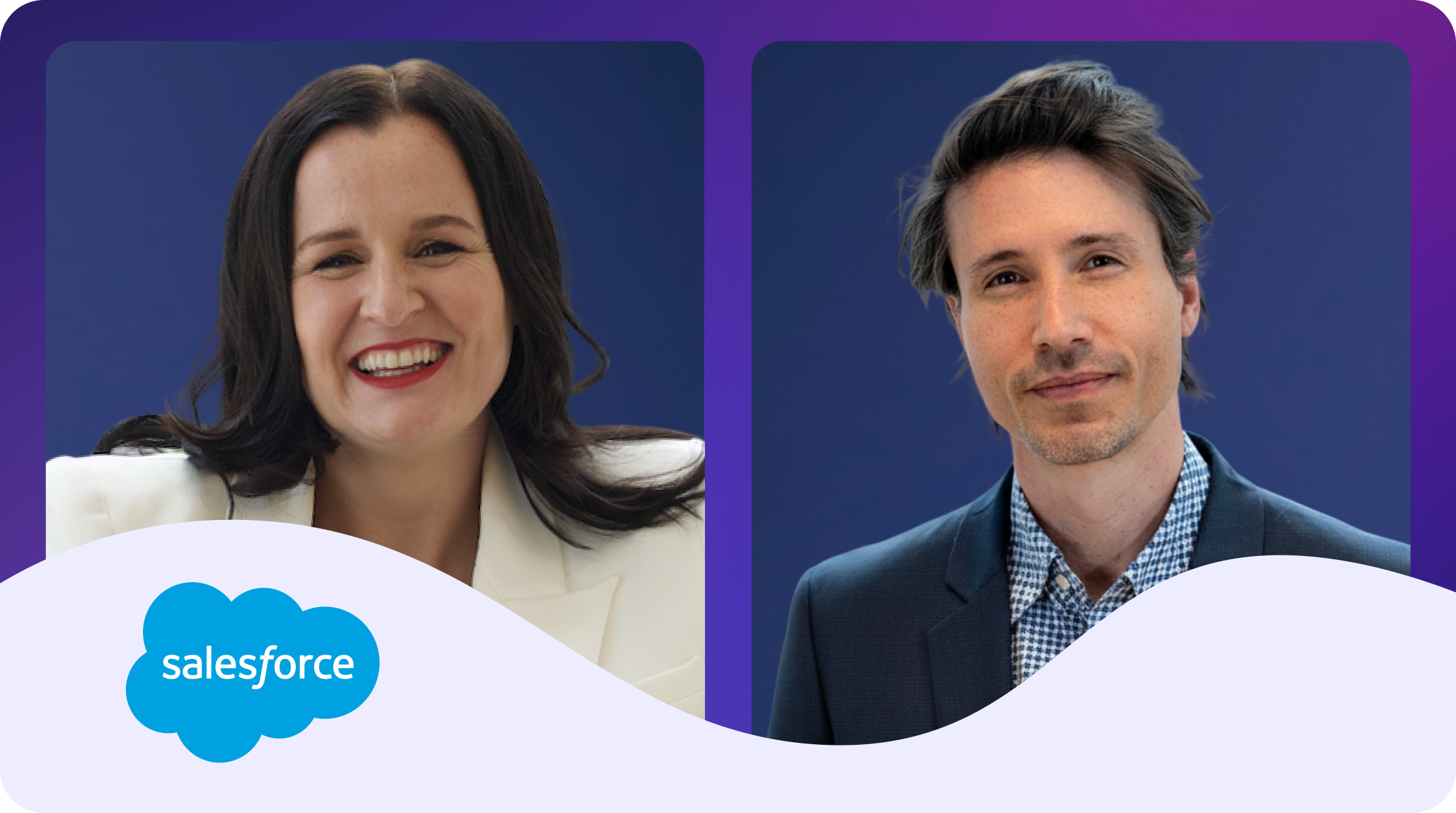

Itai Asseo and Siobhan Savage on agentic AI and scaling AI transformation
{max_height=113, width=200, height=113, max_width=200, embed_html=, oembed_response={provider_url=https://www.youtube.com/, width=200, height=113, html=, thumbnail_width=480, version=1.0, title=Re engineering Work with Itai Asseo, provider_name=YouTube, type=video, thumbnail_height=360, author_url=https://www.youtube.com/@reejig, thumbnail_url=https://i.ytimg.com/vi/R_6wdzFat-I/hqdefault.jpg, author_name=Reejig}, size_type=auto, oembed_url=https://youtu.be/R_6wdzFat-I, source_type=oembed, supported_oembed_types=[video, link]}
Blog Post Body
Table of contents
Catch The Work Blueprint live
Hear how leaders are redesigning work across people and AI. Join us for the next episode.
In a recent Reejig webinar, Siobhan Savage (CEO, Reejig) sat down with Itai Asseo (Head of Incubation and Brand Strategy Research at Salesforce). They discussed what it really takes to re-engineer work in the AI era.
At the heart of their conversation was Agentic AI. This is the next evolution beyond predictive and generative systems. The focus was not just on technology. It was on the operational, cultural, and structural shifts that global enterprises must make. They must scale AI responsibly and deliver measurable impact.
"Change will never be as slow as it is today." - Itai Asseo
Here are five takeaways from their discussion. Practical insights for leaders building intelligent systems and preparing their people for AI-powered work.
1. AI adoption is moving from pilots to scale
According to Itai, 2023 was a year of experimentation. Proofs of concept, pilots, and early agent deployments. In 2024, leading organizations moved beyond trials. They scaled what works across the enterprise.
"Last year was about agents and proof of concepts. This year is about measurable impact and enterprise-wide adoption." - Itai Asseo
That shift requires more than deploying technology. It demands clarity around workflows, outcomes, and how people engage with new systems at scale.
2. Agentic AI is already transforming work
Salesforce's own system, Agent Force, is one example. AI is evolving into something more proactive and embedded. Itai explained that AI has moved from generating content to taking context-aware actions within workflows.
"Agentic AI means the AI does the thing, not just tells you what to do." - Itai Asseo
He described these agents as always-on, ambient systems. They support people in real time. Whether in knowledge work or frontline environments.
3. Rethinking work starts with visibility
Both speakers emphasized that real transformation starts with understanding actual work. That means breaking it down at the task level. Not relying on legacy job structures or titles.
"You can't transform work if you don't understand it. That means breaking it down to the smallest meaningful units." - Siobhan Savage
Every enterprise is deploying AI. Almost none can see the work they're deploying it into.
Itai shared Salesforce's experience with UCSF Health. AI was trained using a "learning engine" to capture expert knowledge embedded in daily interactions. Siobhan echoed this with examples from Reejig's own clients. They use task-level data to redesign work and recover capacity.
4. Culture and data are the real differentiators
Technology plays a key role. But both Itai and Siobhan emphasized that strong data hygiene and a culture of experimentation are the biggest differentiators. These determine successful AI adoption.
"Busy is the new stupid." - Itai Asseo
Clean, well-organized data ensures AI learns from the right inputs. A supportive culture allows teams to explore, test, and iterate safely. Itai shared how Salesforce leaders model this behavior. They use AI systems themselves. That signals to teams that change is expected. Siobhan echoed the need for environments where employees feel confident to experiment. Especially when redefining long-standing processes.
5. AI should make work more human
Both Itai and Siobhan emphasized that the goal of agentic AI is not to displace people. It is to free them from repetitive tasks. It allows deeper focus on creative, strategic, and human-centered work.
"The best work in the future will be deeply human. AI will just get the busy stuff out of the way." - Itai Asseo
They also discussed evolving workforce models. These models reflect a blend of human and digital contributors. They clarify roles, skill sets, and task ownership. This is the Agent + Human Operating Model in practice. It drives both productivity and employee satisfaction.
Final thought
This conversation underscored a powerful idea. AI transformation is ultimately work transformation. Technology may play a role. The real opportunity sits in how we redesign, measure, and experience work itself.
"We're not just transforming tools. We're transforming how we think about work itself." - Siobhan Savage
The Work Operating System. Critical infrastructure for humans and agents in the AI era.
Book a demo to see how Work Intelligence makes work visible from day one.
Speakers


Siobhan Savage
CEO & Co-Founder of Reejig

.png)
Itai Asseo
Head of Incubation & Brand Strategy, AI Research at Salesforce
Itai Asseo: Hello!
Siobhan Savage: Hello, hi are ya?
Itai Asseo: Hello, how are you?
Siobhan Savage: I am good! Welcome, everybody! We're super excited to get started! Just gonna give a little minute for folks to get settled in, get a cup of tea.
Siobhan Savage: Get settled. Hi, how are you, Itai? Hi, was Dreamforce!
Itai Asseo: Dreamforce was fantastic, you know, it was, it was huge, as always. I was super busy. Wish you could be there with us, but yeah, we had a great time.
Siobhan Savage: I love it, I love it. I'm sure, Ed, the topic of the moment was agents, and what Agent Force is doing, and where the world is going, right?
Itai Asseo: That's right, yeah, it's all about agent force, it's all about agents, and so, yeah, all agents all the time. It was really fantastic to see all these customers and how everyone is leveraging AI to really change the way that they work.
Siobhan Savage: Are people, like, showing up to those types of events?
Itai Asseo: like, really curious and asking questions, or do they step back and just watch the show going on? Like, what do you typically see?
Itai Asseo: Well, look, I mean, we have, you know, I forget exactly how many, tens of thousands of people there. So you'd get, like, the whole gamut, from developers that want to understand how to better develop on the platform, to users that want to know how to better use the platform, to executives, that want to learn from other customers and how they're engaging with their customers.
Itai Asseo: So it's definitely a lot of conversations, not only with us, with our customers, but also with customers speaking to their peers and learning from each other.
Siobhan Savage: Which is the best form of learning, which is exactly why we do these types of events, because everyone is trying to figure out, what the hell do we do? What is AI? How does this work? How is this going to benefit our organization? And we typically find that everyone is just searching for information, so…
Siobhan Savage: Yeah, excited to have you here. We're gonna get started on this here, folks. So first, I want to welcome Itai. So, Itai is the head of incubation and AI Research.
Siobhan Savage: at Salesforce. He is one of the greatest thought leaders around what is coming up for AI over, you know, the next few years, and we're super grateful, Itai, to have you here. Welcome!
Itai Asseo: Thank you so much for having me.
Siobhan Savage: My pleasure. So the whole purpose of these sessions and what we try to do is… it's a series, and each one of these episodes is where we explore, really, how enterprises can practically bring AI to life.
Siobhan Savage: So we have been talking about AI a lot, we've been talking about, you know, what will it do, how will it change our work, the tools, the technology itself, and really, these sessions are focused on giving folks an understanding, really, of where is AI going, what will I expect to see in, like, real terms to our organizations? What does it mean for the business? What does it mean for individuals?
Siobhan Savage: And I know, Itai, you spend so much time with your team, really kind of thinking about, like, things that no one else is thinking about, and I would love for you to really open up and tell us a little bit about, really, what are you kind of seeing the world as going in terms of, where are we going to go? Like, where are we at now, but where are we going to go? And really sort of help folks get that grisp of where it's going to go.
Itai Asseo: Yeah, I mean, it's, you know, that's a big topic, right? And there's so much change that we're seeing. We have this term, change will never be as slow as it is today. And it keeps getting more and more true every year. You know, we're right now in what we call the third wave of AI. You know, AI is not new.
Itai Asseo: Right? For a lot of people, 3 years ago, it's almost been 3 years, by the way, to the day. It's, it's, it's crazy.
Itai Asseo: November 19th, right? November 30th.
Itai Asseo: 2022 is when ChatGPT came out, and then I think that for a lot of people, this generative AI is what people think of when they think about AI. But AI has been around not only for kind of, you know, the past decade or so, but, you know, since the middle of the last century, essentially. And we're now in that third wave.
Itai Asseo: It really began with predictive AI. As you mentioned, I run our incubation. I am actually within our AI research group. I work with a lot of our researchers, engineers, inventing what's coming up next, and we've been researching AI for the past
Itai Asseo: you know, over 10 years.
Itai Asseo: And throughout that time, a lot of that time has been in predictive AI. How do we make predictions better, right?
Itai Asseo: What's the next best action? And so that's been AI, kind of, like, more, in the past, before this kind of big push that we have right now.
Itai Asseo: And so that evolved in that, you know, in 20… the end of 2022, into generative AI. AI that doesn't just predict, now it can generate text, right? LLMs, large language models. And very, very quickly, we went from
Itai Asseo: generative AI to, to now agentic AI, what we used to call autonomous AI, and now we're talking about agentic AI. What is Agentic AI? It's AI that can actually take action, and do some stuff, for you. You know, and it's… and we really look at it as
Itai Asseo: AI that is, you know, augmenting, augmenting the way that you work, augmenting the way that everybody works, and I'm sure this is gonna be a… most of the conversation that we'll talk about, like, how do people use AI, what is the best ways, like, where does it actually do things for you, whether, you know, where… what is the… what are the human tasks, and what are the AI tasks?
Itai Asseo: But there are more waves coming in the future. We're already seeing amazing advancements in robotics, right? If you've been to San Francisco, you may have gotten a Waymo, which is really a robot on wheels, and it's a pretty amazing… have you done this, Sharon?
Siobhan Savage: No, but I… but I literally… I have thought about doing it so many times, and then I chicken-eyed. So, I literally need to do it.
Itai Asseo: I'll tell you, look, first of all, they have… I think that their rollout has been fantastic, right? They have amazing… like, they have really nice cars, right? They have these Jaguar SUVs.
Itai Asseo: And you enter, like, yeah, it was the first time I entered that, I was kind of not knowing, really, what it would be like. It's the smoothest ride you'll ever experience. It's like, it's just so smooth.
Itai Asseo: But the funny thing I think about it is that people actually, take advantage of it, because these cars are very cautious, right? And so people would actually just kind of step in front of them, they would not let them through. There are these videos of these Waymos just kind of stuck in traffic, because no one's letting them through. There's no eye contact with the driver, they're like, hey, you know, thank you.
Itai Asseo: So we're already starting to get into this era of robotics, and so all the quirks that exist today with
Itai Asseo: AI, and, you know, you're either texting with AI, you're talking to it, and you have these weird moments, think about that in the physical world. Yeah, yeah. And so these are the waves, as I see it, as we see it at Salesforce.
Itai Asseo: And… and the progress, like I said, is just, like, it's tremendous all the time, and…
Itai Asseo: from where we were last year, we launched Agent Force last year, and then we just had Dreamforce again this year. The change from back then to now is just amazing.
Siobhan Savage: that was gonna be my question, like, have you noticed the shift in customer? Because I've definitely seen… we were early.
Siobhan Savage: And I had to, like, drag everybody over the hill a little bit with, like, trying to, like, educate, and now it doesn't feel so hard, because the general population is now…
Siobhan Savage: like, aware that this is happening? Like, what was the difference between Game Force last year and this year in terms of, like, people's perceptions, the use of AI in their company? Like, how… because your customers are, like, big, super complex.
Siobhan Savage: You know, really strict in terms of privacy and security, compliance, you know, what was the difference?
Itai Asseo: Well, I mean, again, we have… we have customers that span the gamut, right? We have very small companies to the biggest companies in the world. And so, I think that the way that it was last year, everybody was still…
Itai Asseo: just getting used to the idea of generative AI and agents, and just wrapping their heads around it, and what we saw a lot last year
Itai Asseo: is a lot of experimentations. How do you actually, you know, create these proof of concepts, pilots? There's so many pilots, so many agents, and… and what we're seeing this year
Itai Asseo: is scale. How do you take the successful pilots and you scale them up? How do you take proven use cases and start to see real ROI from it? So, I think that what we're starting to see is just more convergence on where the really effective use cases.
Itai Asseo: How do you scale it across the organization? And and how do you do that effectively in a way that people actually use it, adopt it?
Itai Asseo: Because, you know, people are used to having these tools now as, you know, on their personal lives.
Itai Asseo: So, you know, whether you're using ChatGPT, or Claude, or Gemini.
Itai Asseo: You're used to, you know, asking random questions throughout the day, and then you try to take that to work.
Itai Asseo: And all of a sudden, you have this issue where, well, a lot of your institutional knowledge is locked
Itai Asseo: right? And, you know, ChatGPT2 or anything like that is not going to know exactly where, you know, where that data is, and not have access to that data. So that's where, you know, you have this expectation of consumers actually wanting to have that same experience, and at the same time.
Itai Asseo: how do you do that, on an organizational level? It's a little bit like.
Itai Asseo: how, you know, when the iPhone came out.
Itai Asseo: Yeah. And people started using things like Uber or, you know, whether it's Netflix or, you know, any kind of app, and you… so you have this consumer experience, and you go to work.
Itai Asseo: And then you have… an intranet.
Itai Asseo: Remember those days?
Siobhan Savage: Buh-
Siobhan Savage: Can't get through!
Itai Asseo: So that difference between the consumer experience and what you expect for an enterprise to be able to do is where, you know, where we bridge a lot of that gap, and we're like, okay, what is an enterprise AI experience like? What should it be like? And what type of…
Itai Asseo: experiences you would have, and how do you make sure that people actually use it, and not go off and do a lot of that shadow AI work, right? You're familiar with the shadow AI term, like, where people are using…
Siobhan Savage: Make so much money because of it!
Itai Asseo: Unapproved, unapproved, you know, tools, you know, hopefully not putting any company or customer information in those tools to get answers that they need, because it just makes everything so much more easy and efficient.
Siobhan Savage: Yeah, we did… I have seen a couple of examples where customers who were too late to the party, given their people access.
Siobhan Savage: people then have ChatGPT on their phone and are screenshotting stuff, and then uploading and doing things that they shouldn't be doing, right? And that's a whole other problem for businesses, right? Especially when it comes to customer and people data. So I think, like.
Siobhan Savage: how do you get businesses quick enough to the point where they're accepting and creating usable, responsible AI? Where your employees are enabled to use it, but at the same time.
Siobhan Savage: we've got a company way of doing things, because it's got trained information that's really valuable, that's obviously done in a certain way, and that's the thing I think a lot of customers were stuck in last year.
Siobhan Savage: was like, how do we do this without, like, causing a whole pile of risk? Like, we felt a lot of the conversations were still a little bit on the risk, and now, to your point, we see the same thing, where it's like, okay, we've tested, we've piloted, we've kind of failed in these, but these have done well.
Siobhan Savage: how do we think about doing this at scale? So, totally aligned. When you look at the, like, given the role that you get to play, it's a really cool…
Siobhan Savage: like, situation that you can find yourself in. In one hand, you get to, like, completely imagine and research
Siobhan Savage: like, theories of where you believe, like, what do you think it'll be like as a company in the fu- like, what do companies look like in the future? You know? Like, like, what does that, like, paint the picture of, like, like, how do we work? What does it look like? Yeah, like…
Itai Asseo: So, it's, so the way that we work, actually, is not just in theory, but actually also incubating ideas with customers, right? How do you make… take theoretical AI and turn it into applied AI, and see some behaviors? And so…
Itai Asseo: One of the things that, that we do, I work very closely with our futures team. And the futures team is intentionally, plural, futures.
Siobhan Savage: Because we imagine different scenarios that can happen in the future, and it's not that we have a prediction.
Itai Asseo: of specifically one scenario that's going to happen. And, you know, and some scenarios, are more likely than others to occur, but we need to be prepared for all different scenarios.
Itai Asseo: And… and we obviously also have a hand in influencing, what this, future might look like.
Itai Asseo: And so, as I mentioned before, we're really focused on how do we augment,
Itai Asseo: Human tasks, and the way that you do your work, and…
Itai Asseo: the way that I look at it is that, you know, again, in the same way that
Itai Asseo: the iPhone, or kind of, like, the kind of mobile revolution really gave us these superpowers, right? Like, I know that some people here might be kind of a bit young to remember, but, you know, before.
Itai Asseo: the iPhone, and before, kind of, like, those… the technology, like, you couldn't get an Uber. Like, you had to call a car service.
Itai Asseo: to pick you up, if you weren't, like, if you couldn't just walk down the street here in New York, I'm in Manhattan, you can just hail down a cab, but if you're in Brooklyn or somewhere, like, everybody had on their fridge, like, this phone number of a car service, right? Because you needed to call it.
Itai Asseo: And we don't think about it right now, like, oh, I'm just gonna get an Uber. And so, I think in the same way, it's… we're not gonna think about it. There's a term that we call ambient intelligence, which is,
Itai Asseo: how agents are going to be embedded in the environment. So as we're talking right now on this Zoom, you know, this might already be transcribed. I don't even know. Maybe it is, maybe it isn't.
Itai Asseo: And so agents are going to listen to what we're saying.
Itai Asseo: to kind of see what we're looking at, especially on the screen in the future, also in real environments, they're not necessarily going to record it. It's not about privacy, necessarily. They're going to give us, maybe insights or clues, or, you know, if you're asking me a question, and I'm like, oh yeah, I don't really have that statistic handy, but an agent might actually give me a hint, like, hey.
Itai Asseo: Here's something that can help you.
Itai Asseo: And again, if it knows, my customer, it knows my relationship, it knows my products.
Itai Asseo: it might help me, whether I'm in service or I'm in sales, to be able to just be… to have these superpowers, right? Maybe I would wear some, like, augmented glasses that would give me information
Itai Asseo: visually or audibly, so that I can, you know, have more information, tap into this, like.
Itai Asseo: super knowledge that, you know, I might know but not remember exactly. Yeah. Or, you know, I might just, know how to, like, have an advantage by accessing it, you know, without any effort, right? That's why it's, like, ambient. It's in the environment. So I think a lot of those
Itai Asseo: Those things are going to…
Itai Asseo: profoundly change the way that we work in the future, but in ways that we're not gonna even think about. It's just, you know, and I'm a big believer in humans. You know, being one, maybe it's a little bit of a bias, but I think that work is going to continue to be human.
Itai Asseo: But the type of work that we're doing is gonna be, less about repetitive things, less about…
Itai Asseo: kind of busy work, and more about engaging with other humans. That is the one skill that, even with all the reasoning and everything, and we saw yesterday there was the announcement for Gemini 3, amazing capabilities in terms of reasoning and, and knowledge.
Itai Asseo: But, you know, what is the most effective way to have a relationship? You know, nothing beats an in-person meeting.
Itai Asseo: And what does it mean to be in person? It's just… there's a human element to it.
Siobhan Savage: Yes.
Itai Asseo: It's not something that you can replicate.
Itai Asseo: But you can augment it.
Itai Asseo: And you can have the ambient intelligence on top of it to help you understand, you know, have the information that you need at your fingertips. You know, not look for information as you're having the conversation. And it's not even… doesn't even need to be…
Itai Asseo: an agent to a, like, a personal agent to me, a one-on-one agent. It could be an agent for a group. We now have meetings that, an AI joins the meeting, and so that we can have, like, a discussion, kind of like, oh, what do you think about this? What do you think about that?
Itai Asseo: And it would give you feedback as you're going along to improve and to push you further, and so that is some of the ways that I can… that I see the future kind of shaping.
Itai Asseo: And again, I'm an optimist. I think that future is actually, with agents, is gonna become more human.
Siobhan Savage: Yeah, I actually agree with you. One of the things that I think will be really interesting from a workforce perspective, so when you're thinking about this ambient moment, like, think of all of the jobs that we can't find people for.
Siobhan Savage: Think of, like, all of the, you know, the really complex things. Even, like, an example, like, like Starbucks or something like that, where they've got high turnover of baristas.
Siobhan Savage: You know, like, imagine that someone whispering in your ear of what the best next move would be and what to take. That… that… that is ridiculously cool. Because that takes you from being day one to day very quickly ramped, you know what I mean? Where you're, like, taking what typically would take an individual maybe three to six months to actually learn.
Siobhan Savage: to then shortening that cycle of when you can be productive and start really doing well. Like, that for me, like, I mean, I wish I had that running a company, someone in my ear, just, like, saying, do this, don't do that, like, that would be… that would be incredible. And I think for all of the roles, typically most folks are talking about AI when it comes to, like, repetitive tasking right now, which is, like, knowledge work type stuff. What you're talking about is, like, everything.
Siobhan Savage: You know, like, it could be in a factory, it could be in a coffee shop, could be… it takes, like, not just from knowledge work, but into, like, actual doing, because if something is in your ear, or giving you instructions, you're able to perform the task at the same time. I think this is where it's gonna get really big.
Siobhan Savage: You know, like, in terms of, like, how we work. So, have you seen a lot of that start?
Siobhan Savage: to play out. You know, when you're incubating, like, are you seeing… like, how comfortable are humans
Siobhan Savage: handing over the reins, like, you're talking about the Waymos, but, like, when it's talking about that kind of, like, decision… like, I imagine, like, something feeding you and I right now, telling us, like, Siobhan, stop talking so much, you know, coaching me, like, just be more professional, like, blah blah blah, you know, like.
Siobhan Savage: Do you see humans using it? Have you started to, like, adjust to that world?
Itai Asseo: Yeah, so we're doing, you know, we're incubating and we're doing user tests, and how do people actually react to certain things? So, I think that there are a couple of ways that people are, you know, that we're testing how people are really augmenting their work with it.
Itai Asseo: The first thing that I think, you know, an insight is that it has to be out of the way, in a way. That's why we
Itai Asseo: You know, for it to be useful, it doesn't mean that it needs to kind of bombard you with information.
Itai Asseo: If it, you know, let's say, I would ask you a question, and then the AI would just give you this long answer. You know, if you'd start to recite it, it's just like, to me, it's like you lost that human connection, right?
Siobhan Savage: forget it.
Itai Asseo: And I don't know if you've had it, I've had, candidates, I've interviewed.
Siobhan Savage: I'm doing it right now, it's terrible.
Itai Asseo: Have you had this thing where, kind of like, all of a sudden you see their eye.
Siobhan Savage: 100%.
Itai Asseo: They start reciting something, and it's like, are you…
Siobhan Savage: Oh…
Itai Asseo: Are you talking to me, or are you reading?
Siobhan Savage: Yeah, honestly, and you can see the white of their eye, like, you can see the reflection in their eye change, and then the… yeah, yup.
Itai Asseo: And…
Siobhan Savage: You know, and I know, I know I'm being recorded, and no one's asked me permission. I'm seeing, like, I know it, like, because I can see that something's feedbacking to them, yep.
Siobhan Savage: Yep, I've seen that a lot.
Itai Asseo: And so that's the difference between, okay, so you're reading something, you're kind of, like, completely all of a sudden not engaged.
Itai Asseo: But if you can get that out of the way, and maybe just give you a signal, right, whether it's a quick, you know, a bullet point of something to remind you, a reminder, like, when you're preparing for a talk or presentation.
Itai Asseo: you don't actually write the whole thing. You have some bullets. Okay, this is what I want to talk about. And so, if you can have that type of engagement, we see a lot of promise in that, okay, it's a little bit of a sidekick that helps me, you know, when I need a little bit of a, you know, line, right, or you're on stage, kind of…
Itai Asseo: just give you a little bit of a line to start you, start you off. So that's one aspect. The other aspect is, in a way,
Itai Asseo: teaching or onboarding AI to do… to do work that is maybe more specific and specialized to a certain, to a certain role or task. So, we're working right now with UCSF Health, one of the biggest, hospitals, I think it's number one hospital in California.
Itai Asseo: And, you know, they get a lot of inquiries for their billing, right? Understandable. You know, if you don't understand your, the bill, maybe you have questions about your deductible and stuff like that, you would call your healthcare provider.
Itai Asseo: And a lot of that information, and, you know, it's not just in healthcare, obviously in every industry.
Itai Asseo: It's locked in people's brains, right? You have a certain person, it might, you know, you might have, 20 people, 50 people, whatever it is, in your contact center, and you know that you have, like, these, like, 5 ringers, that they know everything, they've been there for a long time.
Itai Asseo: And that information, like, oh yeah, you need to go to that system, you click there, you jump over to this place, and that's how you get that information. And so… and have you had that experience where you call a call center, and you're like, oh man.
Itai Asseo: this person's not gonna be able to help me. Let me try again. Maybe I'll get, like, a better person.
Itai Asseo: You know, what if we could actually teach
Itai Asseo: the AI some of these tricks that actually, you know, people have them stuck in their heads, and that's exactly what we're doing with UCSF Health. We call it a learning engine.
Itai Asseo: that learning engine, lets us teach AI these human tricks. And so if, you know, if a certain person knows something, they can teach that AI a certain skill, and then
Itai Asseo: they, you know, you generalize that skill, and it's like, oh, I can use that new skill to answer a few different questions that I'm getting from customers. And so… so I think these two ways are kind of, like, ways that people are gonna start working more with AI. One is
Itai Asseo: you know, having as a helper is kind of like this thing that is not in the way, but is helping along the way. And the other is teaching AI to help them better, right? So onboarding AI. And I feel like we're going to be onboarding AI for a long time.
Itai Asseo: There's a lot of small little things that are, you know, all these edge cases, that AI's gonna just, you know, need to learn. And eventually, I don't think that it's ever gonna stop learning. It's like, we're gonna, you know, it's kind of keep teaching it to kind of do these things that
Itai Asseo: you know, we just don't want to do. The things that it's never going to be able to do is… is the human connection.
Siobhan Savage: Yeah, and Carrie has asked in the channel a question. She's like, how do you see corporate training evolving with AI? I mean, everything you're talking about is, like, a perfect example for, like, training folks, you know? Like, this ambient, like, training is, like, that's like a hole unlock, right?
Itai Asseo: Yeah, I think that training, in particular, I mean, learning is completely transforming. I mean.
Itai Asseo: You see that happening in many different environments, and…
Itai Asseo: in particular, having this tutor, type of, of way of learning with an AI is very, very helpful because, it's not…
Itai Asseo: simply question and answer. It's not like, oh, did you get this right? Did you get this wrong? Being a good teacher is being a good mentor and a tutor that kind of helps you get to the answer, rather than telling you the answer.
Itai Asseo: And we're already seeing it with examples like Khan Academy has been one of the first ones to show how that's being done. You know, there's a lot of companies out there that are starting to take, like, learning to the next level.
Itai Asseo: It's gonna be interesting to see, you know, my son just started college, and so he's, leveraging AI to kind of help him study and all that. But it would be interesting to see how higher education, and education
Itai Asseo: in general, is starting to adopt this, because it's… that is a major change in the way that… how do we learn? How do we actually, you know, what is learning? Is memorizing learning?
Itai Asseo: Is, you know, being able to summarize something in your head learning? Or is applying something that you learn and generalizing it to other topics? Is, you know, I think that it's, that is a big crisis right now for, kind of.
Itai Asseo: education in general. But for corporate learning.
Itai Asseo: I think it's… I think it's huge, and we're probably going to be seeing a whole industry around this forming to take advantage of that.
Siobhan Savage: Yeah, I can't wait to get my, like, CEO. Put it in my ear, and it'll tell me what to do, and what rules not to break. It's gonna be amazing. So, in terms of, like, companies, you guys get to work with the best, and the biggest, and the most complex, but yet the smallest, right?
Siobhan Savage: when you're looking at companies that are adopting AI, what separates the organizations who are making progress versus the ones that seem to be, like, stuck in status quo, or in this, like, field pilot territory of AI tourists, right? Like, what's the difference?
Itai Asseo: So, I think that there are a couple of elements that go in there. The first one, and I think everyone is now aware of this, is data. Data organization, data hygiene, how to… knowing where your data is, and organizing it, and making sure that that data is clean.
Itai Asseo: Actually, yesterday we just announced our acquisition of Informatica.
Siobhan Savage: Yep.
Itai Asseo: helps us do exactly that, right? How do you, you know, organize your data? How do you harmonize your data? You may have, you know, especially for large organizations.
Itai Asseo: They may have, like, a web page somewhere that's not even accessible, like, you might find it maybe if you Google something, and you don't even know about it, but it has outdated information.
Itai Asseo: That in itself can already contaminate your data, and might give, you know.
Itai Asseo: If you have a wrong answer from your AI, it might not be a hallucination, it might just be that it's looking at some data that you don't want it to look at.
Itai Asseo: So, being able to harmonize and clean data is a, you know, one thing that organizations that are able to adopt and get better results are doing better, right? If you have better data organization, you're already ahead of the game.
Itai Asseo: And… and the other one, is, of course, you know, behavior change. How do you, get
Itai Asseo: people to actually change the way that they do things. And unfortunately, a lot of position, a lot of jobs, people have created complex,
Itai Asseo: processes.
Itai Asseo: Just, you know, whether it's to justify, or to kind of, like, to have this thing that they do, and we used to have this term, like, busy is the new stupid, right?
Itai Asseo: if you have all this busy work, if you're, like, you might be super busy all the time, but are you working smart? Like, are you actually making progress? And I think that
Itai Asseo: AI has that capacity to kind of really unpack that very quickly. It's like, oh yeah, let me just take care of that thing that maybe it took care of 90% of your work before. So, being able to work differently and to adopt
Itai Asseo: New tools, new ways of working is important, and it's, you know, it's something that is both grassroots and top-down.
Siobhan Savage: Hmm.
Itai Asseo: And from an organizational standpoint, the best way to do that is for leaders and managers to show by example.
Itai Asseo: One thing that I did, not long ago, is, you know, I used to be, a developer and designer back in the day. I used to write code. I haven't done that in 15 years. And there was one kind of…
Itai Asseo: element that we're trying to do for, for Dreamforce, actually, to have this interactive experience for, you know, that helps you learn about our team for AI research.
Itai Asseo: And it was really difficult to get, you know, we have a small agency that works with us to get them to do that. And I figured, like, one week, I was like, well, what if I can actually vibe code it myself?
Itai Asseo: Live coding, if you're familiar, it's this new term that instead of coding, you're just telling
Itai Asseo: the agent, like, what to code, right? You're like, hey, I need a website that does this and this and that, and it'll just vibe code it for you.
Itai Asseo: And… and it's, you know, I was… I was skeptical, like, okay, let's see how far I can stretch it.
Itai Asseo: In about 8 hours, and it was focused, right? I was sitting down, kind of, like, really, you know, talking to it back and forth, I was able to do something that, within… in 2 months, that agency was not able to deliver to me, right?
Siobhan Savage: For no money. It cost you nothing, just time. It was my time. It was my time.
Itai Asseo: But it was, like, you know, a good weekend project.
Itai Asseo: And I was like, wow, I can actually, like, to the quality of, like, now it's deployed in our AI center in the UK, and we're using it now in conferences.
Itai Asseo: So, production, quality, 8 hours of work. And… and so, great, I was able to do that, that was fantastic. You know, I was… it was… it was cool, it was… I was, glad to do that. It's not like I have…
Itai Asseo: So now I can, become a vibe coder now, every day. I have, you know, I have a lot of other things that I need to do.
Itai Asseo: But I was able to use that as a… to show my team, like, look, we don't… you don't need to necessarily just, farm out your work for, for everything that we do, whether it's a video, or a website, or a web page, or…
Itai Asseo: a presentation, whatever it is.
Itai Asseo: see if you can use a tool to… an AI tool to kind of, like, shortcut that.
Siobhan Savage: What one did you use? What did you use?
Itai Asseo: I used Cursor.
Siobhan Savage: Yes, Carsa, yeah.
Itai Asseo: I use Cursor with Claude Sonnet as the LLM, and so now, you know, some of my team members are now, instead of actually creating mock-ups, they're vibe coding mockups.
Siobhan Savage: Oh, it's so cool. There's Vibe everything, no, there'll be Vibe HR, Vibe Legal, Vibe Marketing, like.
Itai Asseo: Well, we launched, at Dreamforce, we launched, Vibe Coding, Agent Force Vibes.
Siobhan Savage: Yeah, I love it.
Itai Asseo: you can actually vibe code Agent Force apps and Agent Force agents, and so that ability to do coding with LLMs is incredible. Salesforce actually… our AI research team was one of the first ones to create a coding, generative AI LLM, was called CodeGen, and so we used it internally. It was called
Itai Asseo: Code Genie for our team.
Itai Asseo: And… The reason that it works so well is that there's so much code on the internet.
Itai Asseo: Right? The internet is built out of code, and so, like, so that coding ability is incredible. Yesterday, again, the Gemini 3, like, one of the cool things that it does is it creates, you know, if you ask it something, sometimes it would actually build an application in order to answer your question.
Itai Asseo: So coding abilities within, LLMs is very advanced, and, you know, now, I'm, like, one of the ways, like, instead of trying to create a slide sometimes, or create even a mock-up, like, I can design on, you know, Illustrator or something like that, or Figma.
Itai Asseo: instead of doing that, I'm like, well, let me see what, like, if I just vibe-code it real quickly, what it would do, and a lot of times it's pretty close, and I'm like, okay.
Siobhan Savage: Hmm.
Itai Asseo: And, you know, sometimes just enough.
Itai Asseo: to do it like that. And so I… so going back to, you know, what are the things that allow organizations to… to go fast.
Itai Asseo: showing by example, giving people kind of, like, the tools to actually expand their skill set, and having that, you know, I think it's a change of mindset, that we don't…
Itai Asseo: I feel like if we look at our jobs, at our individual jobs, as… as very specific, like, no, this is… this is what I do, and this is what I don't do, I think that we are limiting ourselves, and we're kind of…
Itai Asseo: we're, you know, we're gonna stay behind. Being able to learn, how to use AI in different capacities, is the best way to kind of future-proof your career.
Itai Asseo: And also, help your organization move forward.
Siobhan Savage: Yeah, where we're seeing, like, like, what we would say is, like, the top-tier customers that do well, they have kind of two levels. They have, one, this kind of localized innovation, where they create, like, a playground for their people with safe tools that are signed off with certain levels of access of data, where you can, like, locally, at an individual level.
Siobhan Savage: You know, create agents and do things to help them
Siobhan Savage: do exactly what you've just said, like, solve little problems that they've got, or tasks, but then where there's more complex.
Siobhan Savage: you know, enterprise-grade ways of working, which has a couple of hundred people running this way of working, that they have this, like, redesign, where they're rethinking the process. Like, how do we actually… what are the tasks that we actually need to do to complete this? And how do we reinvent this, rather than just sticking an agent on top and hoping for the best? Like, what is it we can do to reinvent? And I think they're kind of what you're saying is, like, we're seeing very similar things around, like.
Siobhan Savage: this whole localized… the only problem that I kind of worry about a little bit is, like, in the companies, and you're one of the companies, right, you guys have to be…
Siobhan Savage: at the front. You build the technology, your employees have to, like, drive this initiative internally too, right? What happens in the world where every employee is going off and creating their own way of working, and there is no kind of, like, everybody in the canoe and everyone's going a different direction? Like, my worry will come to a point where it's like.
Siobhan Savage: what happens in that world around velocity? Like, does it slow us down? Because we are starting to see, like, that kind of, like, bottoms-up movement. What are you seeing with that?
Itai Asseo: Yeah, no, I think that's a great question. It's almost something, like a rogue AI in a way, right? And it's even different than the kind of shadow AI. It's even whether, like, it could be tools that.
Itai Asseo: that are approved and everything, but if everyone's starting to work differently, then you're not really getting as much efficiency as you could from these tools. One of the acquisitions that we had done recently is called Regrello, which looks at exactly that. What are the processes? It's almost like a digital supply chain. What are the tasks and
Itai Asseo: And methods, and clicks, and things that you do in order to achieve a certain
Itai Asseo: Goal. And so you create that process, and then you can encode that process into an agent.
Itai Asseo: And then deploy that agent. So I think it's… that's a,
Itai Asseo: it's an important part for organizations to figure out what is the best way to codify the process in which people work, and then enable others to take advantage of that. And so, you know, I think it's part of the growing pains, I think, that we're gonna see.
Itai Asseo: But…
Itai Asseo: People who are going to, you know, the kind of early adopters that are going to use this technology to make their lives easier, they're paving the way
Itai Asseo: And into kind of, like, actually, you know, creating these processes.
Itai Asseo: it is important for organizations to then take these, like, best-in-class examples, codify them, and allow anyone to actually use them. A good example is the way that we're doing, kind of, follow-up on leads, right, at Salesforce.
Itai Asseo: And, you know, we have… obviously, you know, we help our customers with their Salesforce, but we have, like, you know, we're known to be kind of, like, you know, one of the best Salesforce kind of organizations, in the world in terms of, like, selling. And one of the things with selling is, like.
Itai Asseo: where… how do you choose, and how do you prioritize which leads to follow up on? You have a lot of leads, some of them are cold, some of them are warm, some of them are hot. Especially with those kind of cold leads, how are you following up with them? It's actually very discouraging to keep
Itai Asseo: you know, trying to get traction, where the answer keeps being no, right? It's not a fun thing. You want to get a yes, so you usually… people would follow on the leads that, are kind of, like, giving a little bit more of a traction.
Itai Asseo: And so what we've done, over the past year is create, these SDR agents, Sales Development Representative, SDR. And these, SDR agents
Itai Asseo: they don't really get discouraged if the answer is no, or if nobody replies to them. They can follow up on those leads, and, you know, they can do that 24-7. Yeah.
Itai Asseo: And it's not about spamming, people. It's not about, like, you know, just keep sending them, but it's about understanding who is the customer, having contextual, relevant information that they might respond to, and so even if that response rate is still, you know, you know, not
Itai Asseo: It's not huge, but…
Itai Asseo: You take a huge portion of cases or of leads that you're not even looking at.
Itai Asseo: And you're creating, you're putting it back in the funnel. It's a huge advantage.
Siobhan Savage: I was one of them. I… I didn't go to Dreamforce, because something came up, and I was getting… I was on the… and they were persistent.
Siobhan Savage: They did not stop. To the point my assistant said, are you supposed to be speaking at this?
Itai Asseo: Have you ever gotten… have you ever been on, like, one of those robocalls, and you get really mad at the robot, and you don't feel bad yelling at it, because you know it's a robot? It reminds me of those situations, they're like, just let me spike to a human, like…
Siobhan Savage: One of the things, I was speaking to, like, a leadership forum today with one of our customers, and they asked for, like, an off-record, like, learning session, and interestingly used the SDR example, so I did an article with Forbes where we were talking about, you know, my whole mission, I want to build a billion-dollar company, and for those who don't know, Salesforce is an investor in Rejig, so I want to build a billion-dollar company, and I want to do it with under 100 people.
Siobhan Savage: I don't know if I'm gonna be able to pull it off, but I'm gonna try my best to test it and share as much as we can. So I did this article with Forbes where I was telling them about, like, I had built, like, this agency to take away the SDR work, it was all agent, it was beautiful. It was, like, 18 months ago, and it was really, really good. And it was going so well, Itai, for about 6 weeks. I was like, this is amazing, we've never had as many meetings, it's so good.
Siobhan Savage: And then the whole thing went terribly wrong, because we were blasting people so hard that we churned out our inboxes. So, actually, like, it becomes spammy, and people start flagging it as spam, and then it had the negative effect, where then our delivery wasn't going through. So, one of the examples, and I give this as a really honest example, because some of the scenarios where we have looked at what can we automate versus
Siobhan Savage: human, just because we can, should we, and what is the level? And we went, like, like, completely, like, no break, no human in the loop. Like, literally just, like, straight to the floor. So that was a really good learning for me, that it was, like… and a lot of the folks that are on this are, like, folks that are connected to re-engineering work in companies. They're, you know, leadership around people, you know, these folks are going to be right at the forefront of, like.
Siobhan Savage: helping the business reinvent and make sure that people adopt the AI, and that was, like, one of the things I wanted to share, like, because in some of these scenarios, like, the AI is so good that it's bad. Do you know what I mean? It's like, it's like, it's like, it's just, you don't want to, like… and for us, you don't want to blow up your inboxes and not have any of your emails deliver, right? Like, that, so that was, like, one of the things. Do you see, right, and this is another thing that I find folks talk about.
Siobhan Savage: So, in a world where you now have, like, humans plus agent, and let's say your sellers have to book 5 meetings a week.
Siobhan Savage: And because of the work that you're now doing with Agent Force, they can book 7 meetings a week. Are you resetting targets and telling your people that expectations are now changed? Or, like, what's the human component here? Because, like, if you know that your technology can do X, and your people should be doing it, shouldn't we have to have that conversation with people to say, okay, 7 meetings a week, or book me X amount of new pipe? Like, what do you see around that level?
Siobhan Savage: of when things do work, what happens?
Itai Asseo: Yeah, I mean, it reminds me of this concept known as the Javon's Paradox.
Itai Asseo: Which was, you know, back in, you know, when the oil production kind of, like, you know, was starting, and it seemed like, it was like, wow, we have so much oil, and, you know, not… not a lot of, you know, they just had, like, a few, like, cars and a few, things that used oil.
Itai Asseo: And they were like, wow, okay, so oil prices are basically… it's basically gonna be, like, cheap as dirt, and because… because…
Itai Asseo: there's gonna be so much, and the demand is gonna be low, but guess what? Because it's cheap, and there's so much of it, there's a lot more use cases, and a lot more things that can use oil. And so, similarly, with AI, it's… you can think about it as like, oh wow, we're kind of,
Itai Asseo: we're gonna be, like, we're gonna automate everything, and we can sit back and just, like, let AI do everything for us, but guess what? There's so many things that you can do now with AI, you're doing more and more and more, so even though you can scale, you know, everyone is kind of, like, is scaling up.
Siobhan Savage: Yep.
Itai Asseo: In a way, sure. I mean, targets are gonna be a little different. I don't know if it's gonna be necessarily about the amount of meeting, maybe it's gonna be about the quality of the meetings, right? Maybe it's gonna be about…
Siobhan Savage: soon.
Itai Asseo: other things, but I think that it's, it's not necessarily… you know, when everyone has access to it, or the potential access for it, it just raises, like, the bar for everyone. It's not…
Siobhan Savage: Yep.
Itai Asseo: And I think, you know, early adopters can have certain advantages, and I think that companies, especially companies that have, like, very organized data, are gonna have advantage, at least in the beginning. But it's really about how
Itai Asseo: How do you, how do you position, kind of, the mindset.
Itai Asseo: of people that are really going to take advantage of these technologies. So it's… I don't think it's clear, and I think that we're seeing a lot of really interesting use cases of how different companies are leveraging it.
Siobhan Savage: Yeah, and I think the thing that I think collectively folks on this call care about is their role typically will be about reinventing with agent, right? They're not on the technology side, they're more on the, like, put the technology into the business. And a lot of these folks
Siobhan Savage: Are either working with us or working, you know, to figure out, like, what is the work?
Siobhan Savage: you know, that part we spoke about, I mean, you know, Regi, we look at what are all the tasks, what are all the subtasks, like, looking at that visibility of work to then… most of our customers started out with, like, give me visibility of my work, then we kind of give them a GPS to tell them where to take action.
Siobhan Savage: And then now it's about agent building and actually defining those new agents.
Siobhan Savage: In that world, like, are there key areas that you see to be successful?
Siobhan Savage: that you see, not only are they easier use cases to go after and tasks to go after, but also they perform really well, you know? Like, what do you see kind of coming out as, like… what did you call them? You called them boring, the boring… like, you had this sentence you said to me one time? What was it, something about, like, the boring stuff being so really good or something?
Itai Asseo: Well, there…
Siobhan Savage: Boring Basics or something?
Itai Asseo: So there's the busy work, right, where you have things that are, you know, you have to do, like these kind of, like, it's business critical, right? It's very important for the business, but it doesn't take a lot of your brain activity. And the other one
Itai Asseo: is distractions, things that take a lot of your brain power, but they're not very important for the business. Maybe your boss wants a presentation about how your team has done in the past month.
Itai Asseo: So these are the two, kind of, elements.
Itai Asseo: But if you think about things that are both critical for the business and using your brain, you're coming to this area where you're like, okay, this is stuff that
Itai Asseo: you know, how can we create new opportunities? And so my question to you, actually, is like, okay, so you're mapping those tasks and everything, what about net new tasks that exist?
Itai Asseo: because now we have… we are working differently. So it's not just about mapping the tasks of the past, it's like, now that we have AI, we're doing things differently, and how are we mapping these new tasks?
Siobhan Savage: 100%.
Itai Asseo: about those?
Siobhan Savage: Yeah, and it's really good, because the way that we believe… so, imagine a world where you've got, like, humans and agents, right? And your company is going to have both type of worker. You need a new infrastructure to enable that to work together.
Siobhan Savage: So, you know, people and jobs was, like, the thing of, like, you know, the old days. The new world is, like, tasks.
Siobhan Savage: And is it, like, a human, or is it an agent completion of the task, right? And a lot of the things that folks forget is that when you, you know, put in an agent, yes, you're removing tasks, or you're removing parts of the subtask of the task.
Siobhan Savage: So little, you know, mini steps of it, but also you introduce net new things that you've never done before. So there's this architecture requirement for a business to have this live and dynamic view of, like, work in the company. So, like, think about, like, the Databricks work log. I know all the work that's happening, and I've got an observability layer that tells you how work is changing, and that is with new and stuff being taken away. And then…
Siobhan Savage: the skills that are required to do that work could be human or agent. And I think this is where companies are now, you know, really starting to realize that in order for agent to be successful, they actually need this architecture. And it's basically what you just said at the start, it's data. They need data to tell them about what is their work in a structured way that helps them make good and informed decisions, and that this work keeps evolving, so that the architecture keeps evolving. So that's kind of where we really see
Siobhan Savage: we see kind of two buyers of our… and users of Rejig. There's this one side that's really focused on the builder, telling you where to go, what agent to deploy, tracking the agent performance, you know, that kind of is one part. And in the second part, it's like, okay, and because of that, what does that mean? It changes our work? How does the work architecture shift, and what have you added in? And then, by the way, when you add in new work.
Siobhan Savage: you need to train your people up in all these new things. There's new skill requirements that, you know, everyone's expecting employees to just, you know, lift up ChatGPT and suddenly we've got 4X improvements. There's this other part where, you know, HR folks and training folks and enablers have to enable the people to be able to complete that new work. So, very much so what we're seeing right now.
Itai Asseo: And we're going to see those two parts start to merge, right? So you have, kind of, one part is managing your agents, your digital agents, one part is managing your human agents. We're going to see that converge into having workforce management that is managing both
Itai Asseo: And understanding and, you know, knowing from that the ontology of work, and knowing from all the skills and automation.
Itai Asseo: where those handoffs need to happen, where that convergence is. Exactly. And managing this as one workforce, because that's really what it is, and also being able to do, and that's what you… Reject does so well, understanding where are the gaps, where do we, like, where we might be able to optimize more, how do we empower the people to be more, not more, not just more productive and efficient, but…
Itai Asseo: also more satisfied with what they're actually, you know, to do and want to contribute. Everybody, in the end of the day, wants to be effective in contributing some sort of value, and I feel like a lot of tasks that exist today may not be as satisfying. Kind of like, you know, what am I doing? Like, what is my impact, really? Am I actually making any change?
Itai Asseo: Or is this something that's, you know, can be just automated?
Siobhan Savage: one of the things that we're working on in the back end of the data, so, like, imagine I can see all the tasks, I can see all the subtasks, I can see workflows. What I'm now doing in the back of the product is I'm then correlating tasks to, like, what tasks help me make more money as a company.
Siobhan Savage: What tasks can we get rid of that, like, cost us money, and they're, like, kind of the kind of work that kind of folks don't want to do. And then the third bucket is, what tasks could we remove that cause a lot of pain to our team so we can make this a more enjoyable place to work? So, like, you hear about, like, sellers out on site, you know, going in, and they're out on location, and they've got parts of their admin that they hate doing.
Siobhan Savage: Like, if we were to make this the best job in the world for an individual, and if for every time that you hire an employee and they stay longer, that we can get them to stay longer in the business and stay high-performing longer, that's connected to money, right? So, like, I'm kind of splitting it into these three buckets now, where I'm, like, telling the customer, like, this is not all about cost out. This is about, absolutely, there's cost. Most customers we work with are actually not wanting to pull
Siobhan Savage: people, what they're saying is we're gonna grow at an aggressive rate and not grow our headcount.
Siobhan Savage: That's the… what we see generally now, and that's a big shift from where it was. When we first started doing this, Itai, it was very much so, we want to cut X amount of budget, and blah blah blah. Now it's not that. Now it's like, okay, like, we're gonna, like, accelerate our growth, because we're gonna be so… so much innovation, and we're gonna, like… our people are faster, and we're higher velocity, and we're removing these bottlenecks.
Siobhan Savage: And then this other kind of component really focuses then on the other customers that are starting to get really mature, like, oh, wow, like, what could we do to make work more enjoyable? Because there's a dollar value back to that as well. So this is kind of how I'm now starting, like, we've really advanced our, like, thinking with customers, where it's like, let's triage you.
Siobhan Savage: around these kind of core tasks, and then the other level that I kind of now triage customers to is.
Siobhan Savage: if customers come up with these ideas for task reinvention with agent, but let's say it requires, like.
Siobhan Savage: 10 million APIs, cybersecurity, 7 months reviews, like, there's too much complexity. It's like open-heart surgery. We're gonna downgrade that one for a minute, and we're gonna focus an early customer on stuff that feels light and easier, and like, they don't require, like, open-heart surgery to do this, because what we find is customers get very excited. They're like, this is so amazing, we've got this intelligence that tells us what to do, and then they go into status quo because the recommendations are too hard.
Siobhan Savage: So you gotta start them, like, push them off the cliff just ever so slightly.
Itai Asseo: I think, though, and I'm curious what you think about this, at the same time, as you're kind of creating all that on the front end of things, you know, if we call it front end, of making tasks more enjoyable, augmenting certain tasks.
Itai Asseo: you know, scaling up the capability. On the back end of it, of the data, there are new tasks being created.
Itai Asseo: Because you need to annotate the data, you need to test the data, you need to have humans, whether it's experts or just anyone kind of, like, looking at the data, ensuring that it's correct, cleaning it up, and so there's a whole new category of tasks, of human tasks, that are actually being introduced. It's almost like the new, the new kind of, work, the, you know.
Itai Asseo: and in a way, that's busy work on itself that cannot be automated. It's busy work that has to be human, because you have to create that engine and, like, the data that feeds into the machine. And so, I think that…
Itai Asseo: a lot of time, you know, we ignore a lot of that place. They're kind of like, oh, how does that data actually get created? What do we train these models with? How do we actually test it? How do we ensure, like, security and trust and compliance and all that stuff? And I think
Itai Asseo: That's a big area that everyone needs to actually think about, especially as a larger organization, that you need some protocols, and you need some ways to kind of ensure that your data and the output of the agents is accurate and reflects your values.
Siobhan Savage: Yeah, and I think one of the things that even in that scenario where you get that right, one of the biggest problems that I see today is, let's say you have
Siobhan Savage: you've identified the work, you know where to go, you know what agent, you've deployed agent, and if only 20% of your population adopt that agent, is that a success? And I think one of the things that we're starting to see is back to the human in the loop, right? Like, how do we get employees to actually do the things that we want to do, when a lot of the bigger… it's different, I think, in tech companies, and I might be biased to this, because we're kind of, like, in there, and it's an expectation to do it.
Siobhan Savage: But general companies, where folks are finding out about this, it's pretty terrifying to people to think that, like, their work around them is getting changed. One of the things we've debated about before, it's like, how much do I predict your work versus go and knock on your door and ask you, hey, Itai, what are you doing every day? Because that terrifies an employee, right? It kind of creates this, like, optical, like, feeling of, like, oh my god, why are you asking me that question?
Siobhan Savage: But in a world where you have to essentially redesign, reset how folks work, they've got a new way of working.
Siobhan Savage: that's where I see the biggest risk. Most folks talk about the agents being the problem and the pilots. You've seen all the articles, the pilot's not working. I actually see just firsthand that it's mostly… people are just not doing the thing that they're supposed to do, and it's partly because people have had a half an hour call with them to do prompt training.
Siobhan Savage: and then expected them to be super successful and 10x their job. Like, what do you, like, what are… what are you seeing around, like, human adoption and just that whole, like, yeah, I think you called it more on the change side at the start, right? Behavioral shift.
Itai Asseo: I mean, it's a behavioral show, and honestly, work is changing, and that change is already here, and I… like, my base advice always to people is, like, just…
Itai Asseo: you know, learn how to use AI tools, just play around with it. Right now, we're still in the early stages of it, but the best way to, future-proof anyone's career, at any level, right, from the CEO to, like, the, you know, to the front lines.
Itai Asseo: is using AI tools, knowing how to do it, knowing how to prompt, knowing how to do… you know, right now, it's simple. There's not that much you can do with AI. It's not like it's that complex. You know, think about to the late 90s when, like, you know.
Itai Asseo: Simple HTML tools came out. It was not that complex. Now coding and everything is so complex.
Itai Asseo: Learn it now, so you actually… so you have a little bit of that…
Itai Asseo: you know, that knowledge, you know, my kids are using AI for their school. They're, like, AI natives. Remember when we used to call it, kind of, digital natives that grew up on that technology? And so, it is so important to just be familiar with it, play around with these tools, try to vibe code. It's easy. It really is.
Siobhan Savage: We should do a hackathon.
Itai Asseo: Yeah.
Siobhan Savage: We should do a hackathon where we get people vibe coding and just get them comfortable and start doing that, more stuff with the community, because I think that'll make a difference. We've got a question here from, from Ivory.
Siobhan Savage: What do you anticipate will be the long-term effects of the lack of human touch on customer relationship management and employee engagement? And how can organizations address these issues?
Itai Asseo: I mean, I think that human touch is gonna remain paramount.
Itai Asseo: you know, all the efficiencies that we can get from AI agents are really about removing the other things that we're doing. You know, how much of your day are you spending with your customer versus, you know, logging things in the system and doing all these
Itai Asseo: you know, really kind of operational things that, that, you know, are that busy work. So,
Itai Asseo: you know, yes, if you're an organization that is trying to remove that human touch and kind of automate that human touch, I think that is going to backfire, but if you're able to remove the busy work and the administrative work from your people and let them spend more time face-to-face.
Itai Asseo: and calls, and engaging, having, and growing those relationships, that is, I think, where we're gonna see the most benefit.
Siobhan Savage: Yeah, and that's linked to all kind of, like, human-facing roles, whether you're in HR, whether you're in sales, whether you're customer success, you know, anything that has that connection point, I completely agree with you. Itai, I could talk to you for days on this topic, it's so exciting. Thank you so much for taking the time out. I might hook you up for that invitation for a hackathon, because that would be fun to host one. That would be very cool, actually. You know, just before you go, my
Siobhan Savage: 7-year-old daughter, Indy. She vibe codes with the new ChatGPT version to make herself… she talks to it and says, I'm bored, build me a game.
Siobhan Savage: And she builds, like, a computer game where she designs, like, different computer games. It's ridiculous!
Itai Asseo: Amazing.
Siobhan Savage: I see this!
Itai Asseo: That's incredible, I'd love to see it. Please, please…
Siobhan Savage: And she's dyslexic.
Siobhan Savage: So she can't really write that well, but she can verbally give orders, like something shocking, and she has the… listening to a baby prompt is the funniest thing that you've ever heard. I'll send you a video after, it is very cool. But Itai, thank you so much. Thank you so much to folks. If you want to connect with Itai on LinkedIn, you'll find his link here. Any questions, and for those who are dialing in while you're on the treadmill, or going for the walk, I hope you enjoy this one.
Siobhan Savage: See you all soon. Thanks, Etaai!
Itai Asseo: Thank you.
Catch The Work Blueprint live
Hear how leaders are redesigning work across people and AI. Join us for the next episode.