The Work Operating System for AI-powered work
A live log of every job, task, subtask, and workflow inside the enterprise.
Find wasted potential, unlock hours, and know exactly where agents deliver impact.
Connect all agents, recommend the right one for each task, and capture the context to build new agents.
Measure ROI based on actual work changes, not agent promises.
Replaces static job architecture with a dynamic model for humans and agents that updates as roles shift.
Shows how AI will change jobs and what skills your workforce needs.
Redesigns how work gets done and tracks every change automatically.
See the Work Operating System in action and start re-engineering work for AI.
The latest insights on re-engineering work for AI
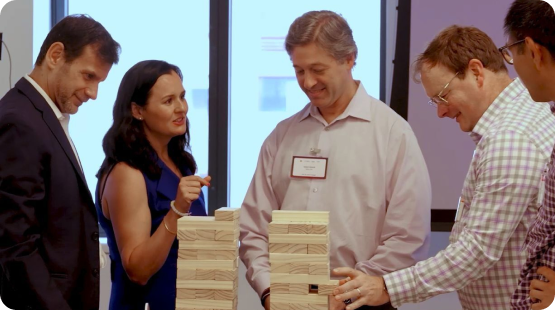
Earlier this month, we ran our second Work Design Collaborative meetup, hosted at AWS in New York City, alongside The Learning Forum.
We gathered 47 senior leaders - heads of transformation, AI, human resources, and workforce strategy to work out how we are going to reinvent work for the AI era.
Here’s what I jotted down.. and what it says about where we’re heading.
Task-level visibility is still the exception. One leader said: “I don’t know what my team does. I know what they’re called.”
Without that level of clarity, we’re designing with a blindfold on.
Several leaders admitted their structures haven’t been updated in years — or longer.
“We’re updating the plumbing while the building’s flooding.” That really stuck with me. Frameworks built for hierarchy aren’t built for responsiveness.
Finance is moving. TA isn’t. This gap came up over and over. Leaders flagged it as a coordination failure — and a reputational risk.
“It looks like we have no plan.”
In a hands-on workshop, teams deconstructed real roles that live in their organizations. Red dots went on duplicate tasks. Many teams lit up immediately.
One exec said to me: “We’re duplicating effort and calling it collaboration.”
Everyone’s chasing time saved. No one’s measuring how it’s used.
Ben Schreiner, Head of AI and Modern Data Strategy Business Development at AWS, asked the room: “What are you tracking after automation?”
Silence.
This is a missed opportunity — and a strategic risk.
This wasn’t just a systems conversation. People flagged burnout. Emotional drag. Confusion.
“We’re redesigning without recalibrating trust.” That’s why culture isn’t keeping up. Not because people won’t change — but because we haven’t told them what’s really changing.
We heard it straight: “We’re building smart systems into brittle cultures.”
If you lead with tech, culture snaps. If you wait for culture, tech drags. There’s no playbook — just tradeoffs.
Job architecture is slow. It's rigid. It hides the real work.
You can’t build an AI-ready workforce on a broken system.
Start with what’s true:
The leaders in that room didn’t posture. They got clear. If you are reading this and you’re responsible for redesigning how your org runs, this is your sign to not wait. Build on real work. Test fast. Fix what’s slowing you down.
Siobhan 💜
See the Work Operating System in action and start re-engineering work for AI.
The latest insights on re-engineering work for AI