The Work Operating System for AI-powered work
A live log of every job, task, subtask, and workflow inside the enterprise.
Find wasted potential, unlock hours, and know exactly where agents deliver impact.
Connect all agents, recommend the right one for each task, and capture the context to build new agents.
Measure ROI based on actual work changes, not agent promises.
Replaces static job architecture with a dynamic model for humans and agents that updates as roles shift.
Shows how AI will change jobs and what skills your workforce needs.
Redesigns how work gets done and tracks every change automatically.
See the Work Operating System in action and start re-engineering work for AI.
The latest insights on re-engineering work for AI
Still think skills are the key to future-proofing your workforce? Think again.
In the rush to reskill and automate, most companies are missing a critical piece: the actual work.
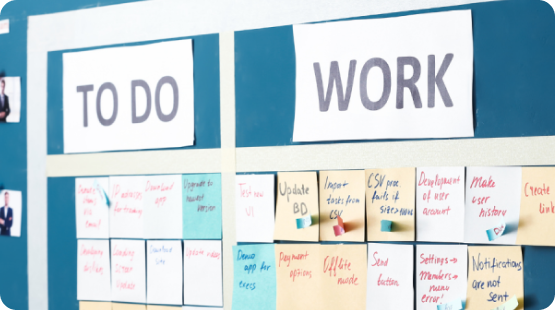
Because skills alone don’t drive performance… Tasks do.
Here’s why task-level thinking is the missing link in workforce strategy—and how you can stay ahead as AI reshapes what really gets done.
Take a skill like “Python” or “negotiation.” On its own, it doesn’t tell you what someone can actually do.
Skills only become useful when tied to tasks—like writing a script to automate reporting or negotiating supplier terms. Without that context, a skill is just a label.
People don’t come to work and say, “I’m going to use my problem-solving skill today.”
They complete tasks that require problem-solving. Work doesn’t happen at the job title or skills level—it happens through actions, tasks, and subtasks.
That’s why skills frameworks alone can’t capture how work really gets done.
AI isn’t replacing entire roles or skill sets—it’s automating individual tasks.
For example: A marketing analyst might still have “data analysis” as a skill. But if AI takes over report generation, that part of the job is gone. What still matters is interpreting insights and making decisions.
If you don’t understand work at the task level, you can’t see where AI fits—or how to prepare your people for what’s next.
The half-life of a skill is shrinking fast. By the time you’ve updated your skills taxonomy, the actual work may have already changed.
Tasks evolve in real time. Roles shift. New responsibilities emerge. Companies need a live Work Ontology™—one that keeps up with how work is actually changing on the ground.
If your learning strategy only focuses on skills, you risk training people for work that no longer exists.
Effective upskilling starts with understanding tasks. What’s emerging? What’s disappearing? What really needs to be done?
Task-based upskilling ensures people are building capabilities that matter—today and tomorrow.
Skills still matter—but they’re not the full picture. They never were! AI has just made that abundantly clear. To truly reinvent workforce planning, reskilling, and automation, organizations need to start with the work itself.
That’s why Reejig built the Work Ontology™—a dynamic framework that connects tasks to skills, people to outcomes, and AI to real opportunities for transformation.
Because the future of work doesn’t start with skills. It starts with the work.
Siobhan 💜
Sign up for our full email newsletter to get weekly resources, exclusive extras, and more delivered straight to your inbox. 📩
See the Work Operating System in action and start re-engineering work for AI.
The latest insights on re-engineering work for AI