 Platform Overview
The Work OS for AI-powered Work
Platform Overview
The Work OS for AI-powered Work
 Work Architecture
Live entity model of your enterprise
Work Architecture
Live entity model of your enterprise
 Map
Build the Work Context Graph
Map
Build the Work Context Graph
 Analyze
Your GPS for reinvention
Analyze
Your GPS for reinvention
 Build
Workflows + agents
Build
Workflows + agents
 Run
Deliver the new way of working
Run
Deliver the new way of working
 Measure
Track real, board ready ROI
Measure
Track real, board ready ROI
 Log
Source of truth · audit trail
Log
Source of truth · audit trail
 Update
Keep architecture current
Update
Keep architecture current
Reejig x Workday
Unlock more value from Workday with AI Work Design.



Author
Siobhan Savage

Read time
4 mins

Published
Nov 20, 2025
Blog Post Body
AI Work Design Blueprint
The responsibilities every CHRO must own to lead AI Work Design and build internal capability.
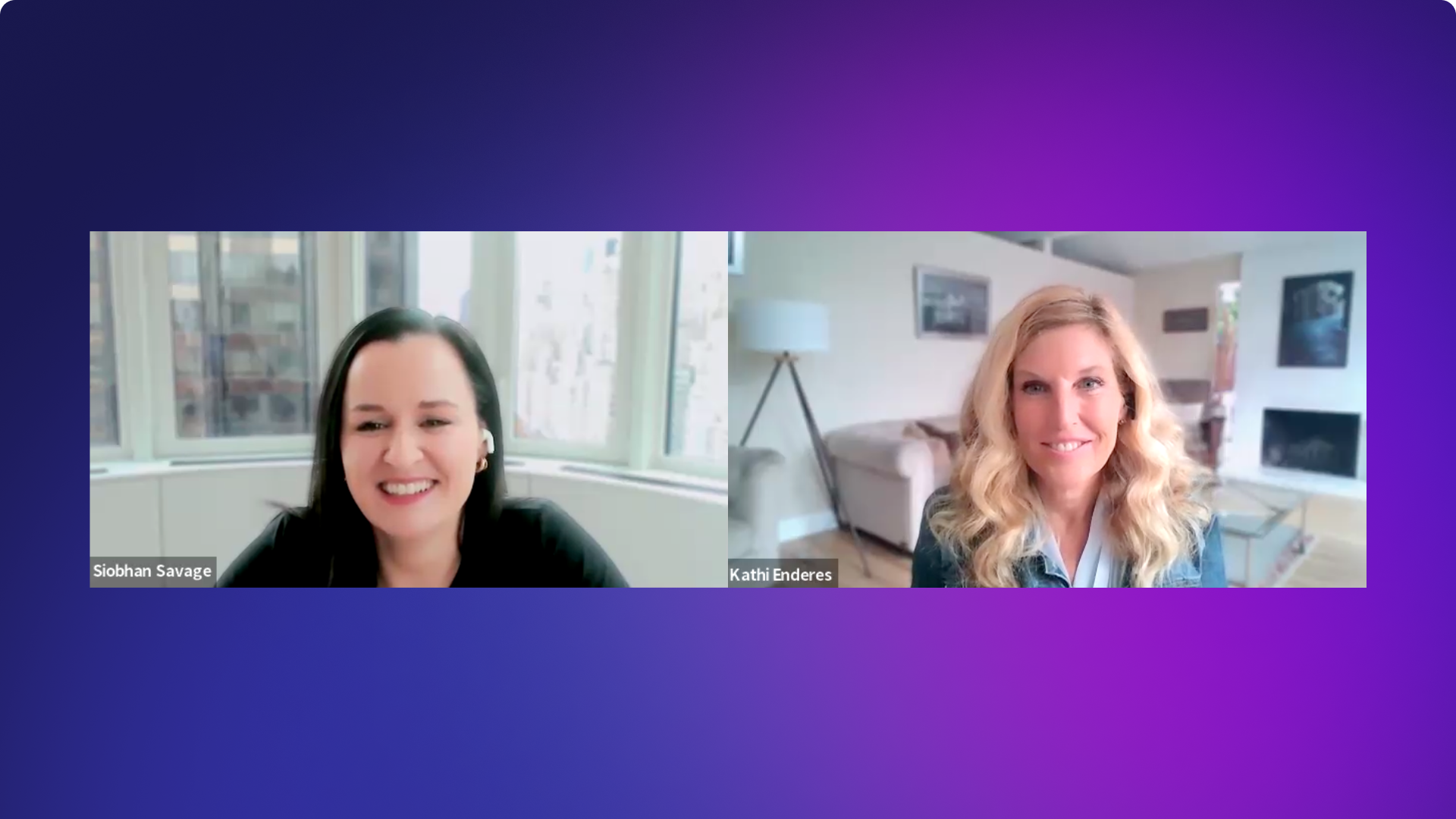
I recently sat down with Dr. Kathi Enderes, SVP of Research at The Josh Bersin Company, to talk through what is really happening as AI reshapes work.
We unpacked new research on Dynamic Work Design. This framework helps organizations rethink how work gets done as AI capabilities expand. The biggest gap facing organizations right now is understanding how work actually operates. This spans both business and technology layers. It is not just an HR concern. CIOs, IT architects, and tech leaders all play a critical role. They must map and re-engineer the systems that shape how work gets done.
Every enterprise is deploying AI. Almost none can see the work they're deploying it into.
The productivity mandate has changed the conversation
Three years ago, the focus was on career growth and retention. Those ideas still matter. They have been reframed. Today, the questions I hear most are:
- Where is work happening?
- What tasks are being performed?
- How do we scale without adding headcount?
- Where does AI fit in?
For CIOs especially, the pressure is on. They must support enterprise productivity. Not just through automation. By collaborating with HR to reshape workflows and eliminate structural inefficiencies.
How we talk about skills and tasks needs to evolve
One core idea in this research: the distinction between people and the work they do. People bring skills. Jobs are made up of tasks. When AI enters the picture, it changes the composition of work itself. Tasks are removed. New ones are introduced. Entire workflows are restructured.
To manage that shift, we need a connected view of work. Down to the task and sub-task level. That is where Work Intelligence comes in. It is also why we built Reejig's Work Context, formed by 25 industry-specific Work Ontologies. It maps how work really happens. It links that to the skills needed to perform it.
For technology leaders, this shift opens new opportunities. They become work architects. They build AI-powered systems that reflect how tasks evolve, how capacity can be redirected, and how agents augment human work.
Dynamic Work Design offers a clear framework
Kathi shared four stages of AI transformation. I see them reflected in our work with customers:
- AI assistants: supporting individual productivity
- AI agents: automating steps in workflows
- Multifunctional agents: integrated systems that reshape jobs
- Autonomous agents: AI-managed processes with human oversight
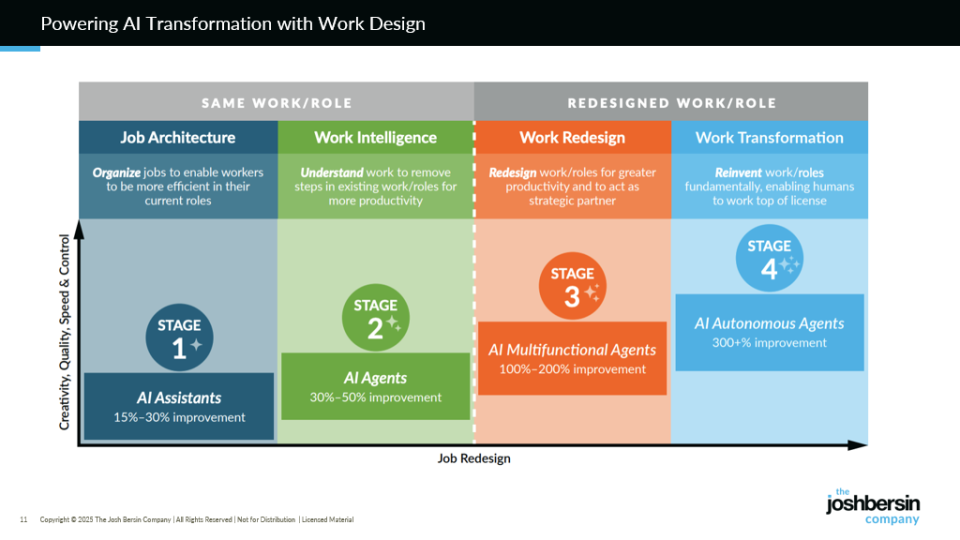
Most organizations are still in the early stages. The leaders are moving further and faster.
CIOs and systems leaders often drive movement across these stages. They translate strategic intent into scalable infrastructure.
Work redesign is a cross-functional priority
This is no longer a niche HR initiative. It is a core business strategy. It requires cross-functional ownership. HR leaders bring visibility into people and capabilities. CIOs and IT architects are essential partners. They operationalize change. They build the intelligent systems, data flows, and governance frameworks that make redesign scalable.
Organizations need real visibility into the work being done. Where change is happening. What skills are required to support it.
What the journey looks like in practice
In our session, I shared Reejig's approach to work redesign. This model is designed for joint leadership across HR, CIOs, and business owners:
- Make work visible
- Identify waste and opportunity
- Assign the right agents to the right tasks
- Equip your people for new ways of working
- Prove the impact
- Re-engineer workflows
- Pivot and reskill in real time
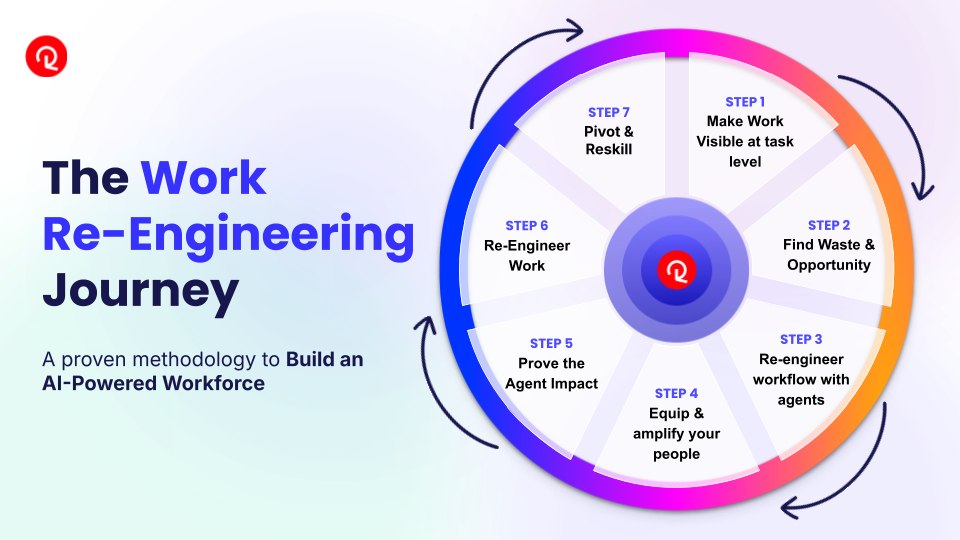
Each step requires both human-centered insight and technical architecture. It is a team effort between people leaders and technology builders.
This maps to the Seven-stage loop inside Reejig's Work Operating System: Map. Analyze. Build. Run. Measure. Log. Update. That's Reejig.
This is not a one-off initiative. It is a capability that should be continuously developed. It must be embedded across HR, IT, and business leadership.
Final thoughts
Many HR teams are still unsure how to engage with AI strategy. My advice: do not wait. The opportunity to lead is here.
AI is evolving rapidly. Workforce strategy must evolve with it. If you are leading transformation in your organization, start by getting closer to the work. Map it. Understand it. Make decisions based on what is actually happening.
We are ready to help.
Siobhan
Speaker


Siobhan Savage
CEO & Co-Founder of Reejig

AI Work Design Blueprint
The responsibilities every CHRO must own to lead AI Work Design and build internal capability.