 Platform Overview
The Work OS for AI-powered Work
Platform Overview
The Work OS for AI-powered Work
 Work Architecture
Live entity model of your enterprise
Work Architecture
Live entity model of your enterprise
 Map
Build the Work Context Graph
Map
Build the Work Context Graph
 Analyze
Your GPS for reinvention
Analyze
Your GPS for reinvention
 Build
Workflows + agents
Build
Workflows + agents
 Run
Deliver the new way of working
Run
Deliver the new way of working
 Measure
Track real, board ready ROI
Measure
Track real, board ready ROI
 Log
Source of truth · audit trail
Log
Source of truth · audit trail
 Update
Keep architecture current
Update
Keep architecture current
Reejig x Workday
Unlock more value from Workday with AI Work Design.



Author
Siobhan Savage

Read time
4 mins

Published
Jun 18, 2025
Blog Post Body
AI Work Design Blueprint
The responsibilities every CHRO must own to lead AI Work Design and build internal capability.
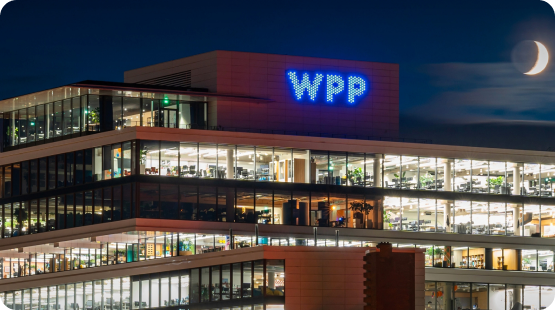
WPP didn't add AI to the edges.
They reengineered how work gets done across a 110,000-person workforce.
What started with 55,000 fragmented job titles became a unified, task-level blueprint for the AI-powered enterprise.
At Reejig, we partnered with them to deliver the infrastructure for that shift. But what matters most are the strategic moves behind the scenes.
Here are 7 real lessons every executive team should take seriously. Direct from the ground floor of WPP's transformation.
1. Frame transformation around capacity, not cuts
WPP's leadership didn't lead with fear. They led with potential. They presented AI not as a reduction strategy but as a way to create 20 to 25% more capacity in roles across the business.
"It's time saved that can be applied to upskilling for more productivity. The goal is more purpose-driven work and better client outcomes."
— Josh Newman, Global Head of People Strategy & Experience, WPP
2. Replace static job architecture with real work infrastructure
WPP's org design was holding them back. 55,000 job titles across 110,000 people. No common structure. No clarity on work.
They built a new infrastructure. It connected tasks, subtasks, skills, and AI agents. It produced real-time workforce decisions.
From Job Architecture to Work Architecture.
3. Fuse internal and external data to power intelligence
WPP knew internal org charts weren't enough. They layered Reejig's Work Intelligence on task-level automation potential. They combined it with their internal LLM and in-house AI. The result: validated, task-specific redesigns.
"We fed the company's own AI into the model. That made the outputs immediately useful and trusted."
— Josh Newman, Global Head of People Strategy & Experience, WPP
Lesson: Insight isn't intelligence unless it's grounded in execution. Merge what you know with what's possible. Make it usable in the flow of business.
4. Make it enterprise-wide, or it doesn't scale
WPP didn't isolate AI to one team. They evaluated 600 roles, 750 tasks, and 18,000 skills. That covered 84,000 employees. Redesign wasn't about one function. It was a systemic shift.
"We cannot begin to answer that unless we understand the implications for the entire workforce."
— Josh Newman, Global Head of People Strategy & Experience, WPP
Every enterprise is deploying AI. Almost none can see the work they're deploying it into.
5. Let transformation be pulled by the business
WPP didn't roll this out top-down. They started with teams that had a reason to act. Media planners, creative, and PR leaders who already saw the opportunity. That pull created momentum.
"It's about finding people who have the right perspective."
— Josh Newman, Global Head of People Strategy & Experience, WPP
6. Make the insights actionable for leaders
WPP created task-level playbooks matched to actual AI already in use. Business leaders didn't just get recommendations. They got execution plans.
"The ability to create a playbook for us that is so tactical and explicit. It will be hard to look away from."
— Josh Newman, Global Head of People Strategy & Experience, WPP
Lesson: If your AI strategy requires interpretation, it's not decision-ready. Leaders should act without asking twice.
7. Operationalize it with C-level governance
AI transformation at WPP wasn't left to tech teams. They brought in CHROs, COOs, CFOs, and other C-suite leaders to guide the redesign of work at scale.
Final word
Most companies say they want to be AI-ready. Fewer are willing to do the foundational work required to get there.
WPP didn't "automate around the edges." They rethought what work is. They redesigned from the inside out. They used intelligence, real, structured, task-level intelligence, to make every role, every decision, and every person count.
That's the benchmark now. Every company has the power to meet it. If they start with the work.

Siobhan 💜


Siobhan Savage
CEO & Co-Founder of Reejig

AI Work Design Blueprint
The responsibilities every CHRO must own to lead AI Work Design and build internal capability.