


 Platform Overview
The Work OS for AI-powered Work
Platform Overview
The Work OS for AI-powered Work
 Work Architecture
Live entity model of your enterprise
Work Architecture
Live entity model of your enterprise
 Map
Build the Work Context Graph
Map
Build the Work Context Graph
 Analyze
Your GPS for reinvention
Analyze
Your GPS for reinvention
 Build
Builder Studio · Workflows + agents
Build
Builder Studio · Workflows + agents
 Run
Deliver the new way of working
Run
Deliver the new way of working
 Measure
Track real, board ready ROI
Measure
Track real, board ready ROI
 Log
Source of truth · audit trail
Log
Source of truth · audit trail
 Update
Keep architecture current
Update
Keep architecture current

Author
Siobhan Savage

Read time
3 mins

Published
Sep 26, 2025
Blog Post Body
AI Work Design Blueprint
The responsibilities every CHRO must own to lead AI Work Design and build internal capability.
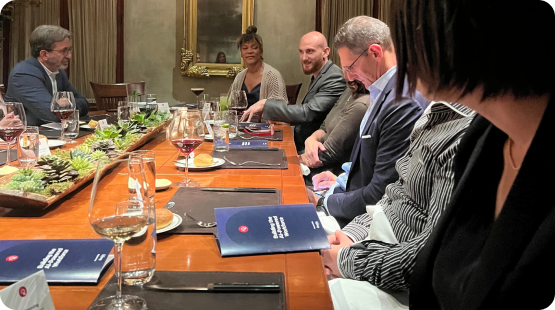
We hosted an intimate dinner in NYC with some of the city's top executives. I noticed interesting patterns. The conversation sounded strikingly similar to the webinar we ran a week earlier. That session featured JoAnn Stonier, Fellow of Data and AI at Mastercard, and Michael Fraccaro, Fellow and former CPO of Mastercard.
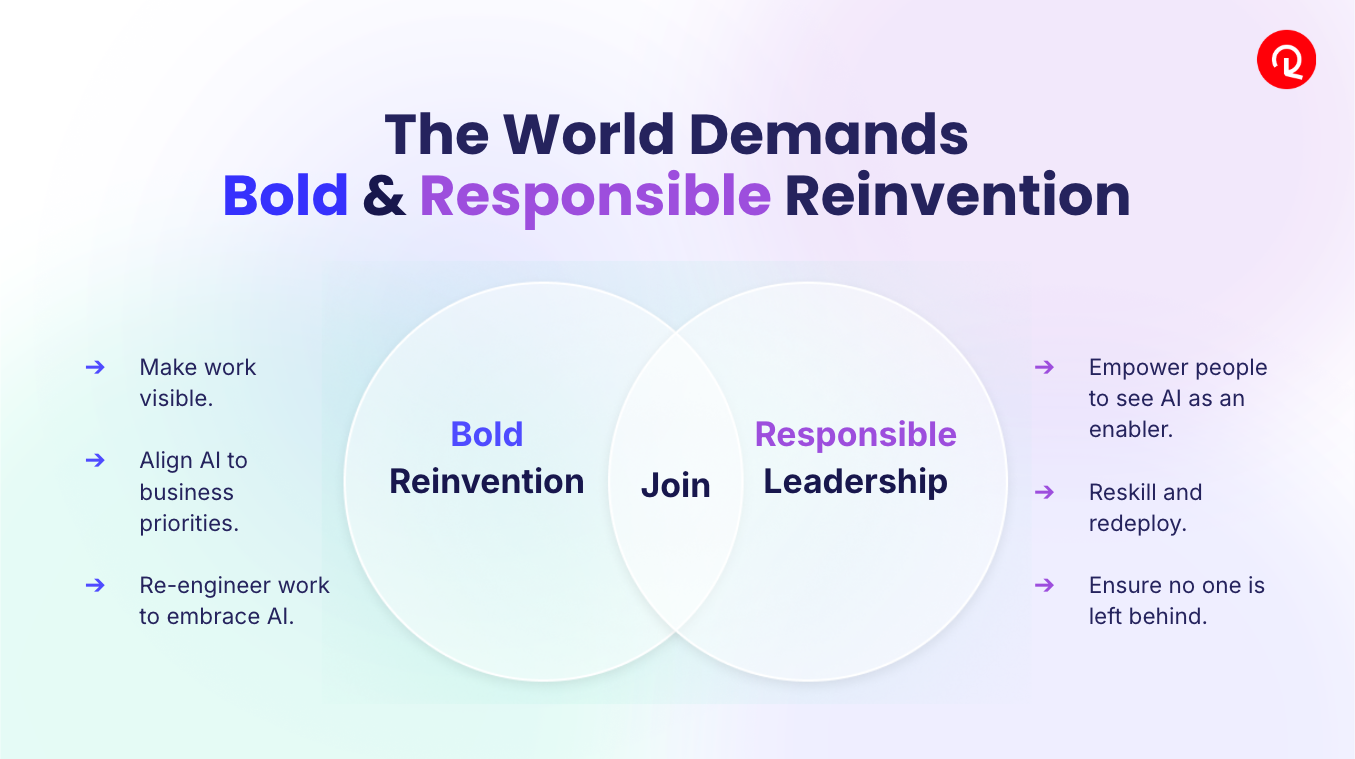
The same big themes kept coming up. These are mandates. They describe where CIO and CHRO priorities must move in lockstep. That is how you build an AI-powered workforce.
Every enterprise is deploying AI. Almost none can see the work they're deploying it into.
The team turned these mandates into five board-ready strategies. For each, you will see:
- What the CIO must do
- What the CHRO must do
- The joint mandate to deliver impact
Mandate 1: Use one shared operating system for AI transformation
CIO must: Map work and ROI before deploying AI. Avoid flying blind.
CHRO must: Lead change adoption. Ensure technology connects meaningfully to talent.
The Work Operating System is that shared operating system. It sits across HR, IT, and the business. It makes work visible, redesigns how it flows, connects agents, and proves ROI.
Mandate 2: Map work at the task level
CIO must: Use task-level visibility to decide where to build, buy, or deploy agents.
CHRO must: Rebuild job architectures with real task data. Plan skills and pivots.
Work Intelligence maps every task and sub-task across roles. From Job Architecture to Work Architecture.
Mandate 3: Show ROI early and build confidence
CIO must: Govern AI use at the enterprise level. Prevent chaos and fragmentation.
CHRO must: Build employee trust with clear communication, upskilling, and adoption programs.
If I automate chaos, I just scale the chaos. ROI must be measured through actual changes to work. Not consumption dashboards.
Mandate 4: Reinvent in loops. Test, learn, scale.
CIO must: Run proofs of value. Measure impact. Scale what works.
CHRO must: Pilot org design, reskilling, and communications. Test and refine in motion.
This is the Seven-stage loop in practice. One loop. Seven stages. Always on.
Mandate 5: Design a human and AI workforce and put it into practice
CIO must: Build data models that show work shifts, agent fit, and ROI.
CHRO must: Translate models into reskilling plans, career pivots, and skills investments.
The Work Operating System orchestrates the Agent + Human Operating Model. Builder Studio is where workflows are redesigned. Builder Studio is the Build stage.
Get the board-ready deck
To receive the full deck with all five mandates expanded, book a demo.
Siobhan 💜


Siobhan Savage
CEO & Co-Founder of Reejig

AI Work Design Blueprint
The responsibilities every CHRO must own to lead AI Work Design and build internal capability.