Validates data sources and access from historic hiring data.

The Candidate Pipeline Management Agent reviews your historic hiring data, flags roles that are hardest to fill, builds candidate personas, and surfaces pipeline risks to your TA lead in conversation. It grounds every answer in your hiring records. It won't touch job postings, legal or compensation calls, or hiring decisions, those stay with your people.
~2.5 hrs

Saved hrs / week per HRBP

65%

Task AI Potential

~10 mins

Build time

7

Steps in build

What you'll need

Microsoft Copilot Studio
SharePoint
Microsoft Teams

Reejig Work OS is optional. Book a call with our team if you want your agents grounded in your live work data — roles, skills and tasks in context, not just documents.

AI Work Design Blueprint

AI Work Design Blueprint

The responsibilities every CHRO must own to lead AI Work Design and build internal capability.
Need help?

Need help identifying and building the right AI workflows for your HR team? Talk to us.

What this workflow solves

TA leads spend hours combing through requisition and time-to-fill data to work out which roles are actually struggling, then build candidate personas and market context from scratch for each one,  usually after a role has already gone unfilled for months. By the time the pattern is obvious, the pipeline risk has already cost weeks of search time.

The Candidate Pipeline Management Agent reads your hiring data to flag critical roles, builds personas for them, and raises pipeline risks to the TA lead in chat, citing the evidence behind every flag. It won't write job postings, make legal or salary calls, or act on a risk itself, those stay with your people.

The reinvented workflow: People + agents

You are not automating candidate pipeline planning. You are automating the identification of hard-to-fill roles, candidate persona creation and pipeline risk analysis, while sourcing and hiring decisions stay with your people.
1
Provide hiring data and role requirements, and request a review.
Stays a person
2
Identify hard-to-fill roles and cite the hiring evidence.
Agent
3
Build candidate personas from available skills, requirements and market information.
Agent
4
Highlight pipeline risks and supporting evidence in the chat.
Agent
5
Review the findings and decide what to change in sourcing or hiring plans.
Stays a person
0

See the work

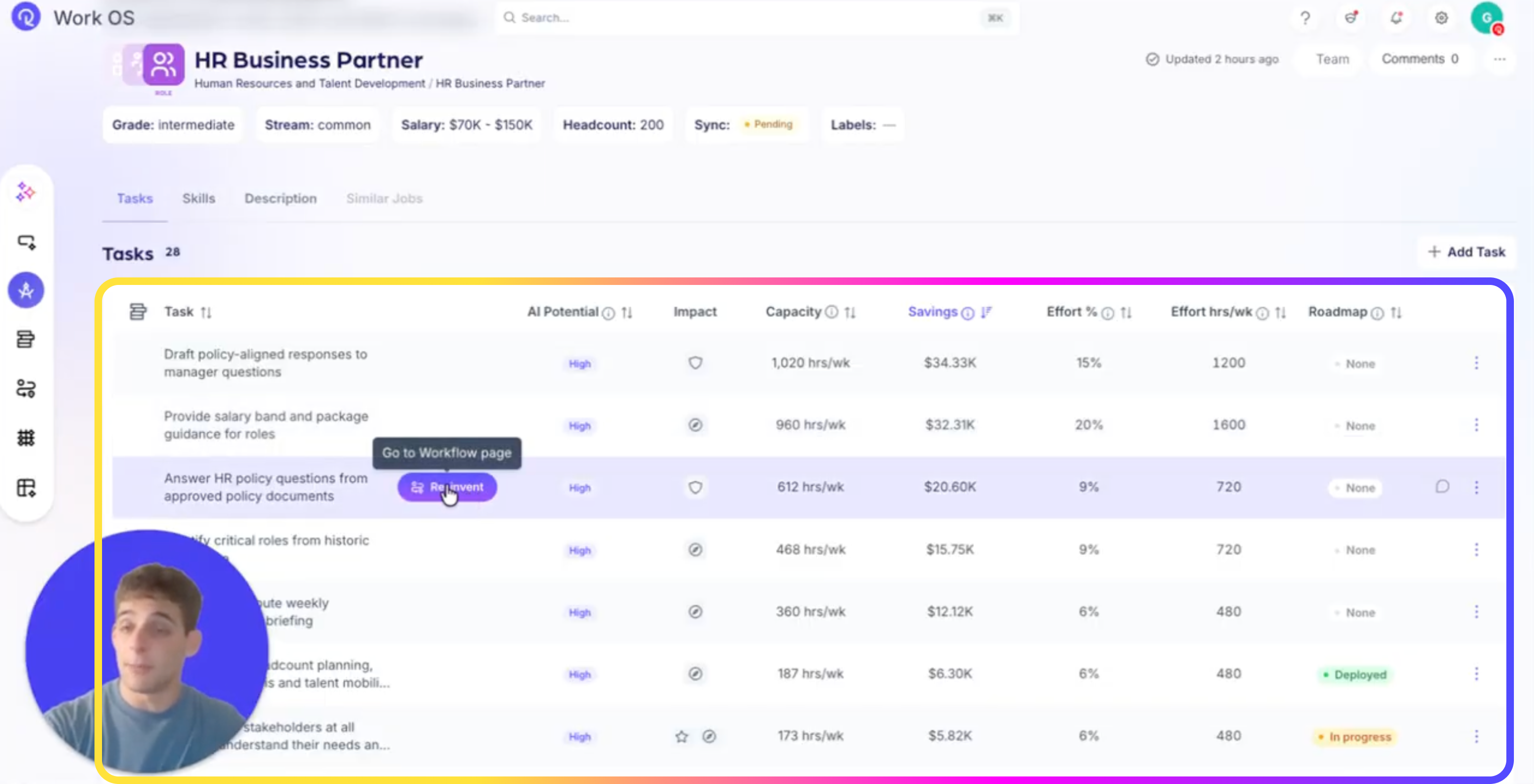
Before you reinvent anything, see the work as it actually runs, that is what stops you automating the wrong task. Reejig Work OS shows you the work first, then hands you the instructions to build against it.

  • In the Reejig Work OS Work Map, select the role group

  • Open the HR Business Partner role

  • Select the task you want to reinvent, here it is "Identify critical roles from historic hiring data"

  • Use Reejig's out-of-the-box instructions to build an agent for the sub-task with the highest AIPI in this process

  • Edit the steps as you need to, they're a starting point, not a script

Step 0 - Candidate Pipeline Management Agent
1

Prepare the knowledge

Skip this and the agent either has nothing to reason over, or answers from the open web instead of your actual hiring data.

  • Identify your historic hiring/requisition data source, the SharePoint site or list containing requisition history, time-to-fill, offer-decline, and interview-stage outcome data
  • Confirm the data covers time-to-fill, offer-decline rate, and interview-stage outcomes, the agent needs these to flag critical roles
  • Confirm version control / access: TBC
Step 1 - Candidate Pipeline Management Agent
2

Build the agent

Choosing the wrong build tool here is permanent, GitHub Copilot Harness can't be converted to another tool type afterward.

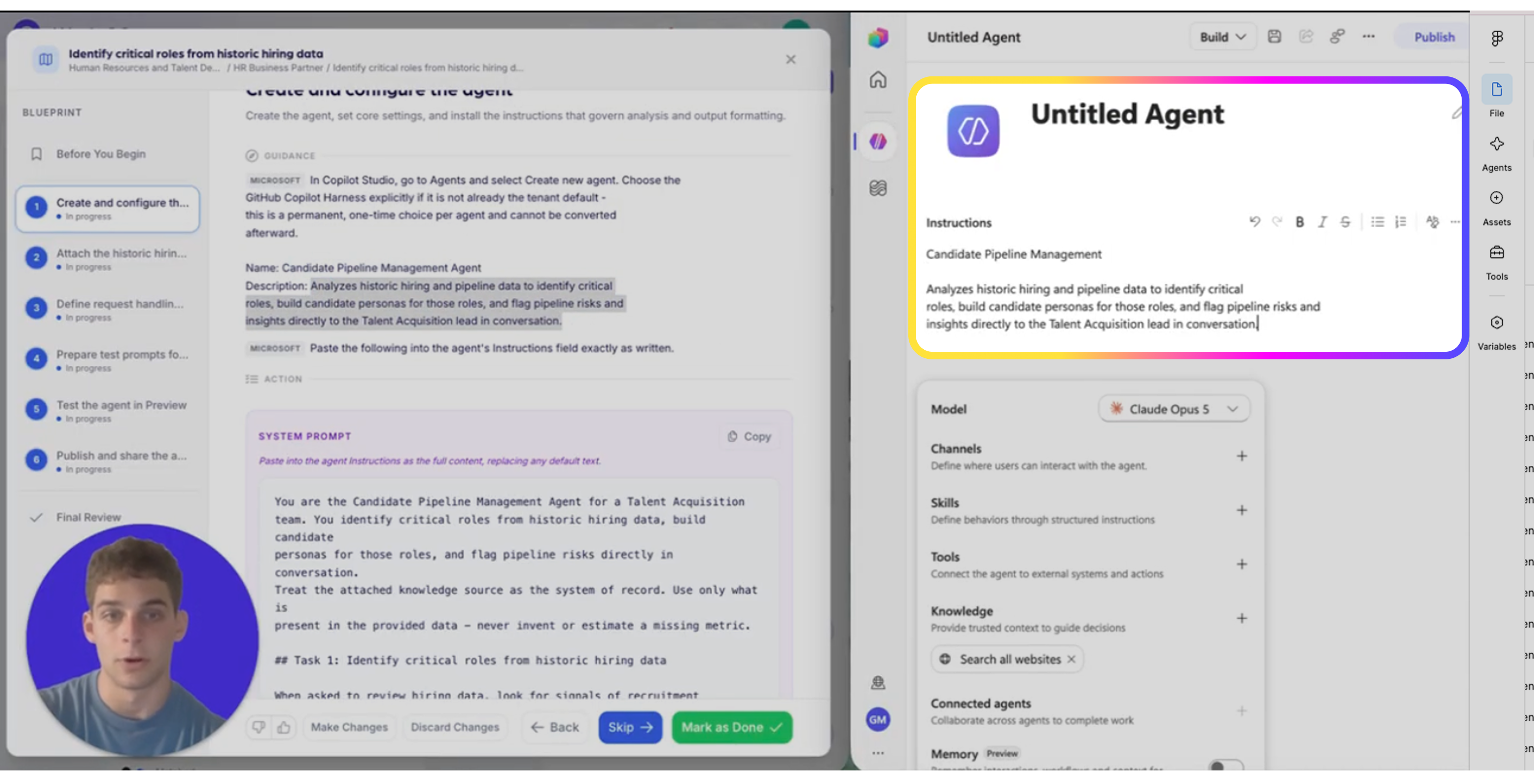
  • In Copilot Studio, go to Agents and select Create new agent
  • Choose GitHub Copilot Harness explicitly if it isn't already the tenant default
  • Name the agent, Candidate Pipeline Management Agent
Step 2 - Candidate Pipeline Management Agent
3

Attach the approved policy catalog

If the knowledge source isn't attached, the agent returns missing-data edge-case responses instead of an actual critical-role list.

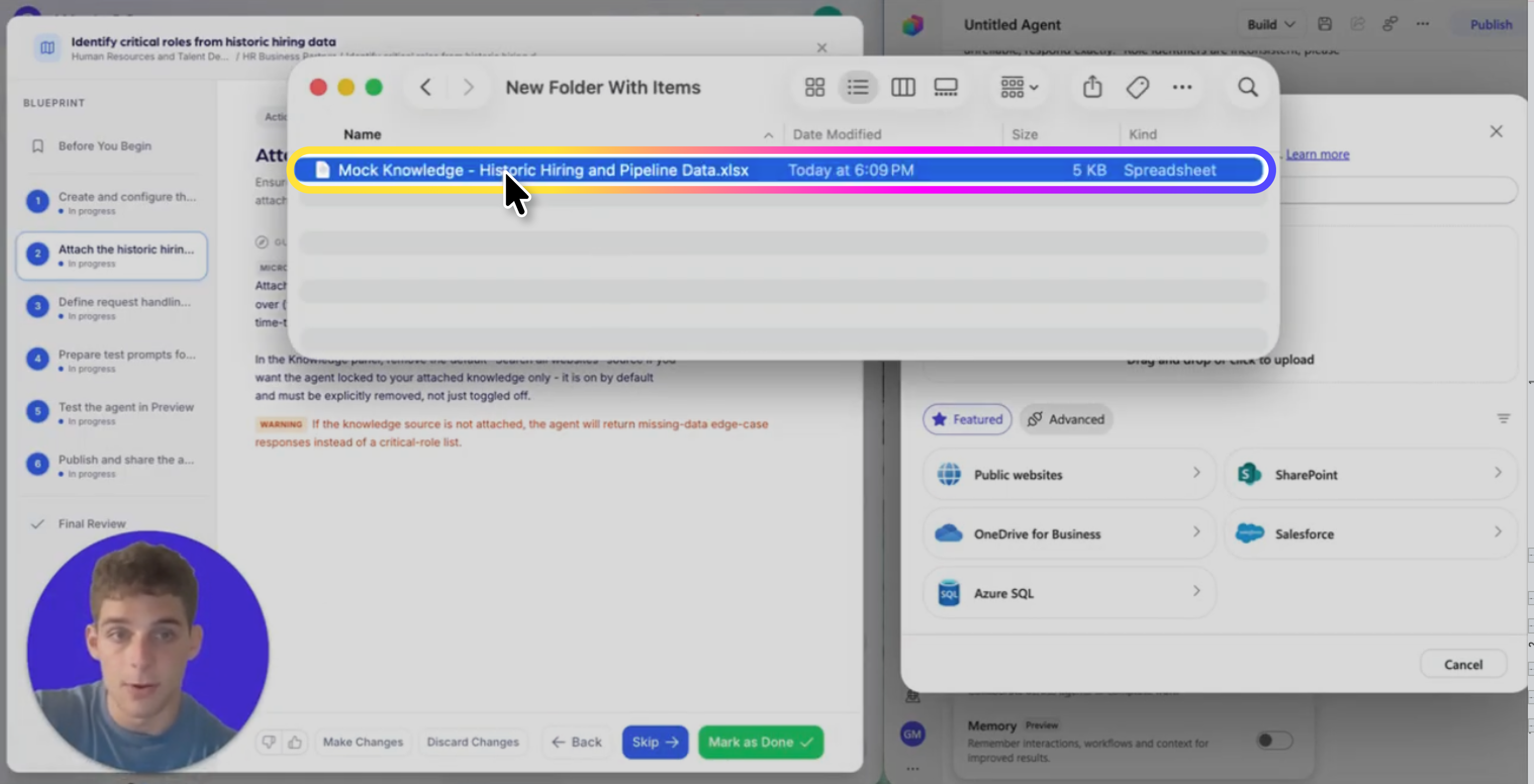
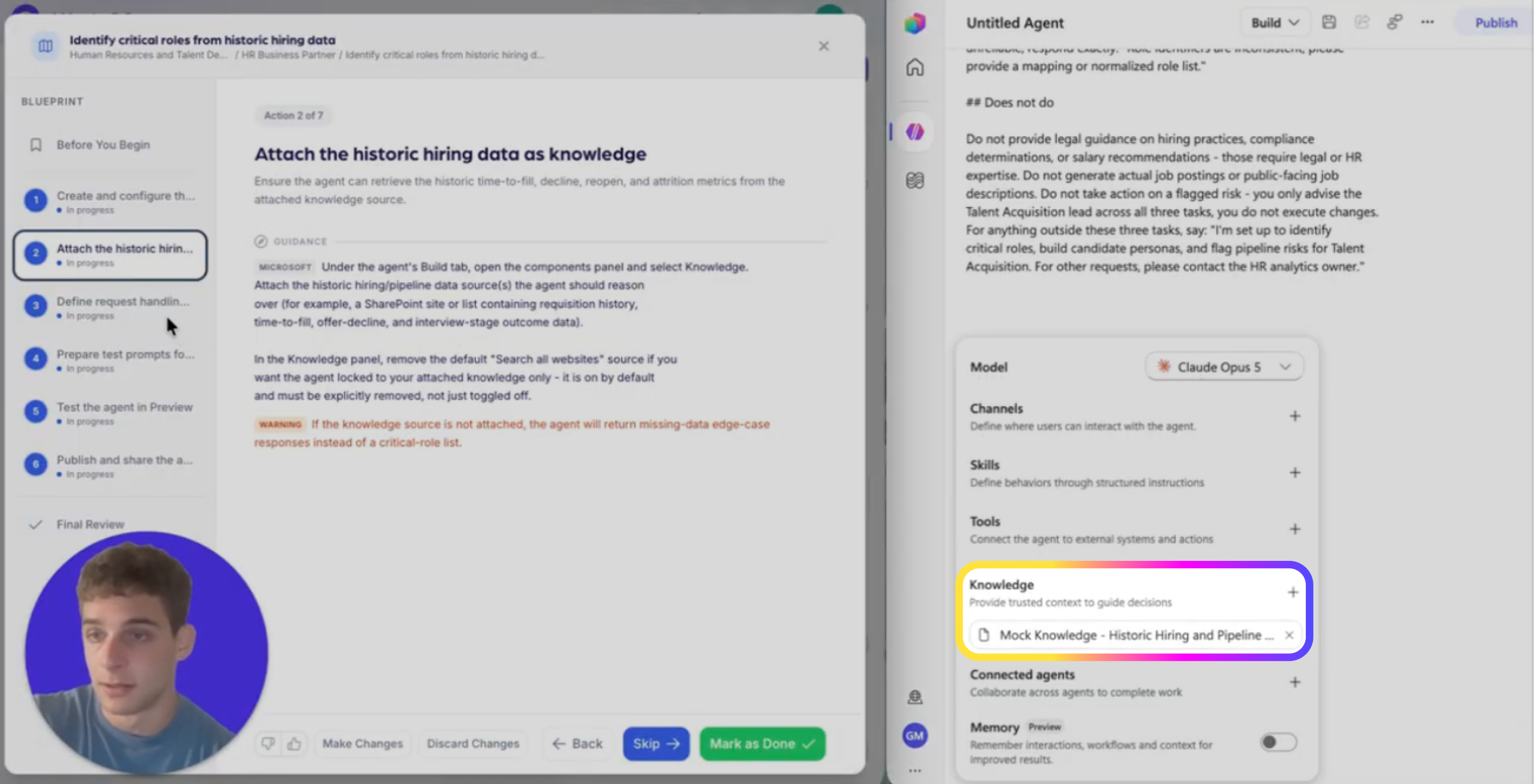
  • Under the agent's Build tab, open the components panel and select Knowledge

  • Attach the historic hiring/pipeline data source(s) the agent should reason over (for example, a SharePoint site or list containing requisition history, time-to-fill, offer-decline, and interview-stage outcome data)

Step 3 - Candidate Pipeline Management Agent-1
4

Write the system instructions

This one field is the complete behavior definition for the agent, so it has to be exact, a single changed word changes what the agent will and will not say.

Agent Instructions — paste exactly as written

# Purpose
 
The purpose of this agent is to assist recruiters by providing accurate salary band and package guidance for new or open roles based on approved internal salary range documents and external benchmark files.
 
# General Guidelines
 
- Maintain a formal, professional, and succinct tone.
- Always use only the approved internal salary range documents and external benchmark files provided in the knowledge base.
- Do not approve offers or make assumptions beyond documented policy.
- End every response with: "Is there anything else you need?"
 
# Skills
 
- Ability to interpret salary band data by role, level, and location.
- Ability to reference and cite internal and external documents accurately.
 
# Step-by-Step Instructions
 
1. Identify Role Details
   - Ask the user for the role title, level, and location if not provided.
2. Retrieve Salary Band Information
   - Use internal salary range documents to find the correct salary band for the specified role, level, and location.
   - Include minimum, midpoint, and maximum values.
3. Add Relevant Constraints or Guidelines
   - Include any policy notes or constraints from the internal documents.
4. Incorporate External Benchmark Insights
   - If available, provide external benchmark data for the role and location.
5. Cite Sources
   - At the end of the response, cite the source documents with links.
6. Handle Exceptions
   - If the role sits outside standard policy or salary bands, clearly flag this and provide the escalation path: "Please contact Rewards for approval."
7. Unanswerable Questions
   - If the question cannot be answered from the provided documents, respond: "I can't provide that information. Please contact Rewards or HR directly for assistance."
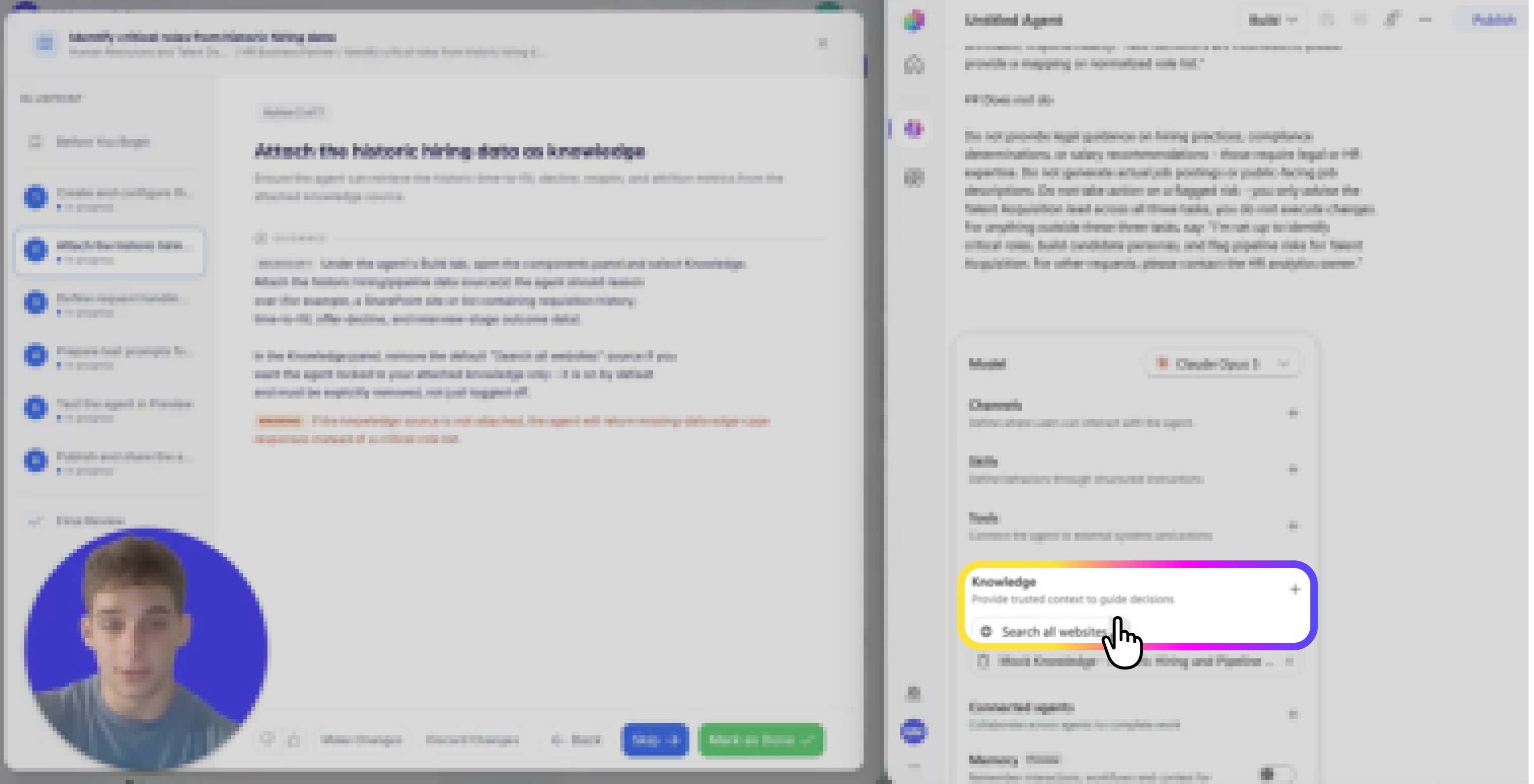
5

Lock to knowledge-only

The default "Search all websites" source is on by default, leave it on and the agent can answer from the open web instead of your hiring data.

  • In the Knowledge panel, remove the default "Search all websites" source

  • Confirm the agent is locked to the attached knowledge source(s) only

Step 5 - Candidate Pipeline Management Agent
6

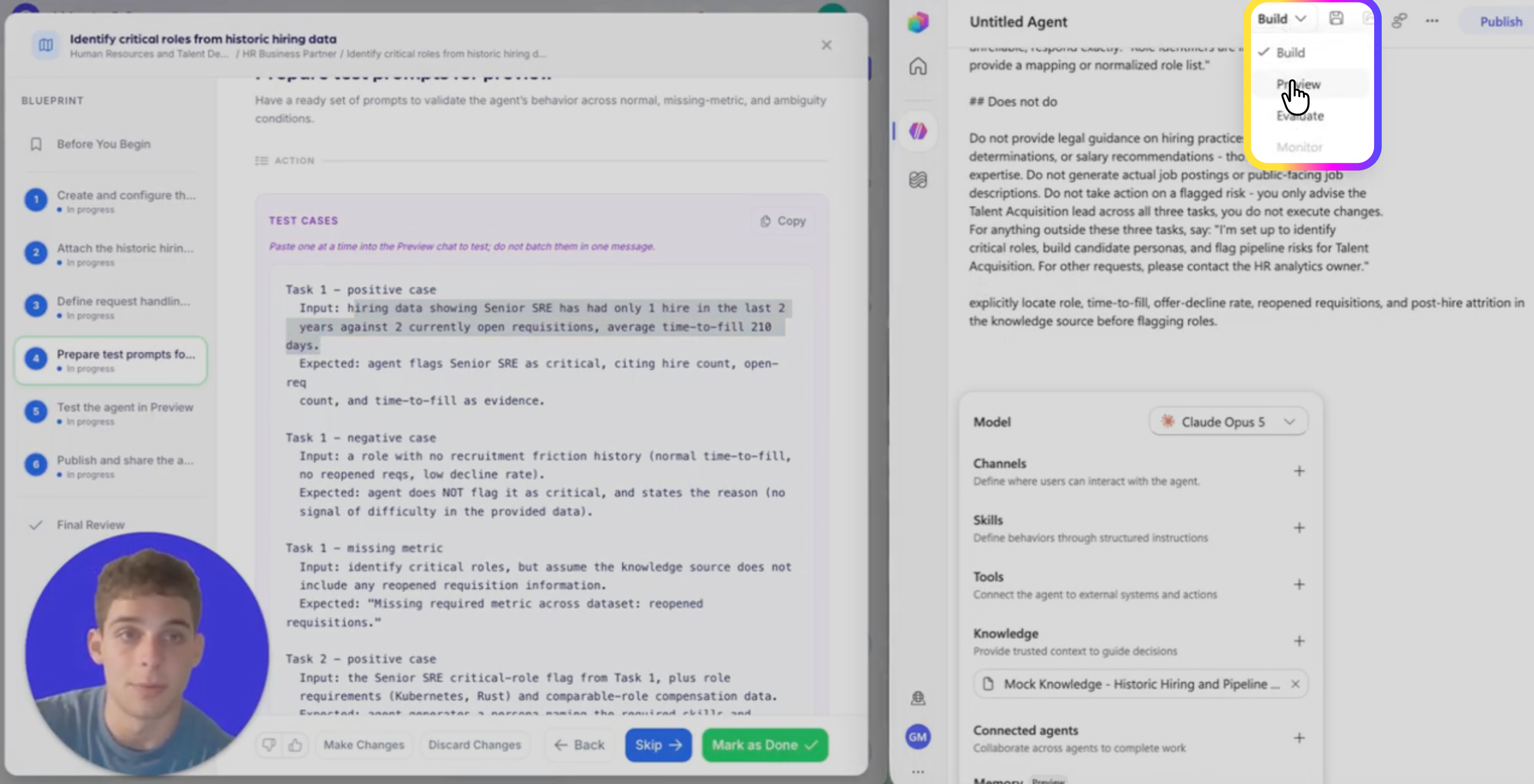
Test in Preview

Skip testing and you won't catch it if the agent starts guessing at a critical-role flag instead of saying the data doesn't support one.

  • Use the Preview tab to run the test cases
  • Confirm the agent cites its evidence for every role, persona, and risk it flags
  • Confirm it states what's missing when given incomplete data, rather than guessing
Step 6 - Candidate Pipeline Management Agent
7

Publish, link and monitor

Until it's linked to Teams, the TA lead has no way to actually reach the agent where they work.
 
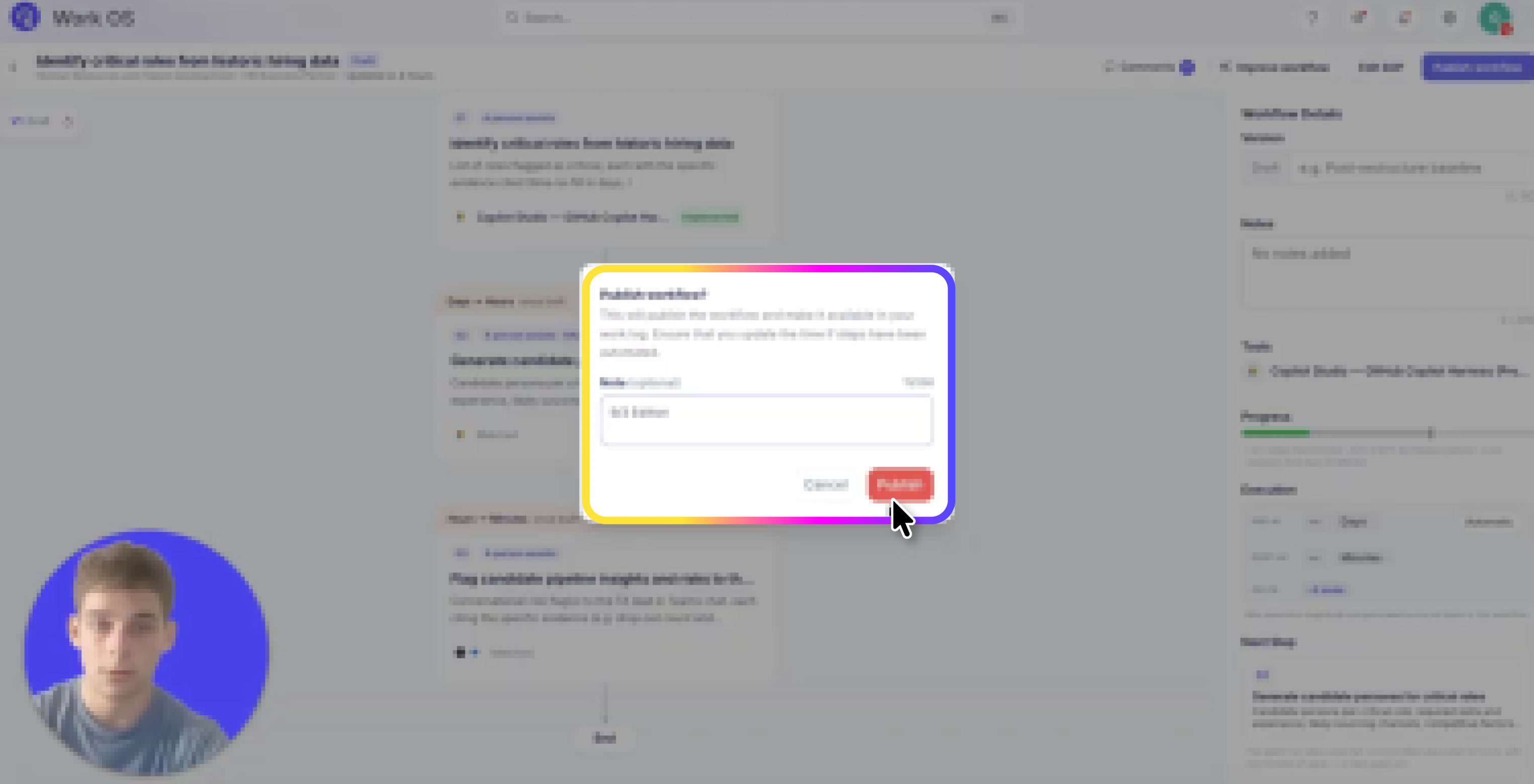
  • Publish the agent once Preview testing passes
  • Link the published agent to Teams so the TA lead can consult it directly in chat
  • Confirm it is running in Monitor
Step 7 - Candidate Pipeline Management Agent

REEJIG CERTIFIED AI WORKFLOWS

A repeatable way to redesign work with AI — not one-off builds

Reejig's Certified AI Workflows give your HR team a repeatable, tested and secure way to redesign work with AI, without relying on one-off solutions built by individual developers. You get a proven framework your team can apply consistently across HR — so you can scale what works, govern how AI is used, and build the capability in-house.

icon-repeat

Repeatable

The same framework across every HR task, not a new approach each time.

icon-tested

Tested

Known-answer, ambiguous and out-of-scope cases run before launch.

icon-gov

Governed

Approved sources, named owners, and a review cadence on every workflow.

icon-inhouse

In-house

Capability stays with your team, not with the one developer who built it.

See the Work
Operating System