PARTNERSHIPS
ViewReejig x Workday
Unlock more value from Workday with AI Work Design.
CUSTOMER STORIES
View
The platform top Fortune 100 companies use to redesign how people and agents work together. Watch it now.
An engineer by training, Santosh spent six to seven months early in his career on a production floor, building a machine from its individual parts. Later roles across process improvement, business transformation and HR reinforced the lesson: combine technical knowledge with the expertise of the people doing the work.
As Senior Vice President, Corporate Functions at DENSO, he brings a Six Sigma mindset to AI: define the problem, measure the work, understand its causes and test improvements. Technology is one possible intervention within that process.
His starting question puts the purpose plainly: “Of course, there’s efficiency to be gained, but towards what end?”
Santosh points to the manufacturing principle of genchi genbutsu: going to the place of work to observe what is happening. An experienced person can notice an abnormality that a performance measure might miss.
That ability matters in work supported by AI. Judgment and discernment are skills organizations need to develop deliberately, through practical experience and opportunities to test observations against reality.
Asked whether employees should see task-level information, Santosh emphasized bringing them into the problem-solving journey and explaining its purpose. With trust established, people can use the insight to make decisions and contribute ideas. “This is a trust curve.”
His concern extends to the next generation: how will people develop judgment without opportunities to practice, observe and solve problems?
DENSO broke work down to tasks and subtasks using Reejig’s Work Architecture, creating a common foundation before deciding how work should change.
Validating with leaders and the people doing the work created a foundation the business recognizes, rather than an HR view pushed into the organization.
Rather than automating tasks inside today’s processes, DENSO is looking at bottlenecks and handoffs across functions to rethink the work and unlock capacity.
Santosh is moving beyond a binary choice: where humans lead, where they rely on AI, where AI works under supervision and where they co-create.
“Human in the loop cannot be eliminated. In fact, it has to be strengthened in the age of AI.”
DENSO is using its Work Architecture to make skills and career development more real and to bring that intelligence into five-year workforce planning.
How Santosh worked with Reejig to build a Work Architecture the business trusts, validated at 90% against real work.
Working with Reejig, the work output aligned 90% with what people actually did.
How Medtronic's Abby Rich is building internal expertise to redesign work and help people succeed alongside Al.

How Lumen’s Sarah Bernstein is connecting workflow redesign with the learning people need to work differently.
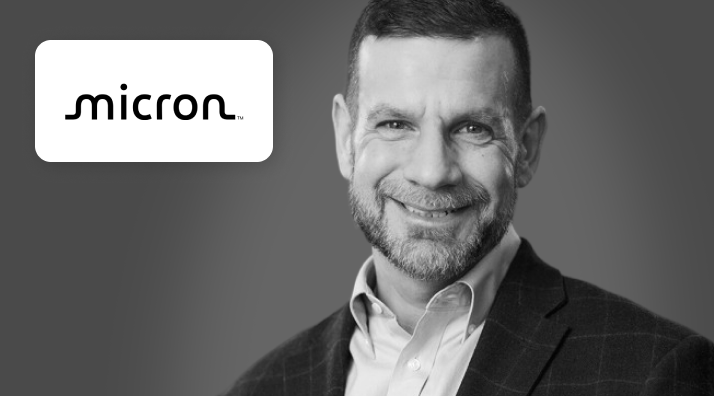
How Micron’s Dennis Di Lorenzo is connecting learning and workforce decisions to the work behind each role.