Reejig
3 mins
Dec 18, 2019
Learn how the world’s largest enterprises are rebuilding work for the AI era.
An interview with Chief Data Scientist and Reejig Co-Founder, Dr. Shujia Zhang.
With a passion for data science and solving complex problems, Dr. Shujia Zhang reflects on her career in STEM. She shares what she believes will be critical for the next generation of scientists and engineers.
Dr. Zhang is the Chief Data Scientist and Co-Founder of Reejig, the Work Operating System for AI-powered work. Reejig gives global enterprises, governments, and academia the visibility to navigate the AI era.
"I knew I wanted a career in STEM when I began investigating ways to automate calculations. That, coupled with my love of cutting-edge technology and continuous learning, fueled my career choice," says Dr. Zhang.
Her career includes leading large-scale data projects. She has designed and developed data science approaches for business growth. Her expertise spans data mining, machine learning models, native iOS apps, and UI/UX and back-end algorithms.
Dr. Zhang also spent more than four years in research at the University of Wollongong. She focused on computer vision, specifically motion and action recognition. She built machine learning recognition frameworks to address human action recognition. She also worked on recursive deep neural networks.
"It's important to embrace fairness and transparency when developing AI. We should work collaboratively to build AI that prohibits discrimination of any type."
Dr. Shujia Zhang, Chief Data Scientist and Co-Founder of Reejig
AI capability is compounding. Work visibility is not.
With a Ph.D. under her belt, Dr. Zhang suggests the future of STEM is exciting and different. She explains the impact that machine learning and AI have on how we work, live, and play.
She talks about the increasing significance of ethics and values in AI development. "It's important to embrace fairness and transparency when developing AI. We should work collaboratively to build AI that prohibits discrimination of any type."
Dr. Zhang also believes future STEM careers will require a broader skillset. Students would benefit from more partnerships with industry. Many leaders across the nation share this sentiment.
Consult Australia (CA) recently published a discussion paper. It indicated STEM education needs to evolve. It must meet the changing demands of future jobs and workplaces. CA reported a growing need for "hybrid STEM skills." This means delivering digital and technology capabilities with core engineering skills. Creative thinking and a blend of digital skillsets with core expertise underpin these skills.
Dr. Zhang is hopeful that the STEM workforce will have greater female participation in the future.
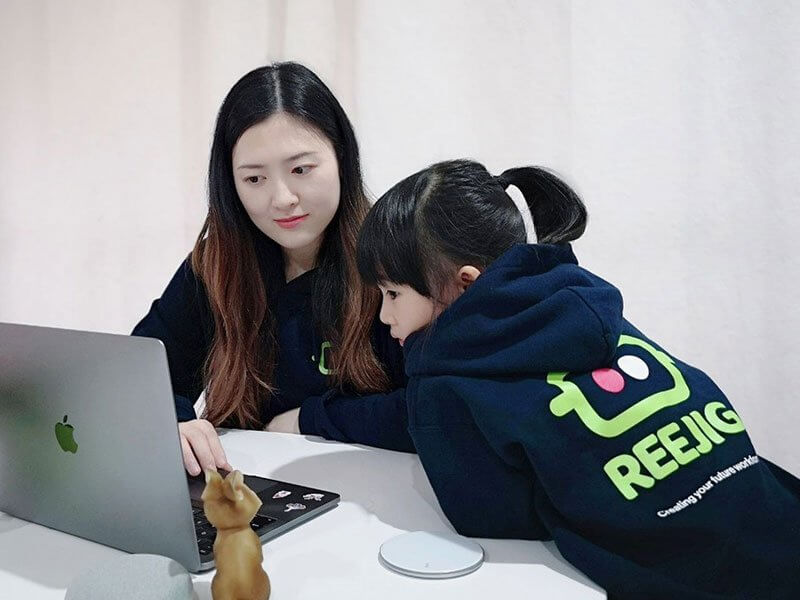
"Looking back, I recall the stark gender imbalance I experienced. I was the only female in the class when I completed my Bachelor's Degree. There have been improvements in gender diversity. Both in industry and academia. But there's more work to be done to attract and retain women in STEM. My five-year-old daughter, Chloe, has already shown interest in computers. I hope the STEM community is more balanced by the time she attends university."
Turning to Dr. Zhang's greatest achievements, she cites two professional milestones. Completing her Ph.D. And transitioning from academia to industry. She thoroughly enjoys working with customers to solve problems.
From a personal perspective, the achievement that has her beaming with pride is being a mother to Chloe. She says, "Juggling work and life commitments is difficult. But I'm lucky to have a supportive husband and family. Both give me a little downtime to bake, play board games, and click my way through a Rubik's cube."
Learn how the world’s largest enterprises are rebuilding work for the AI era.