 Platform Overview
The Work OS for AI-powered Work
Platform Overview
The Work OS for AI-powered Work
 Work Architecture
Live entity model of your enterprise
Work Architecture
Live entity model of your enterprise
 Map
Build the Work Context Graph
Map
Build the Work Context Graph
 Analyze
Your GPS for reinvention
Analyze
Your GPS for reinvention
 Build
Workflows + agents
Build
Workflows + agents
 Run
Deliver the new way of working
Run
Deliver the new way of working
 Measure
Track real, board ready ROI
Measure
Track real, board ready ROI
 Log
Source of truth · audit trail
Log
Source of truth · audit trail
 Update
Keep architecture current
Update
Keep architecture current
Reejig x Workday
Unlock more value from Workday with AI Work Design.



Author
Reejig

Read time
5 mins

Published
Feb 16, 2023
Blog Post Body
AI Work Design Blueprint
The responsibilities every CHRO must own to lead AI Work Design and build internal capability.
Work Intelligence will reshape how people leaders work. It will also create more equitable and impactful organizations by ensuring no one is hidden. The new world of work will be designed with inclusive, data-driven decision-making. Every people leader will have a workforce strategy. They report to shareholders on it and integrate it into organizational planning.
– Siobhan Savage, Founder and CEO at Reejig
It's time for Work Intelligence to get on the strategic business agenda
For many years, workforce teams have fought an uphill battle for investment in enterprise AI infrastructure. Despite people being an organization's most expensive and most important asset, investment in AI that Maps an entire workforce is dismal. Capabilities, experience, learning, and career pathways remain invisible. Finance, marketing, and sales are far ahead.
70% of company executives believe people analytics is a top priority. Yet workforce strategy only accounts for 17% of AI adoption use cases across all industries.
It took a global pandemic and recurring recessions to spotlight this underinvestment. Now the need is crystal clear.
AI capability is compounding. Work visibility is not.
For enterprises to optimize their workforces, they need real-time visibility over workforce capabilities. They need a task-level approach to finding, retaining, planning, and developing people. This has always been on the people agenda. Now it's front and center on the strategic business agenda.
The impact of siloed data and outdated workforce planning
1. Companies have no visibility over workforce capabilities. Businesses typically rely solely on what candidates and employees are willing to share via profiles. On average, less than 20% of employees ever fill them out. This makes it nearly impossible to take a capability-based approach.
2. Knowledge across workforce teams is siloed. When hiring and workforce strategy teams don't share data and KPIs, unnecessary and costly hires happen. Capabilities often already exist internally. A single unnecessary hire costs up to $136K USD in redundancy and rehiring costs versus building new capabilities.
3. Employees are feeling the impact. Disconnection and lack of visibility lead to unclear career paths. One-third of employees today lack confidence in their career path. They're considering quitting because of it.
Organizations are "flying blind." They have no easy or scalable way to get 100% visibility of capabilities, experience, and potential. And no easy way to ensure workforce decisions are fair, equitable, and free of bias.
Every enterprise is deploying AI. Almost none can see the work they're deploying it into.
The impact is three-fold:


Why organizations need Work Intelligence
As organizations navigate the AI era and an uncertain economic outlook, workforce optimization has never been more important. Or more challenging.
The emergence of Work Intelligence gives executive leaders unprecedented understanding. They see where people and their capabilities are best served. This visibility solves many burning challenges. It creates a world where organizations have the data and resources to optimize at scale.
When an organization Maps their entire workforce through a Work Operating System, from people and capabilities to jobs and pathways, they gain the knowledge and foresight to:
1. Access your capability inventory. Consolidate all workforce data into one place. Apply AI models to produce a live Work Context. Understand the interrelationships between the capabilities your people have and the capabilities required.
2. Action a capability-based strategy. Inject a capability-based approach to how you hire, develop, retain, and build new capabilities. Based on the needs of your organization today and tomorrow.
3. Drive workforce optimization. Develop and deploy people where they're needed most. Real-time insights into the DNA of your workforce supercharge your strategies. The right people, with the right capabilities, at the right time.
4. Create personalized career pathways. Identify capability gaps early. Start personalized learning journeys. Engage employees with their own career pathing journeys. Match them to their capabilities and potential in real time. From next move to succession or job adjacencies.
5. Automate and scale change. Create change at scale through automated nudges. These benefit both the company and the individual. Communicate widely. Or with hyper-targeted messages in the moments that matter.
What Work Intelligence delivers for your teams
Research shows leaders and people departments need data-driven decision-making support. The future of these decisions is intelligence. Giving workforce departments the ability to build and access Work Intelligence has a knock-on effect. It changes your organization for the better.
With data-driven, capability-based decisions, leaders strategically plan to scale. Successfully, diversely, and ethically. A Work Operating System gives a complete, unbiased picture of your workforce. Teams and organizations understand and plan for market shifts. They move people based solely on capabilities and potential.
When you place the right people, with the right capabilities, in the right roles, you actively plan for a fair, optimized future.
With Work Intelligence:
- Executives and people leaders strategically optimize workforces. Right capabilities. Right place. Right time.
- Workforce strategy teams plan for today and the future with actionable insights.
- Workforce leadership teams see the full picture of capabilities. They build management and succession plans at scale. They engage people with personalized pathways.
- Learning and development teams gain visibility into capability gaps. They build the right learning programs for the business.
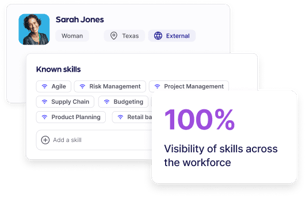
- Hiring teams get 100% visibility across the entire workforce. They build shortlists with high-quality, diverse candidates in seconds.
From Job Architecture to Work Architecture.
Make workforce optimization a priority.
Book a demo to see what a Work Operating System does for your organization.


Reejig

AI Work Design Blueprint
The responsibilities every CHRO must own to lead AI Work Design and build internal capability.