The rise of workforce optimization
When it comes to business operations, optimization has always been the name of the game. Businesses have always wanted maximum efficiency and productivity. This imperative has led to most workplace innovations widely known today.
Ford's moving assembly line was born out of a need for higher productivity and less employee error. It swiftly changed manufacturing going forward. Workforce optimization reduces cost, improves efficiency, increases employee satisfaction, elevates customer perceptions, reduces error, and drives organizational learning.
Workforce optimization has expanded with technology, globalization, and cultural norms:
- Automatic time tracking of employees instead of punching in and out
- Clearance badges for ease of security between workspaces
- Customer satisfaction surveys to learn how to better serve the market
- Employee surveys to understand employee needs
- Management training to reduce in-person meetings and lengthy training overhead
- The printing press. It dramatically increased the speed, scale, accuracy, and productivity of printed materials
Today, workforce optimization has moved far beyond the printing press. It exists largely in the digital world. Modern workforce optimization requires creativity. It must handle remote work, multinational locations, digital approaches, and cross-functional department collaboration.
Today's optimization is also far more data-driven. Data contributes to the decision-making process. It also decides which optimizations actually benefit the company. With this move toward data-driven decisions, questions remain. Who should handle data collection? Where should it sit departmentally? How should it be measured?
AI capability is compounding. Work visibility is not.
Managing optimization internally and the data points to support it
Where data analysis and responsibility sit depends on the type of data collected. And who is most invested and qualified to examine it.
Common modern workforce optimization data points include:
- Employee utilization and productivity
- Work movement rate
- Redundancy savings through redeployment
- Employee learning and training completion
- Capability growth and development
- Regrettable attrition savings
- Employee engagement
- Customer satisfaction scores
- Cost of operations
At a glance, these data points sit somewhere between workforce strategy and business development. The multidisciplinary nature should not be seen as a liability. It's a superpower. It helps both departments think more holistically. They capitalize on the knowledge and planning of people management.
Designating cross-collaboration and innovation through optimization
The siloed nature of organizational departments is not a superpower. Failing to see the big picture and ignoring employee needs causes negative culture consequences. The lack of flexibility and dialogue between leaders and direct reports has resulted in mass resignations. Individuals leave jobs because they feel there isn't the flexibility to make career changes.
Well-organized, strategic organizations retain and deploy their best workers. They suffer when those employees are lost to other opportunities or perceived inflexibility.
Every enterprise is deploying AI. Almost none can see the work they're deploying it into.
Working together to tell the optimization story
Workforce leaders and business development decision-makers should work together. Their goals are often in alignment. They tell the workplace optimization story together. Take employee training. While often housed in workforce operations, training is actually a business goal and a people management priority. Training prepares individuals for the needs of the organization. Today, tomorrow, and a year from now.
Members from both groups can be intentionally cross-functional. Designated personnel from workforce strategy and business development regularly work together. They Analyze these metrics. They represent the needs from both departments. They report on results and optimization outcomes as a team.
Measuring workforce optimization
If optimization is a priority, and resources are allocated to achieve it, which metrics matter? The answer varies with organizational goals. What's more important is how to identify salient metrics. Think of data points as telling a story. What the story is about depends on what the organization needs.
A common priority today: retention. Research shows people stay at jobs longer when they are engaged. This sets the stage for retention and engagement as two key outcomes. Every metric should support better understanding, evaluating, and measuring toward those goals:
- How long people tend to stay before leaving
- What is the average time until promotion
- What are the capabilities and interests of your people
- What capabilities does the organization need in the future
- How often do leaders meet with direct reports about goals and opportunities
- How often do employees participate in educational opportunities
- What is the use of retention and engagement-related benefits
- How often do employees move across departments or change job functions significantly
All these metrics, laid out for decision-makers, tell the story. What keeps people. What might make them leave. Where there are opportunities for improvement. This story then relies on workforce strategy and business development. They optimize, strategize, and set goals for the future.
From Job Architecture to Work Architecture.
Partnering with the right optimization approach
Even with qualified cross-functional employees exploring optimization goals, a huge part of optimization is minimizing manual effort. The Work Operating System streamlines measurement. It creates a built-in analytics layer. It takes the number crunching and gathering largely out of the equation. Designated employees then use their focus to synthesize, present, and establish next steps.
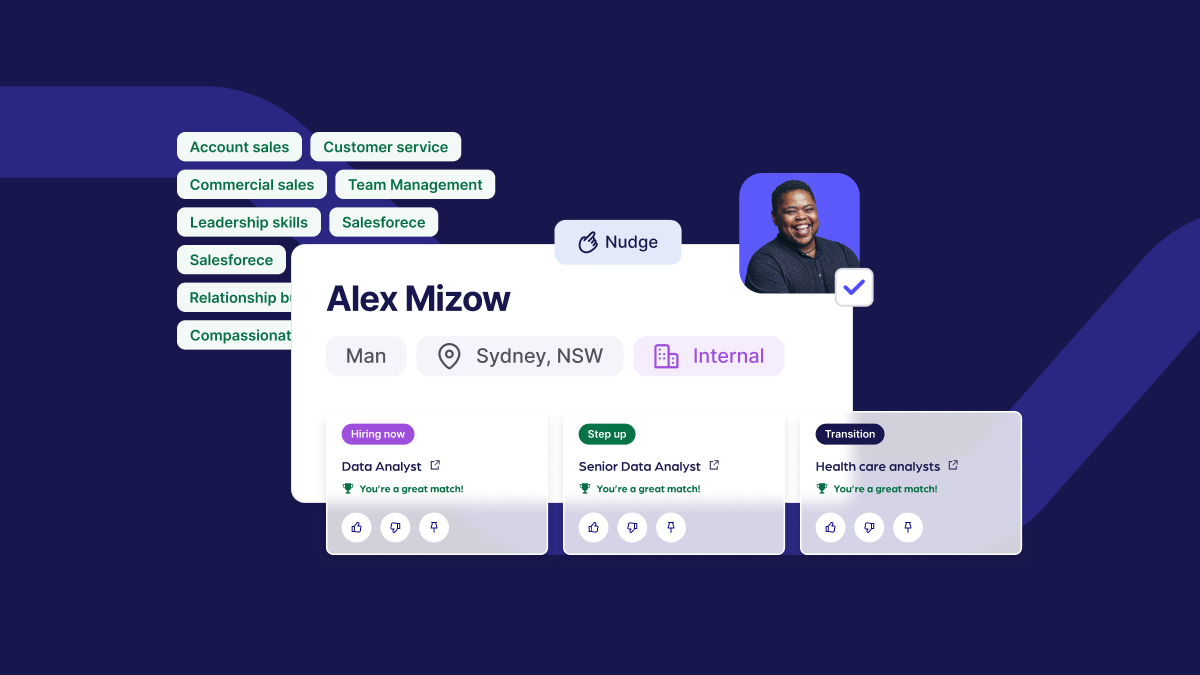
These approaches are multifaceted. For instance, when examining current capabilities and future capabilities needed, a Work Operating System gives complete visibility. It shows the capabilities and potential of a workforce. It supports data-driven workforce decisions. It provides optimized insights. Leaders take action. Right capabilities. Right place. Right time. This means understanding past, present, and future business needs. And how they overlap with relevant employee capability sets.
Forward-thinking approaches also provide AI capabilities for workforce optimization. AI Analyzes profiles of current and future employees. It Maps career paths. It connects opportunities to online learning and training.
Workforce strategy and business development are converging. Both have a seat at the table. They understand how to create a more streamlined organization. With these interests aligned, a Work Operating System creates the trifecta. Employees, the future of the business, and the metrics to see the optimization story going forward. This results in a competitive and resilient workplace.
Book a demo to see how Work Intelligence fast-tracks your workforce optimization efforts.
 Platform Overview
The Work OS for AI-powered Work
Platform Overview
The Work OS for AI-powered Work
 Work Architecture
Live entity model of your enterprise
Work Architecture
Live entity model of your enterprise
 Map
Build the Work Context Graph
Map
Build the Work Context Graph
 Analyze
Your GPS for reinvention
Analyze
Your GPS for reinvention
 Build
Workflows + agents
Build
Workflows + agents
 Run
Deliver the new way of working
Run
Deliver the new way of working
 Measure
Track real, board ready ROI
Measure
Track real, board ready ROI
 Log
Source of truth · audit trail
Log
Source of truth · audit trail
 Update
Keep architecture current
Update
Keep architecture current