PARTNERSHIPS
ViewReejig x Workday
Unlock more value from Workday with AI Work Design.
CUSTOMER STORIES
View
The platform top Fortune 100 companies use to redesign how people and agents work together. Watch it now.
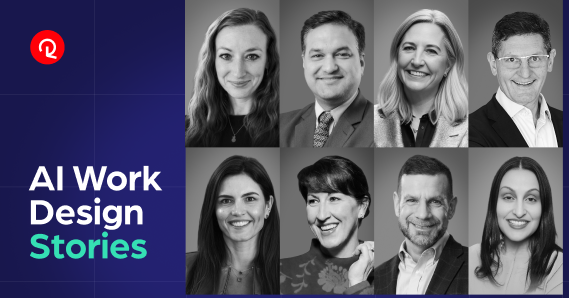
Jasmine Jaco, VP, Organization Transformation & HR Strategy at Boston Scientific, believes AI opportunities need testing with the people doing the work. Her background in business transformation and experience design informs how she challenges assumptions about what AI will improve.
She looks beyond projected time savings to consider the information employees need, the judgment they apply, and the responsibilities AI creates. Better documentation, for example, can be valuable without saving anyone time.
With Reejig providing a shared view of work, Jasmine is bringing work design, technology, and employee expertise together to assess opportunities. Her ambition is to build the internal expertise to keep redesigning work as technology changes.
An early opportunity at Boston Scientific focused on helping sales representatives prepare for customer calls and document interactions in the CRM. Based on initial assumptions, the team estimated that AI could free up around four hours per representative each week.
Jasmine’s approach called for testing that projection against the work itself. Job descriptions and high-level conversations could identify broad responsibilities, but they couldn’t explain every step, information source, or exception.
Those conversations changed the picture.
Preparing for customer calls required information from several sources, including information representatives kept on their phones. The initial agent design hadn’t accounted for all of it, so it would not fully equip people for those conversations.
The team also discovered that some representatives weren’t consistently documenting meetings in the CRM. Part of the projected saving therefore came from work that wasn’t always happening.
Introducing a documentation requirement could add work while improving the information available to the business. Jasmine’s example exposed why those benefits needed separate assessment: better documentation and time saved were different outcomes.
It also demonstrated the importance of involving employees early enough for their knowledge to shape the solution and its business case.
Jasmine’s broader approach connected visibility into work with the expertise needed to redesign it.
Reejig provided a shared view of work across a large, complex organization. Alongside employees’ knowledge of tasks and subtasks, that visibility helped her team assess opportunities across business units, roles, and regions.
Jasmine also described an integrated AI transformation pod combining work and organization design, technology, data, AI enablement, business expertise, and program management.
The model brought the relevant disciplines into one team. Decisions about where to focus could then account for employee implications alongside how widely and frequently work occurred, the effort involved, risk, and cost.
For Jasmine, understanding the work and preparing people for change belong in the same process.
“Work redesign and employee support are considered together from the beginning.”
Jasmine’s scrutiny extended to the responsibilities AI creates.
People still need to review outputs, correct problems, and remain accountable for the result. Under pressure to demonstrate productivity gains, those activities can be compressed or overlooked. Her approach asks teams to account for them when designing the workflow and assessing its benefits.
Employees also need the experience to recognize when an output is wrong. As AI changes tasks, leaders need to consider how people will develop and maintain that expertise.
These questions reinforce Jasmine’s preference for focused work with the business. Starting in one meaningful area gives teams the opportunity to test their assumptions, refine their methods, and demonstrate what redesign can achieve.
Jasmine’s ambition reaches beyond individual projects. She wants a shared understanding of work to connect changes across roles and regions with workforce needs over the next three to five years.
Fully linking those insights to strategic workforce planning remains work in progress. The next challenge is connecting individual redesign decisions with how the organization develops people and prepares for changing responsibilities.
Her approach builds toward that ambition through practical experience. Each project offers an opportunity to understand the work more accurately, support employees through change, and strengthen the team’s ability to do it again.
How Micron’s Dennis Di Lorenzo is connecting learning and workforce decisions to the work behind each role.

How WPP’s Josh Newman is turning detailed work insights into practical guidance for business and workforce redesign.

How Medtronic's Abby Rich is building internal expertise to redesign work and help people succeed alongside Al.