-
Platform
-
Resources
-
Company
- Work Architect Course
- Contact us
 Platform Overview
The Work OS for AI-powered Work
 Work Architecture
Live entity model of your enterprise
 Map
Build the Work Context Graph
 Analyze
Your GPS for reinvention
 Build
Workflows + agents
 Run
Deliver the new way of working
 Measure
Track real, board ready ROI
 Log
Source of truth · audit trail
 Update
Keep architecture current
PARTNERSHIPS
View
Reejig x Workday
Unlock more value from Workday with AI Work Design.
 All Resources
Content for AI-powered work
 Certified AI Workflows
Proven builds you can copy
 Articles
AI work design thought leadership
 Events
Roundtables, webinars, dinners
 Webinar Recaps
What we learned, from the people building
 Playbooks & Guides
How to build capability in your team
AI WORK DESIGN STORIES
View
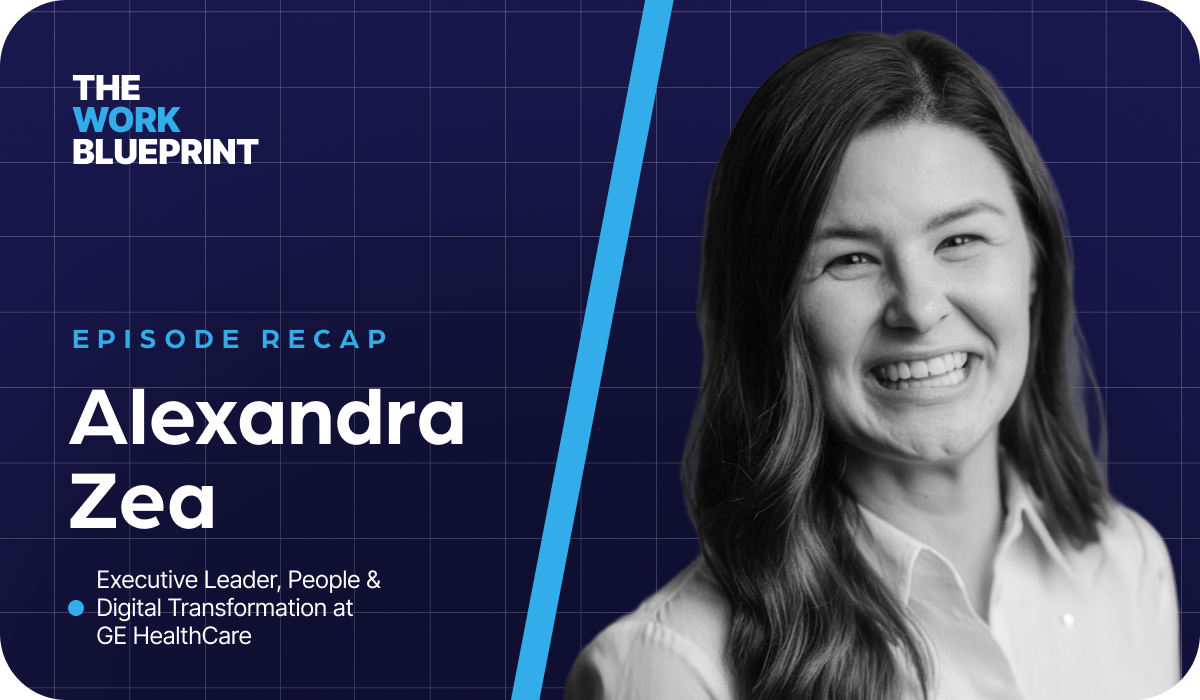
Alex Zea is redesigning GE HealthCare HR around outcomes

Author
Reejig

Read time
6 mins

Published
Nov 9, 2026

Alex Zea is redesigning GE HealthCare HR around outcomes
{source_type=oembed, oembed_url=https://www.youtube.com/watch?v=wVaImK8hyM4, oembed_response={type=video, version=1.0, html=, title=The Work Blueprint with Alexandra Zea, author_name=Reejig, author_url=https://www.youtube.com/@reejig, provider_name=YouTube, provider_url=https://www.youtube.com/, thumbnail_url=https://i.ytimg.com/vi/wVaImK8hyM4/hqdefault.jpg, thumbnail_width=480, thumbnail_height=360, height=113, width=200}, width=200, height=113, size_type=auto, max_width=200, max_height=113, supported_oembed_types=[video, link]}
Blog Post Body
Table of contents
Catch The Work Blueprint live
Hear how leaders are redesigning work across people and AI. Join us for the next episode.
When Alex Zea was advising CHROs on what the next HR operating model could look like, she ran into a problem familiar to anyone trying to lead a transformation from the outside: it is hard to ask others to go first.
So she decided to do it herself.
“The best way I could move the industry forward was to lead by example,” Alex says.
Now Executive Leader, People & Digital Transformation at GE HealthCare, Alex is helping redesign how HR operates while building the capability to guide broader changes to work across the enterprise.
In her conversation with Siobhan Savage on The Work Blueprint, she explained why the shift starts with a deceptively simple question: not what activity does this team own? but what outcome are we trying to achieve?
Stop redesigning functions. Start with the outcome.
Alex had already spent years working on digital transformation when she and her colleagues began exploring what a future HR operating model could look like.
Their first instinct was conventional: rethink business partnering, then rethink centers of excellence.
“We didn’t get anywhere,” she says.
The breakthrough came when they stepped back from the existing HR structure and examined the assumptions underneath it.
Traditional operating models were designed around scarcity: limited time, money, capacity and expertise. That encouraged organizations to standardize work, streamline jobs and specialize roles.
AI changes some of those constraints. For Alex, that means the question is no longer simply how to make the existing activity more efficient. Leaders can reconsider how the outcome should be achieved in the first place.
“Today we’re activity oriented and tomorrow we have to be outcome oriented.”
Take hiring. A leader might ask HR to recruit someone, but the outcome they really need may be a fully staffed team. Once the outcome becomes the starting point, the organization can consider a wider set of ways to get there.
That same logic now guides Alex’s approach to redesigning work: define the value first, decide what people should do, then determine where technology can support the rest.
Redesign HR so people can work at the right level
At GE HealthCare, that thinking is changing the structure of HR itself.
Alex describes moving centers of excellence toward leaner domain expertise teams focused on strategy, policy, program design and enterprise guardrails. Delivery is being brought together through a colleague experience and delivery capability designed to work digitally wherever possible while retaining human support where it is needed.
The change is also intended to reshape business partnering.
Rather than senior HR partners being pulled into every transaction or fire drill, Alex wants them focused on workforce outcomes: talent capability, organizational design, human-machine teaming and systemic issues that affect the business.
That distinction matters. You cannot simply tell an HR business partner to become a strategic workforce advisor while leaving all their existing work in place.
“You have to pull the work out,” Alex says.
The operating model has to create the conditions for people to contribute at that higher level.
Show leaders what they gain from the change
Alex is clear that getting there has not been frictionless.
Changing established transformation processes can create concerns about deadlines. Finance leaders still need to understand the economics. Business leaders need to see why giving up familiar ways of working will lead to something better.
Her approach has been to make the change tangible.
She has used lessons from previous transformations to show where a different approach to work could have improved the outcome. Within GE HealthCare, she has also gone directly to business leaders to understand their priorities and ask where her team can help redesign the work around them.
Her analogy is finding the “puppies” in transformation: the thing compelling enough to get people moving toward the change rather than beginning with what they have to give up.
That approach has created more interest in work redesign than Alex initially expected. The next challenge is how to support that demand without making one central team responsible for every redesign.
Build a capability the business can use without you
For Alex, the long-term model cannot be a small transformation team doing all the work.
The team needs to lead the most important initiatives, but also teach others how to apply the approach through frameworks, templates and repeatable methods.
She compares it with change management: build deep expertise centrally, then develop enough capability across the organization that smaller changes do not always require the central team.
That becomes especially important because the work itself will keep changing.
Alex argues that organizations need to understand tasks and how they connect, not only maintain static lists of jobs and skills. Skills data becomes much more useful when it can be connected to the actual work people perform.
At the task level, leaders can examine where technology can contribute and where human expertise should remain central. That makes work redesign less about attaching AI to an existing job and more about reconstructing the workflow around the outcome.
HR has to lead before it is forced to react
Alex’s urgency comes partly from experience.
Early in her career at Time Inc., she watched the publishing industry try to respond to the shift from print to digital. Smart people could see the transformation happening, but the organization struggled to move quickly enough.
She does not want HR to repeat that experience with AI.
For Alex, acting early is not about cutting people out of the picture. Some HR work will shrink as agents take it on, but acting early gives the organization more ability to shape the change deliberately: where human expertise matters, how roles evolve, what new work emerges and what meaningful careers can look like as technology becomes more capable.
“I really believe that if HR is at the forefront of this, we can do it with a human lens.”
But HR cannot claim that leadership role without changing itself.
“We have to walk the walk to guide this,” Alex says.
That may be the most important lesson from her move inside GE HealthCare. HR’s opportunity is not simply to manage the people consequences after AI changes the work. It is to build the credibility, operating model and expertise to help the organization design that change well from the beginning.
Explore more pioneer stories and practical guides to help you redesign work across people and AI.
Explore AI Work Design resources →
Speakers
Siobhan Savage
CEO & Co-Founder of Reejig


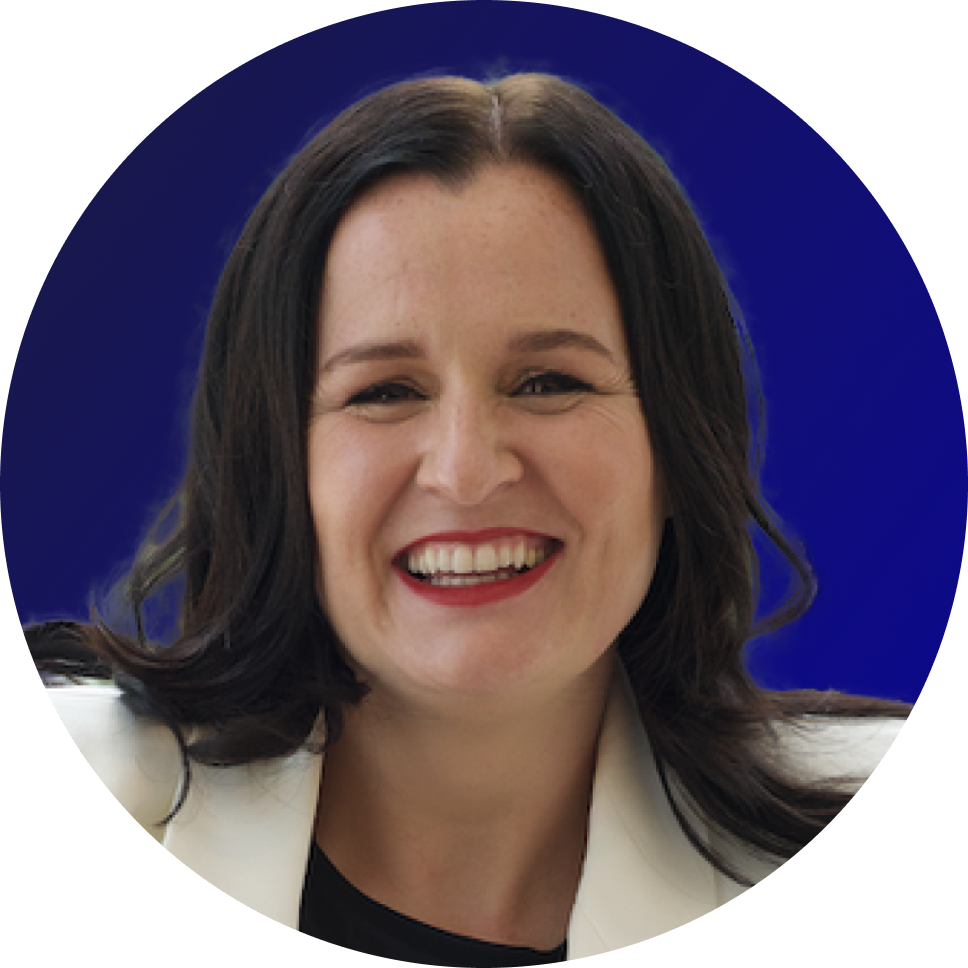
Alexandra Zea
Executive Leader, People & Digital Transformation at GE Healthcare
Siobhan Savage: Hello. How are you? Welcome.
Alexandra Zea: Hi, Siobhan. How are you today?
Siobhan Savage: I am. So, you're going to have to bear with me today because I'm a little bit I don't even know if I would call it jetlagged, but I just arrived in from Sydney 2 hours ago and I haven't slept in two days. So,
Alexandra Zea: what did you do on the plane?
Siobhan Savage: No. I was literally in the air longer than I was like on the ground. I was only in Sydney for two days. I had a very important meeting I had to go to with lots of important people. Um so it required Zoom wasn't good enough. I had to be in real life. So I was in and out. So um yeah, this is life.
Alexandra Zea: I you know I know that it's a long travel and it's obviously very taxing but I think that in-person face to face time is so critical. We're getting our core project team together for the first time in two weeks and just the opportunity to see someone to, you know, see facial expressions just to spend the time together. It's it's not something you can do over Zoom.
Siobhan Savage: I agree. And I told my little girls that mommy has girl bossed too hard so now she has to go.
Alexandra Zea: You know, I take I take my daughter um all over with me on work trips. Um she and I took her
Siobhan Savage: You should bring her to Pioneers Club.
Alexandra Zea: She's actually going to be in She'll be with me.
Siobhan Savage: Yeah. Oh my god. I love
Alexandra Zea: She'll actually be in New York with me, but my one of my sister-in-laws is going to take the day off and spend time with her. Yeah. I I truly I'm not kidding. I take her everywhere.
Siobhan Savage: I love this. If you need a nanny, my nanny's at home, so if you ever need help, let me know.
Alexandra Zea: You know, I might take you up on that. I actually, it's funny. I took her on a work trip with me, just really quick aside, took her on a work trip with me right before I left consulting. Um, I was speaking at an executive leadership team uh summit in London and they scheduled a Four Seasons in Hampshire outside of London and I thought like I'm flying all the way over the pond, you know, for a 45minute presentation. I
Alexandra Zea: might as well just take her and ended up there for a few days. And while I was there, my mom came to help and she rode uh ponies, mini ponies during the day at the Four Seasons. They had a full kids camp.
Siobhan Savage: Wow.
Alexandra Zea: Like kids school all while I'm working. Uh my mom got a massage, you know, got a pedicure. And then in the evening one night, you know, the whole resort was the leadership team basically. So they were all off at a pub and there was this couple there who was celebrating their 45th anniversary. And they had booked out the entire like restaurant and scheduled this basically half a million dollar fireworks show. And the staff
Alexandra Zea: came over and they apologized to us. They're like, "We're so sorry. This private show is going on outside. Would you like to step outside and watch it?" And so my daughter had these incredible experiences. Mom's job's amazing. On the way home, she's like, "Mom, work is really cool."
Siobhan Savage: Yeah, I love it.
Alexandra Zea: Work is so cool. I mean, that does sound cool. Horse season, mini horses, like cookie decorating classes. Like, you're so cool. I was like, I think maybe that you got the wrong idea.
Siobhan Savage: I love it. I love it. I mean, every everyone that's probably dialing in here can absolutely agree that the the juggling between like the work trips the work trips are intense in America by the way. Everybody travels a lot. It's very much more where from where I was like everyone travels a lot but welcome like firstly I know folks are still coming in
Siobhan Savage: and out so um but we'll we'll get started. So firstly welcome to the work blueprint. The whole idea of this coming together is really pioneers who are leading the industry, who've got their sleeves rolled up, who are actually in the AI work design doing they're figuring it out and they're sharing all of sort of their lessons and the golden
Siobhan Savage: nuggets as they go along. For those who don't know, Alex is I mean, how long do we go back? It would be six or seven years.
Alexandra Zea: Yeah.
Siobhan Savage: So, whenever whenever I first when whenever I very very first started in Reejig. Um, so Alex, why don't you give us an introduction into sort of who you are, what you're up to at G, like kind of a little bit of context setting for those that are here so they kind of get to a little bit to know you.
Alexandra Zea: Yeah. Well, and for those who I don't know, it's nice to meet you. Thank you for for letting me share. Um, I'm on this journey, too. So, you know, I learned from these conversations. Um, like Siobhan, I actually started internally. Um, I I worked as a an initial kind of HR tech, strategy, analytics. um HR professional in a couple different settings, first in
Alexandra Zea: publishing and then at Morgan Stanley. Um and I went through my own journey of understanding if we would have been a little bit more prepared, if we would have had better digital infrastructure, if we could have pivoted, if we had the right insights, what would it have been like for us to support business strategy in a different way or to to really be able to have that seat at the table and drive value with it? Um, and so I I had
Alexandra Zea: these incredible opportunities across those two different organizations. Learned so much and I realized how quickly. Um, I wanted to be able to have a I wanted to do more quite frankly. Um, I wanted to be at the forefront of where tech was going, you know, how we were changing employee experiences. I just I wanted a faster pace. That's kind of my personality. Um, and so I had the opportunity to join uh a startup called
Alexandra Zea: LeapGen. We I was the second person on the team and we built the team to be about 65 individuals focused entirely on digital transformation in the HR space. Um that's where Siobhan and I got to do a lot of really incredible work together. Um I personally feel like we pushed the industry forward. We helped define the focus on employee experience. We helped redefine digital well we
Alexandra Zea: defined deployment as opposed to implementation. Um and then we had the incredible opportunity to join the Mercer family in 2023 to integrate some existing components in Mercer HR tech implementation and really bring together this big team focused on changing the industry pushing things forward. And I got to look after innovation for that
Alexandra Zea: broader group for the last three years. And then um in 2025 in that work um I got to pivot that innovation work not so much into digital transformation but really asking the question what does digital now change about HR and you know I've I've used this quote quite a lot in the past having a digital strategy will one day be like having an electricity
Alexandra Zea: strategy you know there's a time and place for it but there's also a time when it's just how you work and we're at that point now we're really at that point where having any sort of strategy without how you'll run it with digital cap capabilities. It's it's meaningless honestly especially in in medium and large enterprise. And so we started to look at the broader HR operating model and I had the opportunity to lead an effort to define
Alexandra Zea: what the future operating model could look like. Um it was some of the the work I'm most proud of in my career and I I had these conversations in these challenger sessions with CHRO's across the world and what I realized is I I believe firmly in what we've built. um you'll you'll learn more about that and you learn about my work now, but it's very hard as a consultant to be first.
Alexandra Zea: It's very hard to go out and say the future, the world needs to evolve into this and have no one to point to. Um and so towards the end of last year, I realized that the best way I could move the industry forward was to lead by example. And so made the transition, found um the right role for me, a CHRO who knows me well, who I have, you know, dramatic confidence in, who's extremely
Alexandra Zea: brave, and we have been on a journey now to redesign the operating model um for GE Healthcare for about 9 months. Um it it started a little bit earlier than that in my work in consulting. Um but we are focused on bringing to life an organization that's not only more effective, more efficient, um not only one that delivers incredible colleague experiences, but also one that delivers
Alexandra Zea: value that we haven't really seen in the past across the organization specifically around being able to guide the organization through the AI transformation that is impacting the world. Um, I think just this morning the I think it was that one of the leaders of Nvidia came out and said, "We're at an industrial revolution." And we're like, "Yeah, we've been saying that for a few years." You know, we're here.
Alexandra Zea: Like, we all know work.
Siobhan Savage: Yeah. Like, we're here. We're ready. We like we're talking about it.
Alexandra Zea: Um, but those changes are extensive and they're going to reshape organizations. And we're building an HR function that will be guiding the organization through that reshaping with the idea of using technology to drive incredible value, but protecting our people to drive even more value when we make their roles more meaningful in the future.
Siobhan Savage: It's so exciting. And having watched your career, I I just think where you've landed and what you're doing, it's it's incredible. And by the way, how hot is this space in terms of career right now? These rules are popping up everywhere. It's shocking.
Alexandra Zea: Well, it's not it's not shocking. That's not the right term. But I will say I mean when I made the decision last year to leave consulting, I recruited pretty extensively. I wanted to make sure I was making the right choice. I will say, you know, I I believe completely in where I landed, but I I felt the need to really validate it. And I so I took on a mix of looking at
Alexandra Zea: things like more traditional tech roles, HR strategy and transformation roles. Um, and I'll be honest, I mean, I every single job I've had for the last actually for for my entire career, now that I think about it, I have written my own job description for every job I've had in the last, you know, 15 plus years of working. and I wrote the job description for my transformation job
Alexandra Zea: currently. Um, as we thought about, you know, we knew I needed to join the team. We knew what it needed to look like and we shaped that. But I I'm seeing it pop up now right and left. And I I'm having, you know, people reach out to me all the time about, you know, are you interested or do you know anyone? It's a really unique background to be in this space. And there's a few other I can point to a
Alexandra Zea: number of others who are doing this, but it's uh yeah, it's a very hot space to be in. And it's one where you have to have this blend of of tech and strategy and change and ambition but also understand all of the detailed ways of working. Um
Siobhan Savage: I've definitely seen across our customer base like when we started out very early in like task work redesign AI work design it was kind of like bolted on top of someone's day job because it was such a new kind of theory. I think in the last 12 months I mean I moved to America what 2 and a half years ago maybe two years ago I
Siobhan Savage: think in the last year I would say 70 80% of our customer base now has this role and it's really interesting it's kind of like either it's kind of got it's kind of got two different versions there's the version like you which has come from transformation consulting sort of like that part before as well as some early
Siobhan Savage: career inside or it is like someone who was like really strong in org design, skilling, job architecture, talent, like that role where they're taking like they're kind of like moving up. Um there's not one right or wrong version in my mind. I think the fact that
Siobhan Savage: organizations are now at the point where they know this is not like a one-time change to work. It's a forever change to work. And you shouldn't be giving out your most sensitive strategy work to external folks. You got to build the capability inside cuz it's forever, right? So that is a huge tick for us as career professionals to be in this moment where like this is like it's
Siobhan Savage: a new role. AI work design is like it's it's real. And by the way, like next year it'll be everywhere, you know, like if you look at what we're doing and where we're working and you know all who who who you know all the pioneers are like it's going they're all the top companies that are now pushing and you'll just see the market now follow in in their suit. So, it's very exciting for folks that are listening like get
Siobhan Savage: your notebook out because Alex will give you some incredible like insights into like career cuz like a lot of people are calling me this why I do a lot of these calls like hey like I'm thinking about this how should I position or how do I get the business case for this um so I given given I'll give you some of the examples of the things that I get asked where I think we would I would love to
Siobhan Savage: get your view. So you were previously sort of on the outside of GE but connected to the business. How did you paint the picture to get such a passionate um commitment to going allin business casing painting the like what what was the picture that you painted for your leadership group because it
Siobhan Savage: wasn't just your CHRO this connects in to CIO to CFO it's it's across the board. So firstly would love to know that because I think this is kind of the main reason that it stalls is that people treat it like a HR project.
Alexandra Zea: Yeah, that's a huge huge question. Um and I will say I mean I I can share both from a career perspective and an approach perspective. So for me in making the right decision and I think this is important. Um, when I when Adam, my CHO, and I really had this conversation, I talked to I said, I wouldn't feel comfortable unless I
Alexandra Zea: connect with all of those key stakeholders, right? And I interviewed with our CIO, you know, our head of our biggest business and really talked through here's our vision for the role of HR. If that's not, you know, you're not just interviewing me for my capabilities, you're interviewing me for my vision because that's what we want to bring to life. Um, and I don't know that they all necessarily came to it thinking like, oh, I want to hire an HR
Alexandra Zea: transformation leader, but they left those conversations thinking, do I need these capabilities in our organization? And for me, that was extremely important because I didn't want to come into an organization where the headwinds were so significant I couldn't change them in the right amount of time. Now, from a how did we approach this? And I I think that that's a really interesting question because we stumbled
Alexandra Zea: a little bit as Mercer trying to figure out how do we actually build that vision for the future of the HR function? And in the beginning, what we started with was exactly where you'd expect to start. We said, what should business partnering become? And then we said, well, what should COE's turn into? And we didn't get anywhere, just in all transparency. And I I did this with um two primary
Alexandra Zea: partners, a woman named Emily Little and a man named Jim Scully. Two of the most brilliant people I've ever met. And we were, you know, the the core team sitting down on a daily basis thinking this through. And what we ended up having to do is really take a step back and ask some early questions of, you know, what is an operating model? How do operating models work? What are the paradigm shifts that will actually
Alexandra Zea: happen in those operating models and then apply that back to our specific operating model? And the biggest unlocks were were two and I actually I see them everywhere now, but we had to go on our own journey to discover this ourselves. The first was that AI actually shifts from a paradigm of scarcity to a paradigm of abundance essentially. So today we never have enough time, we
Alexandra Zea: never have enough money, you know, we never have enough resources, we don't have the right knowledge or skills. And our entire operating model has been built around making the most of that, right? Standardizing work, you know, streamlining jobs, you specialization to get the right knowledge and skills. When you flip that and imagine a world where, you know, we've really realized these
Alexandra Zea: potentials with AI, none of that's necessary anymore. You have more than enough. You know, we're seeing it now, right? We see AI slop created. We see things are done in seconds that used to take us weeks. And now the value is how do you work with it? How do you make it work for you? And it's a completely different mindset shift when you look at that abundance and say, now how do I
Alexandra Zea: filter down to what's meaningful and then harness it to drive value? And so those when we started to go through those types of paradigm shifts another one is for example we organize today around the work we do I mean it literally in HR we call ourselves the activity that we are responsible for I'm talent acquisition I'm compensation I'm learning and development if that's your
Alexandra Zea: activity it's very very hard to operate differently but AI allows us to operate differently so if you go ask a people leader do you want to hire someone they're going to say yes but if you really push into it they're actually going to say I just want a fully staffed team. And if you go about the problem of building a fully staffed team, you might never have to get to talent acquisition. But if you are in that paradigm shift of
Alexandra Zea: I'm the hammer and everything is the nail, it's very hard to pivot. And so one of the major shifts is also outcome thinking. Today we're activity oriented and tomorrow we have to be outcome oriented. And so we actually started with those paradigm shifts. And so in every world where I've focused on bringing this to life both when I was still a consultant and now I started by actually teaching the paradigm shifts
Alexandra Zea: well before we talked about our operating model. And then by the time we got there when we talked about you know why do we need to take business partnering orgs and turn them into outcome teams it was obvious. Everyone was like oh well that makes complete sense that we shouldn't have team members dedicated to activities. We should have team members who are responsible for outcomes and have a toolbox to drive that. And so that's I
Alexandra Zea: think the biggest thing for me was to not jump to the what but to really explain the why and I've now done that but obviously in our HR function but also across the organization. I have a responsibility for for enterprise transformation as well. So we've been trying to drive some of those paradigm shifts across the organization.
Siobhan Savage: I do definitely see the outcome like the way that I've designed my company is like instead of going into who are the people that I need I go like well what's the outcome that I need? Well I need to drive revenue. what are the what is the the the work that drives the outcome and then do I need people or agent and like what's the blend of of that capability so
Alexandra Zea: and that's Siobhan you just said it I mean that's the core of really good work redesign is not saying basic principle like start with the task but what's the value we want to drive what's the best way to get there then what what should people do not what could tech do but what should people do then where does the tech fit to drive everything else.
Alexandra Zea: Then you reconstruct that. And that's where, you know, we can we can talk through that in a lot of depth, but that's really the core of of what effective work redesign really does. And those paradigm shifts have allowed it, you know, it's it's easier for us to talk about redesigning work because everyone can see how, you know, the way the steps you followed in the past don't
Alexandra Zea: necessarily get you to the those outcomes in the same way.
Siobhan Savage: No, and I definitely think there is like such a direct correlation between this moment of AI work design and outcome based thinking because like people are just going in and like sticking tools on top of stuff and then hoping it like will create all this unlock but like it doesn't because it wasn't even worthwhile chasing in the first place. So like it like so there's just so many
Siobhan Savage: so many parts of like taking it down the funnel. So you you got leadership bought into sort of the bigger paradigm shift of what is the outcomes I'm going to drive the org. You then start looking at the operating model of how to do it. And then talk me through like the type of capability that your team requires
Siobhan Savage: um and a second like visionary thought on like what will HR in that world look like because I've got a couple of views on that. So I would love to get your take on on those two parts.
Alexandra Zea: Yeah. Um I I'll start backwards because I think when you when you can kind of see the simple visual of the future then you can talk about the capability and then the capabilities that we need to bring that to life. Um oversimplify I'll oversimplify our model because I think that's it's the best thing for this conversation. And there's a lot more that I can share obviously on it but um
Alexandra Zea: first and foremost one of the things that we're doing is shifting our COE's today to what we would look at as much more lean domain expertise capabilities. Um what we have found is that COE's today own what I would call you know they own the strategy of that they own the delivery or they own the policy and the program design and they own the delivery. And when you are responsible
Alexandra Zea: for all of those, one, it's really hard to be strategic when you also have to worry about the logistics of delivery. But we also we let them each kind of come up with their own. You know, if I'm responsible for how I effectively deliver learning and development, it doesn't always look and feel super cohesive with how I might deliver total rewards. And you end up with duplicating
Alexandra Zea: work. You end up with, you know, not a consistent experience across our our workforce. And you also end up with, you know, the ability to say, you know, you're going to have to transform all of that delivery in pieces. And so we're creating a much more strategic focused domain team or domain expertise capability where they're responsible for the strategy of that of that domain,
Alexandra Zea: workforce strategy, you know, talent strategy, uh, performance and the the program and policy design. And then they're codifying that through guardrails, you know, enterprise approach, you know, clear standards. And then we're actually delivering, we're centralizing all delivery into one capability. And that capability is ev it's evolving from our people ops
Alexandra Zea: capability. We're calling it a colleague experience and delivery. And it's a much more hands-on delivery org where digital first in every case possible. Um, however, that will be not only our end-to-end colleague experience will be owned there, but it's also where the majority of things you'd typically go to an HR partner for will all go through
Alexandra Zea: this capability. So, there will still be human components, both reactive and proactive, where we've designed that, but it's not going to be, you know, I have my senior HR business partner who I call when I can't process my job change. All of that will go through our CXD or in the future and that will allow our business partnering orgs to transition from you know owning everything HR for
Alexandra Zea: the business to owning the outcomes related to the workforce. So do we drive the talent capability? How do we look at our effective design? How do we build human machine teaming in the right way? And I think if you take a systems thinking lens that's really the cut off they're looking at things when they're impacting the system. So one off ER case not involved in second ER case not
Alexandra Zea: involved in when it becomes a trend it comes to them as an insight they're still not addressing the ER case but they're looking at is there a systemic problem that I should solve for new leader toxic culture is the manager problem well right like what do we need to do and so they're really looking at the overall system and then using that and they own those workforce outcomes in
Alexandra Zea: support of of the business goals.
Siobhan Savage: Yeah, it's really interesting because what's happening is I mean if you look at HR business partner as just an isolated like moment to talk about the role expectation is drastically evolving compared to where it's at today and even like when I was in Sydney um one of the days I actually hosted one of our big customers and they had 60 of their most
Siobhan Savage: senior HR folks business partners in the room and when you think about where the world is going they want to free up those HR business partners with more um AI to allow them to then become more on the workforce advisory side.
Alexandra Zea: Exactly.
Siobhan Savage: So, exactly what you just said around like how do I help guide the business to become more focused on AI impacts AI opportunity and then what will that happen in terms of like following that down the pipe around you know driving out those changes to work to then work force um and then right down the pipe. So like that's definitely what I'm
Siobhan Savage: seeing. And you know what was really interesting? I completely underestimated the role of the HR business partner in this moment. So I always thought it would be like a team of you and I where we would be driving this like COE too big. That's literally the activation layer across all of my customer is my HR business partner. And what is really exciting is I'm now spending all my time
Siobhan Savage: hanging out with a crowd that I've never really spent a whole pile of time with. And I'm teaching them all of like the stuff that I know so that then they can become the front line to their customers because they are the best person because they know everything about that org. They know the leader, they know the sensitivities, they know all the tribal knowledge plus they know where their goals are. So I think like that that's
Siobhan Savage: become like a really hot trend in market as well is that that role the only problem will be is like unless you do what you've said which is change and structurally redesign that you have to pull the work out right if they still have fire drills if they still have you know the the more urgent but maybe less
Siobhan Savage: forwardlooking components of their job they can't operate at that level
Alexandra Zea: and so we felt very strongly about separating that and pulling that out. Um, we started with our CEO when we looked at aligning this because that mindset shift for leaders to say, you know, I can't just call Alex any longer when I need to open a wreck. You know, they they can, you know, we're not saying they can't call someone, but it might be whoever picks up the phone. You know, it might
Alexandra Zea: not be their dedicated senior leadership person to help them with those things anymore. Um, but what we've done is we've actually started by showing them the value. um by starting with saying, you know, here's problems that you're facing. You know, here's ways that we'll be able to help in the future. Now, here's what you have to give up to get there. And they're like, well, of course, like I'll figure out how to do it in workday if you show up with a view
Alexandra Zea: of where work needs to transform across my function. And it's been more interesting. I I'll tell you jokingly the analogy that I used earlier this year. I have young children. You know this, right? I have a 2-year-old and a 5-year-old, and this group knows about the 5-year-old already. And I, you know, at like getting them out of the house to go anywhere is so hard. It's like I get a shoe on and someone picks up a cup of
Alexandra Zea: water and spills it. I get a another shoe on and someone's like, "Oh, I need to go to the bathroom." And it's just it's always so hard. It's kind of like if my neighbor was walking a puppy down the street and I'm like, "Guys, puppies. If you go outside right now, you can pet the puppies." And then I can get them in the car. I feel like there's these like we have to find the puppies in transformation. Well, and that's exactly what we've been
Alexandra Zea: doing this year with work redesign. I've been just like knocking on doors like tell me about your business priorities. What are you doing? What are you transforming? And how can we help you?
Siobhan Savage: Yeah.
Alexandra Zea: By helping you look at where work needs to transform and then guiding you through it. And by doing that, I have more and more people now like outside on the street petting the puppies. And it's actually kind of a problem because there's more momentum than I than we necessarily expected. And so we're figuring out how to how to staff it. But it's a good problem to have.
Siobhan Savage: And I completely agree with you. What I've seen is the the activation layer gets like cut through really quickly in the business and then the COE that starts out with a couple of people now has to scale pretty quickly because they've got so much land. But here's the thing. I literally did a business case with a customer the other day where they've got a small they're very big
Siobhan Savage: company like you know Fortune 100 very big company. They they started out last year by hiring in you know someone like you only a couple of people work in the team. It's got so much energy now around it which is like oh no we didn't forecast and budget for scaling this and we've done the whole HRBP activation layer and the business case is so simple like
Siobhan Savage: you if you go out to the company right now you're spending millions and millions and millions of dollars on external parties coming into the business to help with this thinking when actually you should be investing that money into building permanent capability in your organization because this is not a one-time change and I think like the business case on value realization of just even the intelligence of like
Siobhan Savage: sitting with your leader and giving them really good intelligence to show them here's where AI could have the greatest opportunity and here will be the impact in your workforce that in itself is a couple of million bucks you know just saved in terms of that moment so there's kind of like bringing it back to my original question it's like it's like there's the vision of like where you're
Siobhan Savage: going to take your leaders to get them to buy in and then there's ROI provide value realization proof and evidence to then get the capability bought into your team because these teams are going to be big teams. This is this is in my mind I I truly believe and you know I invest a lot into the education side of this space as well because no one's really
Siobhan Savage: got a lot of that yet in market. It's so emerging that we this is why these conversations are so important and we're so grateful for you to share because people are just needing to understand what what what like what what what's possible? What can I do? What is others doing? How do I benchmark? Um but then they can build this within their team and and I think like that's where you
Siobhan Savage: know 2027 is going to be so hot. AI work design will become like a capability that we have as a team. You know we'll have expertise in that space now.
Alexandra Zea: Well, and I will say I mean with the momentum that we're seeing and I we're focusing mostly on like our largest, you know, major transformation initiatives across the business, but it's already beyond, you know, things are coming in that are too big or too I'm sorry, not too big, but not at that level. And so we I think that our future is obviously being able
Alexandra Zea: to run, but we also need to be able to teach and enable with frameworks, with templates. I think about it a lot like change management. Um, you know, we've focused on building a really strong change capability at GE Healthcare through, you know, we we own it in HR, but we focused on building it across the business. And so, we are, you know, the change leaders in the most critical
Alexandra Zea: major initiatives, but there's also the ability to have, you know, something smaller in an area of the business, you have someone who can learn and teach and grow. So, we're actually doing both because I don't know that we when I think about I mean, we're, you know, over 50,000 employees. We operate in I think like 180 countries. We have such a significant scope that when I look at
Alexandra Zea: what we do, we can't wait for HR to lead everything. We need to build a foundational capability too.
Siobhan Savage: I even even though like I do the technology side of this puzzle, I actually probably spend most of my time talking about capability processes. I mean that's and just like how do I help you build what's the operating model for your team? what's the processes that you need to think through in terms of like governance. I mean you and I started our careers very focused on skills because
Siobhan Savage: that was in that moment what it was and then you seen my transition from skill to task and skill and I think like the market is now caught up to that vision. So I think generally speaking people get that like task data is like super critical but like you you know three years ago you and I were talking about this right like and I was like task is
Siobhan Savage: going to be so important. Um for those who may not be as familiar with that like break down for us like why like why understanding work and task in this moment to support your type of work is important.
Alexandra Zea: Yeah. And and I this is one of my biggest I'd say like lacks of understanding. And so we didn't plan this Siobhan, but you're gonna have to humor me. You're gonna have to let me explain it. Um and for those who don't know, I'm um I'm starting to teach uh in a graduate setting at Colombia for the first time. So I'm building the first AI course um AI for HR course. And so I
Alexandra Zea: just had to defend a point like this as I'm building my syllabus for the first time. Um I I want to make sure that we know the difference between a taxonomy and an ontology because I think that's actually the major unlock and we've skipped it a million times.
Siobhan Savage: Yeah.
Alexandra Zea: Um and I'll use skills to start because that's where a lot of us are thinking. So you know a skill taxonomy if everyone remembers Edcast tried really hard like 2015 everyone was like we've got it come by ours and that's cuz it was too hard to build. It wasn't easy and it was this Excel spreadsheet type thing that we maintained where you had the parent row would be like programming and then the
Alexandra Zea: child C++ Java Ruby on Rails we connect it all and we tag it.
Siobhan Savage: I know it was it was I I and I was like I will never work in this space because this is too manual for me like I can't do it.
Alexandra Zea: And we we still I still hear people talk about taxonomies and it kind of kills me because it's not the future. An ontology is think of like if you're familiar with an org network analysis of like where people connect across the organization. You have this web looking map and the more we connect the closer we are and the bigger our circles are the more we connect across the organization. It's a visualization of how connected things
Alexandra Zea: are and that's what a skills ontology is. So, in a skills ontology, you can see the connection between, you know, like C++ and Java, I think I'm going to get this right, are both object-oriented programming languages. And so, you can kind of put them more close. They're they're closer together. So, if I need to
Siobhan Savage: in a little node that connects into the little or C++ and Python, right?
Alexandra Zea: Yeah. Python, we need a lot of Python people now. So like I'd choose my Java people to teach them Python rather than my like you know C++ people over here because that's how connected they are. And when we talked about AI personalized learning paths you know 5 years ago that's what was missing from the conversation. It worked because the ontology it would
Alexandra Zea: crawl the ontology and say you need this skill to do this thing and so for you to get to this skill I'll go to I'll jump the closest and then it would recommend things to get you there. And and in theory it that you know it should have worked right and it was the ontology was the unlock and the AI allowed it to happen automatically but what was happening was the skills never matched
Alexandra Zea: the work.
Siobhan Savage: No
Alexandra Zea: and so I they weren't fair enough the job title right so manually I could go in and I could of course find you know someone who knows you know C++ or whatever could learn this other thing but at scale it wasn't working because it didn't have the connection to the work and that's where work ontologies do the exact same thing. It looks at this task and it says how closely is it related to this task
Alexandra Zea: and then it can break down those tasks and look at where the technology can do the task and where people need to do the work.
Siobhan Savage: And so today we try and do this manually, right? We level jobs manually. We we build job architectures manually for millions and millions of dollars. It's actually mental, isn't it?
Alexandra Zea: It's absolutely mental.
Siobhan Savage: I know. I said I can this now.
Alexandra Zea: and and yet when you build it with the technology and the AI it can actually start it finds the connections and it finds the meaning in the connections and then it groups things in the right way. So again, if you go back and look at a skills ontology laid out, marketing things are grouped together, right? HR things are grouped together. Not because we told them, hey, marketing is a function. It's because it's naturally a
Alexandra Zea: similar set of skills. And that's exactly how work works. When you let the work be mapped by AI is it has natural groupings. It has natural sets of responsibilities. We can interpret it in a way that the human brain wasn't capable absorbing of absorbing that. But technology can do it for us and it's a bit of machine learning, it's a bit of
Alexandra Zea: AI, but natural language has allowed us to do it differently because we can translate the natural language into something that that math can map.
Siobhan Savage: Yeah. So when you were talking about a work on forget that I was like, oh well there we go. we've got the like we'll be able to do this and that was even before large language models and you were building
Alexandra Zea: I did that I did that for
Siobhan Savage: 2002
Alexandra Zea: for like 2002 22 22 I didn't just miss
Siobhan Savage: 2022
Alexandra Zea: yes
Siobhan Savage: and I remember thinking like wow the machine learning specialists that she has hired into that organization must be very expensive and amazing but you built the foundation then you could overlay a large language model onto and interpret the data at scale scale in mass, but translate work into something where it's connected logically.
Alexandra Zea: And I I we're not here yet. And I don't like to talk about this because I think it's too it's too far out. But work will eventually need to flow significantly more than it does today.
Siobhan Savage: Oh, it's already changing. So like even in your example of the skills taxonomy, like the second that you pay for that like spreadsheet, it's already out of date. The second you pay for a job architecture, literally it's already out of date by the time they've even left the office. Like it changes and evolution to work,
Alexandra Zea: my eyes glaze over.
Siobhan Savage: Yeah. But it's just like work is changing already and we are not even in peak AI. We're in like getting the, you know, when you roll the rocket down the driveway and it's like over the bumps. We're at that part right now. We haven't even stood this rocket up yet, right? Like that's where enterprise is today. So I feel like if you're thinking about taxonomies like like there's actually
Siobhan Savage: probably no point because it's it's like you're not going to helpful and even like workday and others now are completely moving away from traditional model into like our data fees you know feeds into workday all the tasks all the connection points into their adaptive planning in through all of their core systems like
Siobhan Savage: that's where the world is now at um which is
Alexandra Zea: And we're still, you know, that it's that connection point of, you know, people, positions, tasks and work, jobs, compensation, like bringing it all together. We talk a lot about this concept of a digital fabric. This idea of when you can actually start to weave together the people in the technology, it creates something that looks very
Alexandra Zea: different and is much more connected and insightful than what you had in the past. And so, you know, it's it's understanding these concepts of like why like what's the unlock? I'm not coming to you and just saying the same thing that we said in 2022 and all of a sudden saying we can do something different. Things are possible now that were not possible at scale 5 years ago or three
Alexandra Zea: years ago or even two years ago in all honesty.
Siobhan Savage: Even three months, it's like the the shift already has been crazy like really like crazy.
Alexandra Zea: But when you know when we tackled work redesign at Mercer in 2023, we did it manually with you know technology to help us break down tasks and to be able to look at you know how do you restructure these jobs but what I can do at scale today with these models you know truly and the technology I can help an organization understand
Alexandra Zea: opportunities prioritize them and then make progress on them at scale and that's what I think is most critical for the future model because we're not asking you to triage this reactive problem. We're asking you to proactively design an organization of the future. And you know, Siobhan, I didn't share this when we started, but you and I have talked about this. Um, I started my career in an organization
Alexandra Zea: called Time, Inc., and we were making print magazines,
Siobhan Savage: like the newspaper print magazines. Yeah.
Alexandra Zea: Yeah. And we were making print magazines like into the 2010s. And you'd go online to like money.com and it would be the cover of the magazine from last month and you'd click it and it'd be like enter your address and we'll mail you a magazine, you know, like free subscription for a month and then we charge you. And we were trying to figure out how to transform this business from
Alexandra Zea: print publishing to digital media. And we had no idea how to do it. And we tried all these things. We hired the guy who built the Kindle app. We we we bought MySpace in like 2012. We um we started a TV show at one point and I watched this transformation and it was so obvious like Huffington Post was already there. The New York Times was already there. You know, iPad, you could
Alexandra Zea: buy all the magazines on iPads already at that point, much less like true real-time news apps. And so the writing was on the wall, but we couldn't get there quickly enough. And it wasn't for lack of trying, and it wasn't for lack of really smart people. It was just the transformation was coming and we didn't look to it and we didn't do enough to be ahead of it. And I look at where we are
Alexandra Zea: now and again I think you know the the Nvidia executive this morning saying that you know we're at the fourth industrial revolution it's like or fifth I think you know that's been where have you been the last 10 years right like I've published that in 2024 right we know it's coming this time and so there's a degree of negligence if we're ignoring this and I I I'm truly
Alexandra Zea: like this is what gets me out of bed every morning it's going to happen regardless you know and it happened in the past you can look at your Kodak You can look at you know the shift the changes that IBM
Siobhan Savage: my company I'm building a billion dollar company with 100 people
Alexandra Zea: you had to but Siobhan you had to completely pivot at one point in time like you totally agent you had to pivot and then when you did that you had to redesign your organization to use differently and you had to pivot but you saw it coming and you were one of the only few and I know this because we've talked about it you've said you know I stood there by
Alexandra Zea: myself and I argued with the board and I are, you know, I defended it and it was lonely and I know that and but that's the thing is like we're at that point right now where we can see it coming early enough to still not be caught off guard but I've worked in those situations where you are caught off guard and it is not fun. You it's layoffs, it's budget cuts, it's it's it's it's careers, it's people's
Alexandra Zea: livelihoods and I I really believe that if HR is at the forefront of this, we can do it with a human lens. We can make sure the technology is meaningful, but we can also make sure that we're creating valuable careers and career ladders for what that looks like and something that is still engaging to people. And the
Alexandra Zea: technology at some point will become commonplace just like every other industrial.
Siobhan Savage: Yeah, you just won't talk about AI. This is just how you
Alexandra Zea: then it'll be like your electricity some point. But what'll happen is the companies that have ignored the people, everyone else will have the same tech and the competitive advantage will come back to the people. That's where it'll come back to. And can you recover from having degraded the employee experience? What it means to be a colleague for five trust productivity. You know hard like
Alexandra Zea: it's so hard to rebuild. But the only way that we can do that is if HR is leading this. Y and the only way we can do that is if we have the credibility and the expertise to do it.
Siobhan Savage: I agree. Hell yes to all of this. The one thing that I have now seen play out in so many companies is CIO started out in this moment driving this AI moment because it was like the natural place where you would imagine because they were buying the tooling. They do not want to do work design. They are not enjoying their lives right now. They have spent millions and millions
Siobhan Savage: and millions of dollars on technology that no one is kind of using in the way that it was intended or that was put in the business case. Most people are using it like a chatbot. They're not actually using it in the intent. So the CIO's team does not want to do this. The CFO, they are in a situation where they're now looking at all the money that's been spent between all the consultants, all
Siobhan Savage: the agents, and the whole promise that was given. And they're now at the point that they also agree that well, the thing that we got wrong was we just shipped it out to the business and hope for the best and we did some prompt training and that was it. Everybody now is at a collective aligned view that we have to redesign work for this to be successful. And then you have the CHRO
Siobhan Savage: where there's this perfect I don't even think that chief human resources officer is the most stupidest title. It needs to be changed. Like it's like sounds like robotic like weird. It's just not it's not a good name for It's like chief workforce officer, humans, people and agents, like even chief people officer is not right because it doesn't get the
Siobhan Savage: whole remix.
Alexandra Zea: It doesn't get to the word.
Siobhan Savage: No, it doesn't. It doesn't get it. And I think what's happening is across all of our customers and I spend like a lot of my time is not in the business as much anymore. Like I spend time with like customers where I'm on the advisory side and like most CHRO's are now at the point where they're really trying to figure out what this means and they don't know what it means because they've
Siobhan Savage: tried to understand it but it's usually quite over complicated when you bring in people that help. It's not the way you described it is so simple but like usually it's over complicated. So most people are like what do I do? But like this is where this opportunity presents itself so perfectly for this like someone like you coming into work for the CHRO is the perfect opportunity
Siobhan Savage: because AI work design has to happen across the whole org and the CIO loves this role coming into the business. The agent providers who are your partners love the fact that you're in this role because they are all looking at you guys going no one's using this stuff properly. You're using it like chat. It's not a chat. It's a workflow design.
Siobhan Savage: So like they love you, the CFO loves it. So like this is like the win-win-win situation. It's like the perfect like opportunity to carve out like this moment, right?
Alexandra Zea: I I think in an ideal state, yes, I want to be very clear, it it's not been that easy. Um I work with incredible people at GE Healthcare. have incredible leadership. But even for example, you know, when you introduce work redesign into a transformation workflow, you have IT project managers saying, you know, well, we're not going to hit deadlines and that bubbles up, right? And and it
Alexandra Zea: multiply that times a thousand. And so, you know, even you, you know, our we have a new CFO now who's, you know, phenomenal and been very supportive, but even, you know, in those conversations, like we still have to make sure that we can communicate the dollars. And sometimes, you know, I'm on I'm on this kick right now trying to talk about creating new value with work redesign.
Alexandra Zea: So, you know, I love redesigning for optimization, for acceleration, even redesigning for just getting to the outcomes more quickly. But I'm trying to introduce this concept of there's an unlock of where do we want to truly create new value and the IKEA case study is one of the best for that. So, thinking through, you know, what's a new revenue stream? What's a new way to unlock? And we have this incredible
Alexandra Zea: install base at GE Healthcare. like we have so much opportunity for that but that's not you like that's a spin you know when I'm talking to to Bill our CFO about that or around that you know it's like well how many years out does that come up and then then it turns back into product strategy and our business strategy and so it's this big mindset shift you know it's I I agree I think
Alexandra Zea: we're at a point now where we've gotten the momentum we've gotten the you know we've we've proven enough of of how this works to have that alignment not that easy. And so I think for those of you out there that are trying to talk to your CFO, you know, or your CIO or, you know, whatever the the leadership is that doesn't understand it, I think that
Alexandra Zea: the more you can make it tangible, and I've used a lot of postmortems from some of our prior transformations to kind of point out where this might have been one of the major opportunities for that work to have gone more successfully.
Siobhan Savage: Definitely effective in getting leadership buyin. The other thing I would say is like stop using HR language. Like that's the other thing that like% when you talk to it about skills, they think agent skills like in a marketplace like as in what build into an agent likewhere they don't they don't they don't they don't understand what you're saying. Job architecture, no one cares. It sounds
Siobhan Savage: like HR talk about work architecture because that's your people, your agents, your work.
Alexandra Zea: I will say though, Siobhan, one of the really incredible things that I I don't think enough people pay attention to, but effective work redesign and work work intelligence is what I would call it actually helps you build a better job architecture. Y in the you know where you and I were just saying like people would spend millions of dollars to come up.
Siobhan Savage: That's literally what Reejig does, right?
Alexandra Zea: Well, exactly. And we can look at all of our our jobs and the work and then we can reorganize it up with like what's the better way we describe jobs and it's just like oh cool.
Siobhan Savage: And I think the other thing I I would suggest as well like your point about outcomes. So AI shouldn't just be about cutting costs. A lot of my customer stories are we are freeing up four minutes more for a customer service rep to spend on the time of customers. Not that sounds lovely and fluffy but actually they make more money when they do that. So there's
Siobhan Savage: a direct correlation between freeing up opportunity time to then sell more products if you know and be able to be online more. So like that's one, you know, value realization. Then when you're looking at like freeing up the nurse to spend more time doing the patient specific care, the value unlock that that gives to not only the patient, the MPS, but also there's a revenue
Siobhan Savage: correlation in that too, right? So there's like in all of these worlds, it's like it shouldn't just be about task optimization for cutting. It's like what are the things back to your point Alex like how do we make money? What is all the things that we make money? How do we drive that? How do we reduce risk? Like a a CEO will say, I care about my revenue. I care about my
Siobhan Savage: risk and I care about my bottom line. That's literally you talk about those three pillars and like a lot of my pharmaceutical health care customers care about their patient. That's the when they when they talk, they're talking about four four buckets of things that they obsess over. And if you then can find the path of connecting work redesign to that
Alexandra Zea: exactly that's it. And that that's the strategy. And I think about what we do, you know, our goal is to make healthcare limitless. And I mean, I I I didn't actually expect going back internal. I knew I would love the work I do. I didn't expect the direct feelings I got and have related to our business.
Siobhan Savage: So the ripple effect of like the work you're doing. Is that what you mean by that?
Alexandra Zea: Not even my work. I I'll you know I went to like um you know a a product roadmap day with one of our vendors and we sat down you know we're talking through the major product major tech in our space and the account rep who was new sat down and introduced himself and he just he was like I just want to I want to let you guys know I you know had a health issue a few years ago um and it was
Alexandra Zea: unclear on an initial scan and I actually went back and got an MRI on one of the most advanced machines that your company makes and it was able to catch my cancer early enough and I was, you know, we caught it at stage two whereas the original diagnosis wouldn't have put me eligible for care for that and I'm literally alive because of my brain
Alexandra Zea: cancer being caught early because of your technology. Um, I didn't expect that and you know we have so much data about, you know, how that big picture of health comes together. Our ability to impact healthcare globally is absolutely incredible. Again, our products are used in I think 190 countries. And so, um, our services, our support for those, I
Alexandra Zea: mean, we have the the most cutting edge radiological pharmaceuticals, which are literally like a a cutting edge type of chemo that can radically change how we treat cancer. It goes from raw materials into patients within one day. It's a completely different world that we live in now. And so, when I think about to your point, you know, the outcomes that we want to work towards, I've challenged
Alexandra Zea: our teams. I love there. There's a lot of value in the type of work redesign that you just mentioned. I'm not discounting that at all. But what I've also challenged our teams to do is, you know, it's so important to the patient that we do what we can as quickly as we can. And so if you start from those patient outcomes, then you work backwards how we support that. What you can find is maybe it's four
Alexandra Zea: minutes plus 5 minutes plus 3 minutes plus 15 minutes plus maybe there's this thing that we never got to because we didn't have time. And that actually is going to drive the biggest impact.
Siobhan Savage: Yeah.
Alexandra Zea: And so what we're actually trying to do is start our work redesign in all cases with the outcomes. And it's expanding our scope, but it's expanding our scope through synergies that allow us to move more quickly. So yeah, it's more development. It's more tech, but it's a more comprehensive job change. It's a more comprehensive picture and it's a bigger impact more quickly.
Siobhan Savage: Well, it's the life that you impact. You're not just talking about dollars. You're actually talking about saving someone's life, which is just even like
Alexandra Zea: Yeah, I didn't expect that.
Siobhan Savage: Goosebumps. Goosebumps.
Alexandra Zea: Yeah, I've been in consulting for long enough that I've worked across so many different industries for so long that this I just didn't I didn't expect it and it's been really wonderful to be in this position.
Siobhan Savage: What's really interesting is like my version of like that experience is like I don't want to be I don't want to build a company that is going to be taking people out of jobs, right? like in what I'm doing like I have all of the intelligence that could essentially do that but you know the way that we've designed it is like I want you to be on one side really bold and reinvent your company and drive all of the good things that we've just talked about but to your
Siobhan Savage: point at the start it's like how do we also be responsible like you've actually got a responsibility to know what will be the impact to your workforce if you make those changes and also in a lot of regulated customers of mine it's actually they have to know this like like a lot of my customers can't even go and put an agent out without notifying union going to change the job,
Siobhan Savage: right? So, there's also like this like one, they have to do it because it's the law, but actually it's the right thing to do because to your point about that IKEA story where they end up taking the shop floor folks and redevelop them into I think they were like designers like um they took the customer no they took customer service and they were able to automate 60% of the customer service inquiries and so they found that what
Siobhan Savage: was left that they couldn't automate was interior design questions. That's the design whole group and they upscaled everybody into and now I think they've generated like \$3 billion of revenue in the last four years that from a team that was prior like just a cost center.
Alexandra Zea: Yeah.
Siobhan Savage: And then they will probably earn more money, do better and like all the better outcomes as well. And I think that's where again this needs to sit within the HR realm because like a lot of what I see is like a lot of work is being reinvented out in the org without any connection back to HR and workday and all core systems are completely out of date. And the reason we designed the
Siobhan Savage: way we did was one I'm going to build you your work architecture. So you do not need a job architecture anymore. We connected to your RAM. So it's like the wiring of your house, but you've got your work architecture and then you've got the ontology of work that sits and then you can use that for reinventing work at a workflow level, but then every time you go and make a change to a workflow, it triggers back to a governing layer that says, "Hey, there's
Siobhan Savage: jobs actually like stuff's starting to change." And then that triggers back into workday. So it's like the full life cycle through that where you've got the whole connectivity. And I think like where we've spent a lot of time was like focused on the as you know in the first phase and we didn't actually connect the dots back but now with these integrations with workday and others
Siobhan Savage: we're basically able to now connect the whole story in and I think that's where essentially you've got to go from like having this old wiring of your house and rewire for the new world which is like people agents and work. Um and I think like I know we're like out of time. I can't believe time's up already. But like I know when when when when when you're talking about like
Siobhan Savage: not summarizing you, but kind of like the key nuggets of what you said was, you know, really focused on the outcomes, then looking at the operating model, looking at then the team and the capability. I do I do think I could have like about seven podcasts with you even just on that team part like others that are doing the same work. But
Siobhan Savage: it's just like but it's just it's fascinating because it's I get so many questions on it and I've just released a new operating model where I've got like I'd love your feedback and I'll share it to folks here as well if you if you want to see it. We kind of see three different versions of this operating model play out across our customers. It's the same thing but just divided ether into like a hub and spoke model or whether it's like there's a couple of
Siobhan Savage: different so I'm happy to share that with folks here if if you want to have a look and and it's based on what we're designing with customers. Um and then your your point then about getting into the work and moving from skills on taxonomies into work ontologies and work architectures.
Alexandra Zea: Yeah.
Siobhan Savage: And then what have I missed that you've said?
Alexandra Zea: I think I mean there's probably a lot of little things in there, but I if I like the the thing that I would love to land with here is I I really I mean I know it we don't neither of us want to be in the business of eliminating jobs, but what I will say is I lived what what happens in an organization when you ignore it,
Alexandra Zea: you know, your your competitors will eliminate your jobs. Um and that was a very dark place to be in. And so I'd say, you know, to the HR professionals out there who are not pushing for this or maybe not feeling ready, we have a responsibility to do this. Not just for us, you know, when I look at the work in HR in the future, it some of our teams
Alexandra Zea: will be smaller because we just will be able to do less of that work with agents doing it, but it's this new work that's that's available to us, this new ability to guide the workforce through effective work transformation. And if we don't do that, the cost is more significant than if we do it in a million ways. And so I
Alexandra Zea: just it's so important to me that human is at the forefront here. And I think we're best positioned as human resources leaders to be doing that. But again, you have to have the credibility and the expertise to do it. That means you have to get your house in order first. You can't go about doing this and then give someone, you know, a manual paperbased process or a smart sheet form to request a requisition. That's just nonsense
Alexandra Zea: works. Our houses have to be in order. We have to walk the walk to guide this. But the cost of not doing this is so much more significant than the cost of leaning in and figuring this out together. And so I just I mean that's that's my single point that I would love to make every case possible because I don't want to look at a world where you know we get asked this like will there
Alexandra Zea: be an HR function right? We get I see that all the time, right? We just saw I forget what organization it was, but the guy who eliminated HR, maybe he can still, but I'd look back at that and I'd say, you know, how do those people feel? And and you could look at, you know, an HR function that's not doing this super well and say maybe they don't have an impact. But the impact that we can have
Alexandra Zea: and that a high functioning transformation focused HR function can have, it's just it's incredible. And so I, you know, that's where I want the industry to go. that's where I want us to go. That's where I'm trying to lead by example. And I think that's the you're building the infrastructure and the capability to do that. And so I think that's the single most important takeaway I'd leave with.
Siobhan Savage: Yeah. And I think like these are exactly the moments in time where these conversations really matter, right? Because people like me do stuff like this and if I can see, you know, a reflection of someone else who's kind of in a similar enough area as me that it's possible. It's just very motivating to people to see what's possible. Plus also, there's no better way to make your
Siobhan Savage: business change is when they look at the industry benchmark and they see, "Oh, look at all these top companies that are doing this." They they all get FOMO. They they literally do. They get like fear of like it's the fear of screwing up or the fear of missing out in both hands that we sit in this perfect moment where like this is a once in a generation change to work and it is really critical. And I think Alex,
Siobhan Savage: you've been incredible. um we will wrap up a whole like like there's just so much depth in what you were saying in context that we'll share with everyone to folks um dialing in online for the folks that I didn't get to answer your questions um we'll definitely come back to you but you can follow follow Alex on um LinkedIn you can also catch us on LinkedIn we'll drop you the course I'll
Siobhan Savage: also drop you the operating model as well feedback like are you seeing something different um and Alex thank you
Alexandra Zea: thank you thank you for this platform and for what you've built to make this possible
Siobhan Savage: Thank you. See you folks. Bye. Bye.
Catch The Work Blueprint live
Hear how leaders are redesigning work across people and AI. Join us for the next episode.