-
Platform
-
Resources
-
Company
- Work Architect Course
- Contact us
 Platform Overview
The Work OS for AI-powered Work
Platform Overview
The Work OS for AI-powered Work
 Work Architecture
Live entity model of your enterprise
Work Architecture
Live entity model of your enterprise
 Map
Build the Work Context Graph
Map
Build the Work Context Graph
 Analyze
Your GPS for reinvention
Analyze
Your GPS for reinvention
 Build
Workflows + agents
Build
Workflows + agents
 Run
Deliver the new way of working
Run
Deliver the new way of working
 Measure
Track real, board ready ROI
Measure
Track real, board ready ROI
 Log
Source of truth · audit trail
Log
Source of truth · audit trail
 Update
Keep architecture current
Update
Keep architecture current
PARTNERSHIPS
View
Reejig x Workday
Unlock more value from Workday with AI Work Design.
 All Resources
Content for AI-powered work
All Resources
Content for AI-powered work
 Certified AI Workflows
Proven builds you can copy
Certified AI Workflows
Proven builds you can copy
 Articles
AI work design thought leadership
Articles
AI work design thought leadership
 Events
Roundtables, webinars, dinners
Events
Roundtables, webinars, dinners
 Webinar Recaps
What we learned, from the people building
Webinar Recaps
What we learned, from the people building
 Playbooks & Guides
How to build capability in your team
Playbooks & Guides
How to build capability in your team
CUSTOMER STORIES
View
Jessica Neal and Siobhan Savage on redesigning work for AI

Author
Reejig

Read time
10 mins

Published
Jun 19, 2026
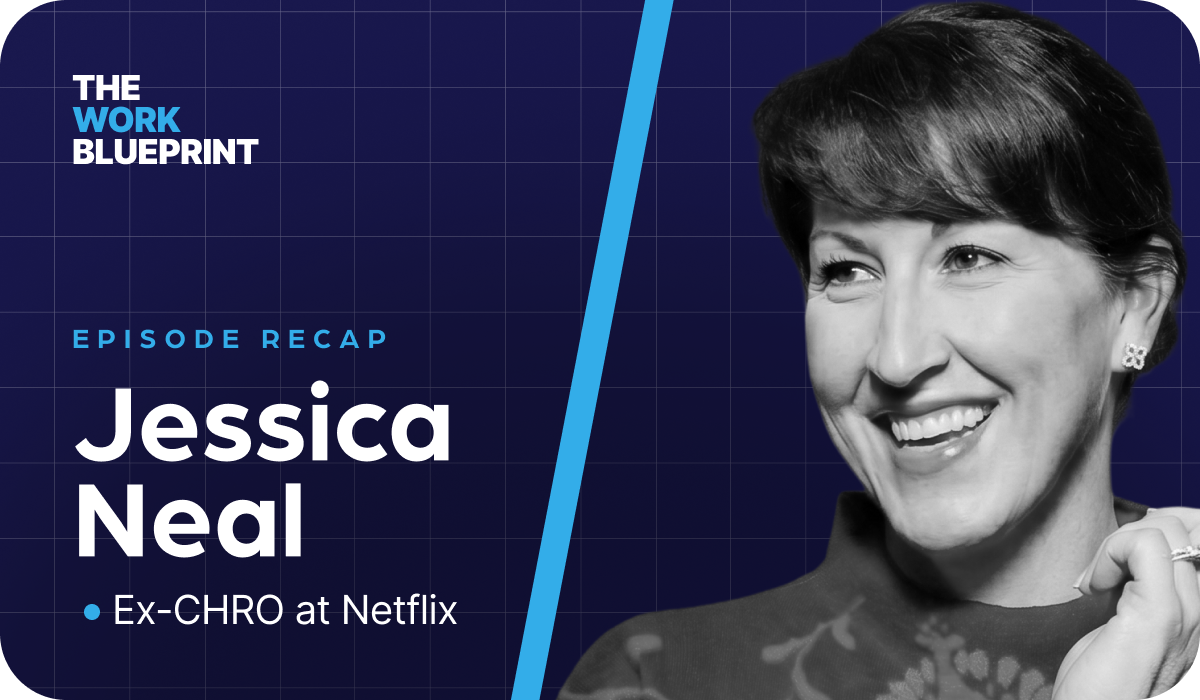

Jessica Neal and Siobhan Savage on redesigning work for AI
{height=150, max_height=150, max_width=200, oembed_response={provider_url=https://www.youtube.com/, width=200, height=150, html=, thumbnail_width=480, version=1.0, title=The Work Blueprint with Jessica Neal, provider_name=YouTube, type=video, thumbnail_height=360, author_url=https://www.youtube.com/@reejig, thumbnail_url=https://i.ytimg.com/vi/DJW1Z0ZkBbo/hqdefault.jpg, author_name=Reejig}, oembed_url=https://youtu.be/DJW1Z0ZkBbo, size_type=auto, source_type=oembed, width=200, supported_oembed_types=[video, link]}
Blog Post Body
Table of contents
Catch The Work Blueprint live
Hear how leaders are redesigning work across people and AI. Join us for the next episode.
AI work redesign succeeds or fails at the task level, not the role level. The organizations getting real returns from AI are the ones who looked hardest at how work actually runs before they changed it. Jessica Neal, former CHRO at Netflix and now an investor and advisor to leading global enterprises, has seen this pattern play out twice: once during Netflix's pivot from DVD to streaming, and again now, as every major company faces a once-in-a-generation work transformation.
This conversation, from the first episode of Reejig's Work Blueprint series, covers what CHROs are actually worried about, why traditional change management is broken, and what it takes to lead the people function as a genuine P&L driver in the AI era.
What they covered:
- Why the companies making the most progress are assessing work through an AI-led versus human-led lens at the task level
- How Netflix navigated multiple talent strategy reinventions and what that maps onto today's AI transformation challenges
- Why enterprises moving deliberately are better positioned than tech companies who handed employees tools and hoped for the best
- How to communicate work changes so employees actually redirect freed-up time
- Why everyone is a manager now in the agent + human operating model
- How the CHRO role is evolving toward chief effectiveness, and why HR business partners are the most underleveraged asset in AI transformation
Key takeaway: The organizations succeeding with AI aren't deploying the most tools. They are the ones who mapped the work first, identified the highest-value tasks to redesign, and built the infrastructure to bring their people with them.
The task-level lens separates progress from chaos
The best-performing enterprises right now are doing one specific thing differently: assessing work through an AI-led versus human-led framework at the task level, not the job level.
Job-level analysis is too blunt. A role that looks automatable at the headline level may contain dozens of tasks, some revenue-driving, some critical for expertise development, and some genuinely ripe for automation. You cannot make those distinctions without task-level visibility.
As Neal observed, companies making progress have a senior coalition aligned on this framework: CHRO, CIO, Chief Product Officer, and CTO in the same room, with a shared agenda. Where that alignment breaks down, AI transformation fragments into a CIO-led tool deployment with low adoption, or a CHRO-led initiative with no engineering support.
As Jessica Neal put it: "The companies that are maybe doing a little better than others are the ones that I really see focusing on a framework of AI-led versus human-led. They're really going through the work. And looking at it, and assessing it... really looking at not just a role, but task."
Just because a task can be automated does not mean it should
One of the most underrated risks in AI work redesign is automating the wrong things. Every enterprise is deploying AI. Almost none can see the work they're deploying it into.
Siobhan Savage, Founder and CEO of Reejig, described the triangulation clearly: which tasks amplify revenue-driving work, which tasks cost money without creating value, and which tasks must stay human to protect the expertise infrastructure of the business. Removing developmental tasks from a role does not just save time. It hollows out the talent bench.
As Siobhan Savage put it: "there's this thing that we gotta all remember that, like, we run towards the AI fire, sure, but don't forget that, like, in five years' time, you don't want to be screwed where you don't have the expertise, because someone has to monitor the agents."
The examples are not theoretical. Government agencies that automated welder roles cannot now find welders. Retailers that removed bakery positions face critical expertise gaps. The pattern repeats. Work Architecture, not just job architecture, is the map that prevents it.
The ROI problem is a communication problem
Enterprises are spending on AI and not finding the returns. In many cases the investment is real and the time savings are real. The problem is that no one told employees what to do with the time they got back.
If you automate invoice processing and free up two hours a day across two hundred people, those people fill that time with whatever they think is important. Intent is good. Information is not. The ROI disappears into unfocused activity.
Neal was unambiguous: employees don't know. Leaders are also not clear. The what and the why are not getting explained, so the how never reaches the workforce.
The fix is not a change management program. It is a communication structure at the role level: "Your workflow is changing. Here is what is different. Here is what we want you to do with the time you get back."
This is the core argument for Stealth Change Management. Continuous, embedded change delivered inside the systems your people already use. No kickoff meetings, no posters, no separate program. Just the work, updated. Work will upgrade like an iPhone upgrades. Getting organizations comfortable with that rhythm is the capability that makes every subsequent wave of AI redesign faster and cheaper.
Everyone is a manager now
The agent + human operating model introduces a management challenge most organizations have not yet processed: agents need to be managed, and that accountability lands on the humans working alongside them.
As Jessica Neal put it: "Everybody's a manager now. Right? Like, whether it's a person or an agent, like, you're managing... if you're coaching an agent to do… not the right things, you're not gonna get great performance."
Most organizations have not updated their performance frameworks, their management development programs, or their hiring profiles to reflect this. The spans of accountability expand. Hierarchies become flatter. The most important capability shift is from task execution to judgment: the ability to direct agents well, evaluate their output critically, and own the consequences.
This is HR's moment
The argument Savage and Neal kept returning to: HR is not a compliance function managing the edges of an AI transformation someone else is leading. It is the function architecting how the organization works.
Neal framed it precisely. She never thought of herself as an HR person. She thought of herself as a chief effectiveness officer. Someone designing the organization around what makes people most effective, with a direct line to the P&L. Look at the tasks. Look at the structure. Look at the design. Get that right and the ROI impact is massive.
The roles emerging across large enterprises reflect this shift. A small workforce innovation team, what tech companies call forward-deployed engineers, drops into departments, maps AI opportunity, models agent cost versus people cost, and activates through the HR business partner network. Job architecture, once a compliance exercise, has become the architecture of how the company will operate in the AI era.
As Jessica Neal put it: "once you have a product and idea, it is… architecting the way that you will operate and work that makes the difference. The opportunity to… really show the value and the impact of… being a strategic partner in the business and impacting the bottom line is like no other."
From Job Architecture to Work Architecture. That shift is the difference between a compliance catalog and the live infrastructure of an AI-powered enterprise.
Executive Checklist: AI work redesign
- Establish a senior coalition across CHRO, CIO, CPO, and CTO aligned on a shared AI-led versus human-led framework at the task level.
- Map the work before selecting use cases. Understand which tasks generate revenue, which cost money without creating value, and which must stay human.
- Audit tasks being considered for automation against expertise-pipeline risk. If removing a task removes a developmental pathway, flag it before proceeding.
- Build communication infrastructure at the role level when workflows change. Employees will not redirect freed-up time without explicit guidance.
- Measure AI ROI through actual changes to work: time saved per task, throughput per workflow, capacity redirected. Not licence activations or tool usage.
- Update performance frameworks to include accountability for agent direction and output.
- Build the work design function within HR: work designers, work architects, and HRBP capability to advise business leaders on task-level redesign.
Where CHROs and CIOs must partner
|
CHRO Focus |
CIO Focus |
Shared Outcome |
|
Task-level work design and AI-led versus human-led assessment |
Agent inventory and AI stack governance |
A unified view of which workflows to redesign and in what order |
|
Employee communication at the role level: the what, why, and how of workflow changes |
Deployment governance and system integration |
AI investment that converts to measurable changes in how work runs |
|
Expertise pipeline protection: which tasks must stay human |
Cost-per-agent versus cost-per-person modeling |
AI adoption that builds organizational capability rather than eroding it |
Executive FAQ
Why are so many AI investments delivering zero return? Most AI ROI fails because tools are deployed on top of unchanged workflows. Without task-level visibility into how work actually runs, AI is applied to the wrong things. Consumption metrics, licences, prompts, logins, do not prove that work changed. Only actual changes to tasks and velocity do.
What does "AI-led versus human-led" actually mean in practice? It is a decision framework applied at the task level, not the job level. For every task in a workflow, the question is whether it should be executed by an AI agent, augmented by AI with a human in the loop, or kept fully human-led, based on complexity, judgment requirements, and expertise-pipeline value.
Why is task-level analysis more important than role-level analysis? Job titles describe what people are called. Tasks describe what they actually do. AI capability maps to tasks, not titles. A role that looks fully automatable at the headline level may contain dozens of tasks, some revenue-driving, some critical for expertise development, and some genuine automation candidates.
What is Stealth Change Management? Stealth Change Management is continuous, embedded work change delivered inside the systems employees already use, without kickoff meetings or separate programs. Traditional change management was designed for single, bounded transformations. AI-driven work change is continuous. Organizations must build the capacity to absorb ongoing change as standard operating rhythm.
How should enterprises think about automating too aggressively? Removing tasks that are also developmental pathways degrades the talent bench over time. Before automating any task, assess its role in building the expertise your organization needs five years from now. Someone has to monitor the agents.
What does the agent + human operating model mean for organizational design? Human roles become broader and less hierarchical. Fewer management layers are needed as agents handle more execution. The most important capability shift is from task execution to judgment: directing agents well, evaluating their output critically, and owning the consequences of what they produce.
Conclusion
The companies that get AI right are not the ones who moved fastest. They are the ones who looked hardest at the work before they changed it. Task-level visibility, a shared cross-functional framework, Stealth Change Management, and an HR function operating as chief effectiveness: these are the structural conditions for AI ROI that holds up under board scrutiny.
Book a demo to see how Reejig's Work Operating System maps your work at the task level and gives your team the AI Impact Analysis to start redesigning with confidence.
Speakers

Siobhan Savage
CEO & Co-Founder of Reejig

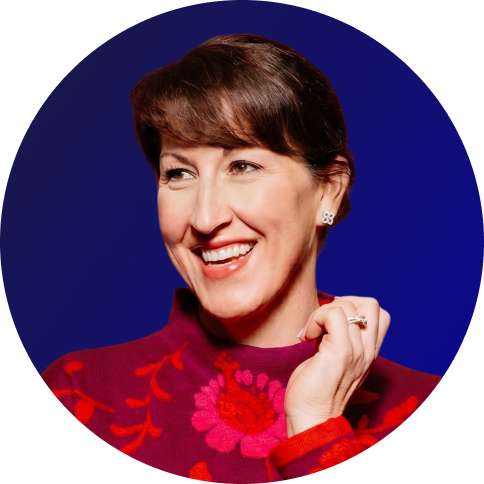
Jessica Neal
Operating Partner at TCV, Ex-CHRO at Netflix
Siobhan Savage: So I wanted to give everyone just a little bit of context into what the work Blueprint is all about. I spend all my time with customers who are all trying to figure out what is this new world with AI coming in, what does that mean to work? And what's happening is it's ending up that everyone is kind of trying
Siobhan Savage: to get around the campfire right now to figure out, like, how do we blueprint the work? What does that mean for workforces? What does that mean in terms of our organization? And what I wanted to do was to bring the best folks into the room so that everyone can learn together, and that we can share from
Siobhan Savage: some of the top industry experts around whether or not is there they're studying this, or they're doing it live, or there's just so many different perspectives. I am so grateful to invite Jessica Neal to join us today. So Jessica is our first Work Blueprint expert. And yes, you are the first.
Siobhan Savage: So don't screw it up. I got more to come, and I want to give you some context and why Jessica is perfect to start this conversation. So back when the industry was changing from like DVDs to nine Netflix, she was right at the front of all of this change.
Siobhan Savage: She was the theater driving. Not only that rapid growth and change to how work was getting done in a hyper growth environment. So she's kind of seen firsthand. So how fast when you go from like an industry changing an org change, their operating model was completely new. No one was working like this.
Siobhan Savage: So she's got this kind of first experience of like seeing like end to end how it plays out. But she also has this other expertise and job now where she sits on the investor side, so she gets access to the best technology companies in the world. She gets to see how AI is truly playing out, the capability that's happening and getting built within market.
Siobhan Savage: And also, I am very grateful to call her one of our advisors, and her role is she is really spending time with all of your theater roles in market, who are really trying to grapple on what this new world looks like. So, Jessica, a massive welcome to the Work Blueprint. And again, really grateful to have you as part of this,
Siobhan Savage: like first pioneering conversation that we're bringing to the world. Well, well thank you.
Jessica Neal: I'm so honored to be the first and I'm excited to not blow it.
Siobhan Savage: So I would love you to. By the way, these kind of blueprints are very raw, very open, very honest. So for folks listening in there, you're listening live now or you're listening after on your peloton, whatever. Like the purpose of these is like, we're trying to like, like lift the lid a little bit on like what it's actually feeling like, because most people are kind of
Siobhan Savage: their nervous, terrified, trying to get information. So a lot of this is just like live what we're thinking, what we're learning. I mean, Jessica, it would be incredible for you to share a little bit of context and like, what was that journey like when you look back to that moment when you accepted the offer at Netflix, you realize that this was a thing,
Siobhan Savage: like, talk us through like that moment to like what? Like how did that whole thing feel as, like leading the people side of the business?
Jessica Neal: Well, you know, I started when I was very young. I'll just say that in 2006, and I wasn't the Crow then. I spent my career growing up in Netflix, but I came in to run recruiting for them, and one of the
Jessica Neal: challenges that they had at the time was that they were having a very hard time attracting the talent to make the shift from DVD to streaming. So they needed these amazing engineers that understood how to build a streaming system.
Jessica Neal: The internet was just starting to be able to actually stream video. It couldn't do it very well, but we needed a group of people that could figure it out. And then, you know, we needed to, you know, we already had within the product deep machine learning capabilities around personalization and search and things like that.
Jessica Neal: But we needed even more of that. And so when people thought about Netflix, they thought about, you know, a DVD company and no good engineer wanted to work for a DVD company, they all wanted to at the time, they all wanted to work for Google. And so the challenge was really to build the talent strategy, to attract
Jessica Neal: the type of folks that would help make this pivot and transformation. And then, you know, as we were scaling and growing the company that led to us going global and not just being a domestic US company.
Jessica Neal: And so that was a different talent strategy than to us making content. And so instead of licensing it, now we're producing content. And now we have people on sets and we're, you know, all around the world filming TV shows and movies.
Jessica Neal: And that was a completely different talent strategy. And so there were so many different transformations and pivots that the company had. And, you know, as many of you know, we've become the largest entertainment company in the world. And but a big reason
Jessica Neal: that we were able to accomplish all of those things is not only because of the talent that we had, but because of how we worked. And I actually think that maybe and
Jessica Neal: this isn't me just blowing smoke up my, you know, but, you know, I think we were ahead of the times because I think in this world of, you know, AI and the changes that it's, it's making, not only with, with work,
Jessica Neal: but with what you might deem as talent for your organization is is changing. And but it's something that we valued then and, you know, we hired we hire people that had tremendous
Jessica Neal: judgment, that could make decisions and ambiguity. Right. We hired people that were driven and passionate about the problem. And I think, you know, what I'm learning and what I think a lot of other organizations are learning is that you
Jessica Neal: don't maybe need the person or lots of people to do lots of execution, because a lot of that execution is or will be done through AI. But you do need people that have enormous ability
Jessica Neal: to cipher through all of that data, because there's a lot and decide what to do. And in the lens of your values and the lens of your mission and, and to own whether it goes well or not.
Jessica Neal: And, you know, I've been thinking a lot about the impacts this this is placing, not just with individual contributors within the organization, but with leaders, because you need leaders now that aren't, you know, maybe you don't need
Jessica Neal: the functional expertise leader who's really good operationally. I think you need a leader that's, you know, willing to to work outside a frame, like not just a great executor, like a great idea, like a great, you know,
Jessica Neal: vision around something. And then you also need a leader that's going to be, you know, a multiplier in terms of the the impact that they're having on the team. Can they attract people? Do people want to work with them? Are they inspiring?
Jessica Neal: Can they develop people like those are the skills that I think are are going to be massively more important. And, you know, it's just been interesting because I've been reflecting back on, you know, what we focused on. And those were a lot of the things that we focused on
Jessica Neal: that a lot of other companies maybe didn't value as much. And so I just kind of find that to be interesting.
Siobhan Savage: I think one of the things that I've kind of learned from just talking to you over the years is like you were very deliberate in how you structured work as well. So not only were you kind of like creating a new platform, essentially, like there's kind of like, I know this sounds like silly because there are two different things,
Siobhan Savage: but where you were moving from, like DVD to streaming was new platforming skills. It's the same thing of like, everyone converting into large language models. So there was this like shift in like once in a generation change at that moment, which you guys were pioneering, which I thought was like really important for kind of looking forward to.
Siobhan Savage: Is there any common things that we're learning from your journey to where we're at? Not. But the one thing that I kind of learned from just the time of tracking you and watching your work was like, I deliberate. You were in terms of the that and that wasn't even with AI in the mix. So I think when, when, when you look kind of at around
Siobhan Savage: your peer group right now at a level and you know, you get to advise the top theater roles in the top companies in the world, like, what are the things that they're kind of freaking out a little bit about? Like, what are the things that you think that people are worried about? Like, what are the things that like, are you seeing
Siobhan Savage: sort of come up in those conversations because everyone talks and it's kind of getting a little bit frustrating that we talk so much about the AI part. But the reality is, like not many major companies are going to have end to end AI. Therefore, they still require humans in the loop, which means the human part is very important.
Siobhan Savage: So like like that's the part I think I would be really interested to hear your view. Like, what are you hearing from all of your peers?
Jessica Neal: Yeah, I think. I think a lot of folks are very excited about the the opportunities that AI is creating for the organizations. But I, you know, and people in general.
Jessica Neal: But but there's also, I think, a bit of anxiety. Right. Because there's no one organization that any of us can point to that has got it figured out. Like everybody's we're all learning as we go.
Jessica Neal: And so I don't I think not having the answers is a little nerve wracking. Plus, there's a bunch of pressure being felt from the board, from the CEO to really figure this out.
Jessica Neal: And I think the companies that are maybe. Doing, doing a little better than others are the ones that I really see. Focusing on a framework of AI led versus human led.
Jessica Neal: They're they're really going through the work and looking at it and assessing it. And I think, you know, this is part of your mission at Reejig. But I think really looking at not just a role but task.
Jessica Neal: Yeah. And like how work is getting done. And they're they're looking at it through a lens of AI led or human led. And, and I would also say they're looking through this also with the lens of their values and their mission. Right. And then
Jessica Neal: also, it's a team of folks across the company at a high level that include the the CIO, the chief product officer, the CTO in some cases, and the that team is
Jessica Neal: is really aligned on this framework, and then they're aligned on the things that perhaps they are trying within the organization and their approach. And I think that those those organizations are having a bit more success than the ones where I'm
Jessica Neal: it's a it's a thing in the, the CIO world, and they're just pushing out some different products and things, and people are trying them and experimental them with them. That's not sticking or it's just the crows responsibility, and it's sort of the same thing.
Jessica Neal: And they don't really have that sort of framework agenda. And it's a shared responsibility across, you know, the organization. I see that being a little bit more fragmented and less successful.
Jessica Neal: You know, like one of the things that I've seen which kind of signs a bit like contra intuitive, like what I'm going to say, but the tech companies are the ones that you read about in the news who are apparently automating either whole company to the point they don't need HR vibes.
Siobhan Savage: That's the the crappy story in the press. Not true. No, it's still shit. Total bullshit. They're usually selling you in AI, literally, if you like, scratch the surface and all of this stuff. Like really, it comes down to the story. Their talent is usually correlated to an AI that can do some part of that work. Right? That's like it's that obvious, right?
Siobhan Savage: But they say you've got that on one side. You've got the tech companies and the startups who apparently have like completely AI, their company and blah, blah, blah. And then you have everyone thinks that the big large enterprises are the ones that are the slow. What's really interesting, and I've worked for both and I'm also a startup.
Siobhan Savage: I am building \$1 billion company with under 100 people. I'm halfway to that goal, right? What I have noticed is the enterprises were slower to the game, not because the want wasn't there, but because from a governance perspective, they weren't. If you if you sell medicine, if you are, you know, hospital, if you are a bank, you have the vibe code of bank. Do you know what I'm saying?
Siobhan Savage: Like there is like restrictions in place that, you know, they're not going to go out and do that. What has become really interesting is when you read in the press, you think that the tech companies are so aggressively ahead of the like the big corporates. But what I've actually find is that's not super true because the tech companies have went out
Siobhan Savage: and their strategy was everybody, I'm going to give you a tool and everybody's going to go and automate how you work. And individually you can work whatever the hell you want as long as your token Maxine and your, you know, using AI, like you'll be great. What is actually happened is not only have they spent way more money
Siobhan Savage: than what it cost for the people, but actually, like, if you imagine everyone's in the rowing boat and everyone's going in a different direction, like the work is slowing down and it's chaos. So I actually think when I look at comparing the two customer bases, that the slower governed world actually has a little bit
Siobhan Savage: of like an interesting view that everyone thinks it's super negative. The enterprises are the ones that are being more intentional about the design of the work versus the tech companies. So I think like, I don't know, like if you like the Wild West versus, you know,
Siobhan Savage: like, you know, a very well run kingdom well and like, don't get me wrong, the corporates have like all these other things about like compliance and risk and even deploying an agent they have that way if, if I, if I was like to kind of look at the orgs, I'm actually going to bet
Siobhan Savage: that these guys are the ones that are going to win over these guys. Yeah, that's if I was betting it could be I mean, look like the I think the opportunity that a lot of startups have is that they are getting to build with AI first.
Jessica Neal: Like you're getting to do this. Yeah.
Siobhan Savage: Like me like I get to design it completely different. Right. And and that's that's that's exciting.
Jessica Neal: That's that's fun. But it gives you a different advantage than these other organizations, which are very large, very complex. And, you know, to your point, do have different compliance and regulatory restrictions where they can't
Jessica Neal: they can't just scrap it and, and start from scratch. And they have, you know, hundreds of thousands to millions of customers depending on them. So it's a different problem for sure.
Jessica Neal: But I see opportunity in both I see. I see. You know, I try to think of a nice way to say it. I see mistakes happening on both sides. Yeah. True. Yeah, true.
Siobhan Savage: The other where it's really interesting for like our listeners generally will be, you know, HR folks. Right. And I actually see that in the corporate more larger enterprise that the role of HR becoming these kind of work designers work architects is like super critical because in the tech world it's like, throw it to a light there and we'll figure it out.
Siobhan Savage: Whereas we have to be more intentional, which means we have to redesign the work. So we're starting to see this like emerging team form with Indian companies, which is all like workforce innovation work, architecture work, design, whatever you want to call it. But I think everyone collectively knows, like multi-billion dollar companies right now are being born from the idea of
Siobhan Savage: like solutions consulting and like forward deploying, right. Like, you look at all of those investments that have just been made into, like building these consulting practices to go in and forward deploy. Everybody knows that. You can't just throw the AI out there hoping for the best and like it'll stick. Everyone's recognizing now that I've got to understand my task, I've got to reengineer the workflow.
Siobhan Savage: So there's this rule where we're seeing HR and I playing into the space. It's kind of like the skills folks, job architecture folks or effectiveness folks, or now I kind of cloning into this new kind of version of like, work in which we're starting to see play out across pharmaceutical, banking, insurance, retail, CPG.
Siobhan Savage: And it's starting to theme like, do you think that like where do you think like, hey, jars rule more broadly, like if you were back in an operating model and you were designing it for one of the big companies, like, how would you be thinking about team? Yeah, I mean.
Jessica Neal: And some days I wish I was back in that role because I feel like it's just so cool. Like the opportunity that these folks have to figure out something, so. Crazy and evolutionary.
Jessica Neal: And to be at the forefront of that, I think is just a massive privilege. And and some days I wish. But most days and like, thank God I don't have that job anymore. So, you know, I think that.
Jessica Neal: Look, I think a lot of value that was put into an HR teams was around, you know, a ministration comms, de-risking, compliance,
Jessica Neal: those things and those things are incredibly important. And you had these very large teams that would handle these things as, as, as our work shifts in our function, those things are going to maybe be taken care of via AI. And I would
Jessica Neal: just really encourage the teams that are out there right now that, you know, are doing some of this work as to really, you know, push yourself to, to to go as far as you can personally go with AI and not to be afraid of it and
Jessica Neal: get to be in the business. Right. And I think when you really understand the business and really what you're talking about, whether it's you're doing it in the world of AI or what we were doing at Netflix, you're designing work,
Jessica Neal: you're designing how the organization is going to be effective. Right? And I never thought about my job as being an HR person, I don't know. I feel into HR. I don't even like saying HR. I think it sounds weird and, you know, antiquated.
Jessica Neal: So one of you out there comes up with a better term than HR or people or talent. I'd love it. So, you know, send us your thoughts. But, you know, I thought about myself as being a chief effectiveness officer. And I think if you're approaching
Jessica Neal: the organization in designing the organization around what's going to make people the most effective, that's just a really cool way to approach it. And then that is going to have a meaningful impact on the bottom line. And so you're really going to have to look at how work is getting done. You're going to have to look at task.
Jessica Neal: You're going to have to look at structure and design of the org. And if you can figure out that massive puzzle, the impact on the amount of ROI that the organization is going to get from that, not just for the people,
Jessica Neal: but from the bottom line, it's going to be massive. And so you have this massive opportunity to be a meaningful impact or to the penal, if you're approaching it as how do we become the most effective? How do we take the friction out of work?
Jessica Neal: How do we how do we amplify our people? How do we amplify decisions? How do we amplify revenue? Like those are all the things that I would be dying to solve, right? I love this, I love this, and like, you know, we've been on a couple of customers together.
Siobhan Savage: And the strategy that we're like working through, and I love this chief effectiveness offer officer as well. And I do think there has to be some evolution of how where we are as a team, because I think people think the HR team is a like police policy thing when it's like it needs a rebrand, I agree.
Siobhan Savage: So yes, we need we need to all collectively agree to rebrand this thing. But what I'm seeing and what you're seeing on these, on this work that we're looking at is like, if you imagine that, you know, how do we make money? And then where we spend money is basically how business runs really simply. So it's like, how do we help reinvent the stuff and amplify
Siobhan Savage: to your language the tasks that help us make more money. So let's focus on where do where do we make money as a company and how do we do more of that. And then we look at like, what are the tasks that are kind of lower value that cost us money, and how do we remove those? Exactly.
Siobhan Savage: And then there's this like third pillar, which is really starting to pop out now as well. Just because a task can be automated doesn't mean we should. So one of the algorithms I've built into Reejig is I cannot tell you what tasks you should not remove, because if you remove them, you will remove the expertise building in your company, which will impact your bench.
Siobhan Savage: So some things are like if you're like a sales development rep, you got to do that time and do your laps in order to become a good salesperson. If you want to have like be a tax auditor, you got to do your laps and learn to read and do the audits before you become the auditor.
Siobhan Savage: So there's like expertise that is really critical for our organization. So I think there's this like triangulation between like how do we make more money. How do we save money. How do we protect the company around like certain things. Because in all of the customer, all the it's that human led versus AI.
Siobhan Savage: Well, and you're never going to have like a vibe coded bank where there's no people. So the reality is you got to have like expertise still in your company. So don't move. There was a whole thing. We're doing a whole pile of work, and I'll not get into the detail of it. But like even in the government where they removed welders
Siobhan Savage: and they automated that, they know I can't find welders. Yeah. Like in the retailers where they remove bakeries. Yeah. And bakers, they know I have this critical expertise gap. So there's this thing that we got to all remember that like we run towards the AI far. Sure. But don't forget that like, in five years time, you don't want to be screwed
Siobhan Savage: where you don't have the expertise because someone has to monitor the agents like you have to have like human in the loop to do that. So I think like that's what we're kind of seeing play at. Yeah.
Jessica Neal: And I think, you know, it's and speaking of managing the agents, I mean it's really interesting because everybody's a manager now, right. Like whether it's a person or an agent like you're managing and I mean, you and I both know this and many people listening know this too.
Jessica Neal: Like, not all people are great managers. Yeah, yeah. You know, if you're if you're managing, you know, I think it's going to be very interesting to look at performance, you know, five years from now because your workforce is going to be humans, of course. And it's going to be agents.
Jessica Neal: And you know, who's responsible for the performance of the agents? Is it the people that's managing them? Yes, that's my guess. And, you know, if you're if you're coaching an agent to do not the right things, you're not going to get great before. I don't know.
Jessica Neal: It's just it's all very fascinating. It's and you know, the, the, the privilege that I get to have as I get to sit on both sides, I get to sit in with the customers who are sleeves rolled up in live doing it, and I get to build the technology. Yeah. So I have this, like you talk about privilege of sitting in a room like I have the ultimate privilege.
Siobhan Savage: This is why I feel a responsibility to share everything I'm learning because, like a lot of it is bullshit and a lot of it is noise. So it's like, how do you tell people really what's happening so that they don't feel like they're out of the loop or they're lost, or that they're not going to let behind? And there was a really good question that came into the chat as well.
Siobhan Savage: So the question was after work redesign high intentional are companies about the change management and enablement and measurement of adoption and changes in both processes and output by humans and willing to invest in these. And I think, like I can take a first crack about what I see
Siobhan Savage: real time in customers right now. And like this is I'm going to give you like a philosophical step up for a second thought, and then I'm going to tell you reality. If you imagine that this is a change, to work forever like this is not a one time change management program that we're doing where we bring in a consultant and we do this once.
Siobhan Savage: This is a forever change to work. It will be continuous. The agents get stronger. Once you update a workflow, you're going to upgrade it again once the technology gets stronger. This is a forever. So like we're not doing this once. Everyone needs to be clear on that because I talked to some customers and they're like, once I do this and I'm like, no,
Siobhan Savage: like once you do this, you open the whole can of worms of all the other things that you're going to do. And so there's this, like it's going to change. That means that how we do change management in our companies has to change. Change management design typically in our world is designed
Siobhan Savage: on this one time programmatic view of like I do this change management program. What you have to build as a capability within your business is stealth change management. So think about like when your iPhone upgrades, it's like work will upgrade like your iPhone upgrade.
Siobhan Savage: So we've got our people got to get our people used to and comfortable with the idea that work will evolve continuously. And you as an organization. And this is where again, HR is so critical, not just on the work we design, but to make sure our people are equipped to do the job in regions in Europe, for instance, if you do not put and make sure your people are able
Siobhan Savage: to adopt the new way of working, you are in trouble because you are putting that employee in a situation where they can't like they don't know how to be successful in their job. So there's this whole thing around. How do you make sure that your people, if I go and I reinvent how invoicing is paid within my company, and let's say a thousand people do that
Siobhan Savage: at scale, that's a thousand people that need to be shown the new way of working. So one of the things that, like I'm really working with customers on is like, let's move away from change management. It's a self change management. And how do we create this continuous evolution in our orgs and really look at that. And, and to the not sure who was put in the question
Siobhan Savage: because it's come from my team. But the other part of is then and you should measure that adoption not based on how many times people are logging in to copilot. Let's say it's actually how much has worked changed. Like is the invoice used to take us like seven minutes. And I like we can see changes based on like
Siobhan Savage: output of like velocity and things getting done faster. Or I only need 20 people to do that now, which meant those other couple of hundred people can get pivoted into other, more meaningful work. So that's kind of my take. Jessica, I don't know if like you agree on that. Like, or you have a different perspective, but I feel super strongly about
Siobhan Savage: change management just feels like the dinosaurs and it's a bit old and crusty and there's this, like, kind of new age version of change that we have to get our org used to. Yeah. You know, I do feel, I feel very similar to, to you. I think, you know,
Siobhan Savage: I've been thinking about this a lot and it's, it's a little bit around change management but a little different.
Jessica Neal: I think the way that most organizations have been working, whether it's around change or decisions that they're making, a lot of it is. A lot of the ways
Jessica Neal: that are built for people to to work are more about not taking risk and de-risking things and doing things the same way. And that's why, you know, we kind of have change management because of course there's always change, right?
Jessica Neal: So I think as much as we can get our organizations to embrace that the way that we're going to be working every, every minute, maybe right is going to be different from the next
Jessica Neal: because the algorithms are going to continue to get better and better and better, and our work is going to continue to be impacted by that. Our organizations are going to shift at a more massive rate. When you look at, you know, sort of
Jessica Neal: the evolution that happened with growth within companies pre AI. And then you look at some of the growth of the companies that are, you know, sort of AI first agenda companies like their path to 100 million versus the path to 100 million a few years ago. Dramatically different.
Jessica Neal: So companies are reaching 100 million in a year or two, whereas that took ten plus years before. So, you know, running a \$100 million company versus a \$30 million company very different.
Jessica Neal: And so those things are just the rate of of change is just happening so fast. So I think if we cannot get our organizations prepared emotionally and mentally and from a work perspective, like how we're going to do this, it's going to be
Jessica Neal: very choppy and hard and a big slog. And, you know, look, nobody likes change, right? Everybody likes things to stay comfortable and the same. But if if your company isn't going to get left behind and your people aren't going to get left behind, you really have to infuse
Jessica Neal: this way of thinking and this behavior, like in how you operate. Because today you might make decisions through consensus. That's probably not going to be effective and efficient now. Yeah. But it even it comes back to your point.
Siobhan Savage: Like what makes money. What do we lose money on. Like I think a lot of folks kind of do this like soft and fluffy thing or use case selection. Like we should be making decisions based on data, like like like where, where do we make money? What's the work? Amplify it. Where do we lose money? Stop the risk.
Siobhan Savage: Like it's literally like that. Simple. And it sounds when I talk about this with customers, I'm like, stop crying. Sourcing ideas. You put a massive backlog in there and it's all crap. It's not even valuable stuff. And usually like, it's stuff. It's just like, like the tiniest thing. That maybe might be an annoying task, but it doesn't cost you any money.
Siobhan Savage: It's like something you do once a month, you know, like, it's like, not even valuable. And I think, you know, as you're talking, just thinking about something that I think is going to become increasingly more important, especially with this evolution. And all the change is companies have got to get really good at being clear
Siobhan Savage: and what's important and what's not. And leaders especially have to be very good at explaining the why behind what we're doing, what we are doing, how we are going to do it.
Jessica Neal: And a lot of companies and organizations just aren't great at that, right? And yeah, so if you go a layer, you know, even if you go a layer below this, below the sea level, oftentimes people have very different views on what the goals are.
Jessica Neal: And the further you get down the organization, the that is. And so I really think that communication and clarity are going to have to be a big part of what organizations get good at.
Siobhan Savage: So you know what you just like. So there's something I'm going to you don't need to know the perfect answer to this, but I'm going to tell you a live problem that I have, okay? I have several customers who have been sold AI, and they promised that they would unlock X amount of millions of hours across their employee base.
Siobhan Savage: And what has happened is they brought in these workflows, they've done the agents, but no one can find the R's that were apparently being locked. And I think a lot of it has been that the employees will fill their time up with other stuff they think is important, like, imagine that most employees intent is good, and they think they're doing good work
Siobhan Savage: and trying to do the right thing for the company. How would you communicate to the employees? Like so if I know that I'm going to reinvent how the invoices being paid and I know of a couple of hundred people do that, I know that it's going to probably unlock two hours a day. Like, who is having that conversation with the employee to say that this is changing?
Siobhan Savage: And then how do I take that capacity? Like, how do we work through that? Because that's a real thing that people are getting a bit cranky about because they're like, well, they're spending all this money, but I can't see the hours that everyone's saying, like, how would you? And most of it's just usually like no one has told the employee, like, how would you manage that?
Jessica Neal: Yeah, because they don't know. They haven't had a it's like a therapy session for me because like I'm like trying to solve that problem. Right. So would love your take. Yeah.
Siobhan Savage: I mean I think that I think that you got to the problem in its core is that employees don't know no one is talking to them about this, and the business isn't being clear.
Jessica Neal: And you have a bunch of leaders who are also not clear. And so the, the, the what and the why isn't getting explained and therefore the how. It's all confused. Right. And so,
Jessica Neal: you know, I think communication is a major plague across many, many, many companies. And it is one of the reasons why a lot of companies get slow and bureaucratic and all these things, because they just have all these people
Jessica Neal: really not contributing to the core of the thing. Right. And to your point, I think employees and managers and everyone are well intended, but but and they're doing the best that they can with the information that they have. But often the information they have is not the right information.
Jessica Neal: And so I think that, you know, if you really want to if you really want to do this, well, you have to help your, your, your managers and your leaders get good at explaining this to their organizations and their people. You have to get good at explaining it to them.
Jessica Neal: And, you know, I think with what I would do if I had people, you know, let's say you're invoicing example and it's like, okay, so I used to spend my whole day on invoices. Now I have two free hours. What should I be doing with those two free hours? Well, here's what I'd like you to do.
Jessica Neal: I like you to learn this. I'd like you to spend time thinking about X, and. But employees don't don't know that. And so they're doing what again, they're maybe spend their time doing some other things that that maybe aren't important to their, their amplification and maybe certainly aren't important to the company's amplification.
Jessica Neal: But I think, you know, if you have more of the how, you know, for those specific roles. And I think one of the things we're going to have to get very good at is teaching people
Jessica Neal: in our workforce how to have judgment, how to make good decisions. You know, I you know, there's a lot of talk out there about, you know, entry level work. And like, you know, we're never going to we're not going to need entry level workers. It's like, well, I don't I don't think so.
Jessica Neal: But but what if instead of thinking about it as entry level per se, you think about it as you know, you're teaching the next generation of the workforce. And what does that mean for your organization?
Jessica Neal: And maybe the, the, the workers that you hire? Because let's assume that functional expertise isn't as important, right? You know, execution on certain task
Jessica Neal: isn't as important, but judgment is learning. This craft is to your bakery example, right? Yeah. Maybe they need to learn the craft of auditing. Maybe they need to learn the craft of product. Maybe they need to learn the craft.
Jessica Neal: Maybe they learn all of those things because you meet them around. Right. So I think, you know, again, we need to we need to think we need to kind of zoom out of what's happening today and really think about what's going to be successful five years from now. And it's very hard to think five years from now.
Jessica Neal: But but I think that that, that that would be sort of the lens that I would be trying to apply is because like, let's think about the what ifs. What if this stuff doesn't exist anymore? What am I going to hire people to do? Am I, you know, and I think you are still going to hire people, and you still need people
Jessica Neal: that know how to do things, the things that you need them to know how to do or just different than what you need them to do today. Because again, most organizations grew and scale because they needed more and more execution, right? We need more task. We need, you know, so invoices to send.
Jessica Neal: So you need more people to send those invoices. And those are all task. But to your point, you know, maybe a lot of that work goes away. But then there's more work created from a decision making perspective. And you know, I just perspective. And maybe you have more, more generalist in your workforce than you do,
Jessica Neal: you know, specific task executed is the other thing that happens is like, let's say you've got a job. Let's say it's a financial controller who's responsible for the invoice pain.
Siobhan Savage: Sure, you're removing certain tasks, but you introduce new tasks that you haven't had to do before because of the agent. So this is the part where people don't realize it's a little bit like Jenga, you know, like you're kind of like, I don't I get these like kind of like kind of crazy big, like newspaper stuff where people like, oh, the job like this entry level thing I call bullshit again on that.
Siobhan Savage: Like, you know, that's not true. I think it's definitely going to be more difficult for, you know, younger generation to come into the workforce just because there's this perception that we don't need to hire this level. And the fastest way to make their cuts is to not hire in this, just to let the talent retention go down and natural attrition, that's what basically the game people are playing right now, in my opinion,
Siobhan Savage: that they're like like, let's keep our head kind flat and grow. That's the bet. So they don't have to do the big head cuts. That's what I think is happening. But like there's not really a lot of jobs in and I'm talking about enterprise like proper big companies here because startups are not a good example. Like enterprises
Siobhan Savage: are not going to just rapidly have all of these jobs getting removed. What's going to happen is that they're going to evolve. They'll just chop and change. They won't be like completely gone. And you're going to see like reengineering happening quite a bit across the job profiles as well. So I think like what you're saying is like totally true.
Siobhan Savage: And but part of the problem for folks right now is like what's real and perception versus the media is to so toxic on its opinion because look at all the media. It's like people selling you a tool and they dominate the whole press. And I think like that's where it's like tricky because managers are reading that stuff. People are going into boardrooms
Siobhan Savage: and going, well, if Facebook has done this, we can do that. Like, why are we not doing that? You know, Elon cut 87% of his workforce and the tech still running. Let's do the same. Like it's kind of like what where you get that tension coming down. And then there's the actual reality.
Siobhan Savage: There was a question that came in about the kind of spicy point of view about when I said about the tech companies. So you mentioned enterprise companies are moving slowly, more slowly and intentionally, and you're betting on them. What advice would you provide to tech companies to improve and strengthen their approach, instead of typically throwing it out of AI and everyone operating independently?
Siobhan Savage: I think there's two things. And I chime in here, Jessica, if you if you kind of have a different view, but I think you have to create a sandbox for people to individually be able to be creative. I think the difference between people using Claude and OpenAI, those tools are individual productivity tools.
Siobhan Savage: They are not typically workflow tools. They are help me code faster, help me do a nicer presentation, help me reply to emails. What I look at in an org is like, how does the the core workflows of the business run where I've got like lots of people on them. So I would say like, let your people do things over here
Siobhan Savage: that are kind of isolated to their kind of common ways of working, but anything that is critical to making money, saving money risk, like that's your AI workflow, like how do I reinvent that? So I think the the viewpoint that I would say is like do an analysis of like the opportunity based on task subtask.
Siobhan Savage: Look at your agents, see what agents are actually allied in your environment. And then I would pick the things that are the most valuable. And I would go and reinvent those and let your teams kind of like do those like individual productivity things. There is a very misconception in market that, like, everyone thinks that Claude and OpenAI is like doing all of these crazy things.
Siobhan Savage: They're not they're making the individual a bit more productive. But the real unlock for an organization is like when you reinvent the workflow, whether it's like Copilot studio in an enterprise where you can, like every 100 people are now working in this new way, or you're redesigning with like a workday with a back end, ServiceNow, etc., etc.
Siobhan Savage: like they're kind of going to be the places where value and true dollars and hours are being unlocked. I don't know, just if you've got a different thing.
Jessica Neal: I think that's right. I would answer it very similarly. Yeah.
Siobhan Savage: And then there's another question as well that's come in. Recently I've come across several articles questioning the long term sustainability of AI, citing concerns about both energy consumption and cost. Given these potential constraints, should organizations be redesigning all of their
Siobhan Savage: processing systems around AI, or is a more targeted approach warranted? If AI solutions ultimately prove steel and economic sustainable? I mean, I'm going to give you that one.
Jessica Neal: Well, I mean, I, I, I, I think AI is here to stay, right? I do I do think that there is an infrastructure problem, but I think a lot of money is going to be thrown at that. And that's going to create a lot more jobs.
Jessica Neal: Right. So you know, there there there may be some bumps in the road, but I, I would not I would not be hedging for that. I would be building, you know, and innovating to amplify my workforce
Jessica Neal: because, you know, the train, the train is moving and the train is moving quite fast. So, you know, again, there is an infrastructure problem and there's economics to figure out, but some very rich, wealthy, smart people are going to be all,
Jessica Neal: yeah, investment dollars are going to go into those, you know, companies to solve those problems. And yeah yeah. The biggest hedge against it.
Siobhan Savage: The biggest the biggest issue I think right now today is that companies are just like they've got no real clear plans. So they're probably blowing out a lot of their budgets because they're kind of throwing it at a wall hoping something sticks. So like I'm not an expert in the impact of AI into energy, etc., but the stuff I'm
Siobhan Savage: an expert in is like like how does this impact the work in the workforces? And the thing I would say is the big problem that folks are having and most CFOs are freaking out about right now, is that like like in some instances, customers have deployed agents and AI workflows that are costing them more than the people they displaced. Right. That's real.
Siobhan Savage: So and that's a that's a like token, Maxine, like everybody was given a leaderboard who can like smash the most tokens and spend the most money on AI, which was just stupid. Like, why would you even do that? But that was their weird way of trying to incentivize people to like adult AI versus. And that's again, back to the tech companies, right?
Siobhan Savage: Like, I've got lots of opinions on that and I'm one of the tech companies. So I feel like I can say that. I also think like there's really funny chat going on, like my accent is really hard to understand when I say Rs. So people are like, what do you mean by Rs. So like the ROI? Sorry Marianne.
Siobhan Savage: I was like so struggling to understand what you meant. Like when I say Rs. And when I say skills that sounds like Skittles. So people like are like what? So what I was saying was that the unlocked of a proper reinvention of a job or workflow is actually the Rs,
Siobhan Savage: as in who's our yes? I can't say that I was so like, have we unlocked hours? Like, how much time you girl I got? Yeah, you've hung around me enough. I got this weird like Irish, Australian, American weirdness going on with accents.
Siobhan Savage: Yeah, we'll cut that part out. Well, that is Texan is a little deceiving because of the seed, but yeah, well, there's another one in America I look at, and I just I can't even remember what it is because my mind blinks when I see it, and I have to worry that I have to say it out loud on a call. But there's lots of words that I look at. I'm like, I don't know how to say this, but I think, I think, I think the thing
Siobhan Savage: that I love about your expertise and I love about sort of just the way you see things is like, I mean, we met because of your role within the tech space and like sitting alongside and watching the AI movement. And we were early, as you know, we were first.
Siobhan Savage: And I think I think the thing that I love about your expertise is you've both been at the helm of, like, this rapidly changing department. And I think the kind of stuff that you're, you're talking about not only is like, I've seen it and played it and I've, you know, I've got the suitcase that's kind of rolled up with me because I've got it.
Siobhan Savage: But I think when, when we come into to this new era, I am so passionate about career path thing in this space, I think this is his moment to be like completely like reinvent ourselves. And I think that, like, there are so many people that will be on this call.
Siobhan Savage: There are so many people that are so kind of fed up with, like the way that we get boxed in at the HR side, and I have so many conversations with investors that pisses me off. They're like, oh, but that's a hard thing. And I'm like, it is not a HR thing. Like, this is not a HR thing. This is actually like, if you imagine that the company's today
Siobhan Savage: are paying for all these external people to come in and tell them how to reinvent their company, do you not think that that's crazy? Like, these people have never reinvented a company before, but they're on the outside looking at your company, telling you how to do it with no expertise, because this is all new. So my vision and my whole like excitement
Siobhan Savage: comes to everybody on this call, everybody listening to this like, this is your moment to own this new era, for us to build the capability internally. I'm also seen across customers, and I don't know if you've seen this as well. CIOs are reporting to see
Siobhan Savage: it's becoming this new evolution, which is the most exciting thing because we are not just looking at capacity in our Aug as people. We're looking at agent and human capacity. Like what? Give me like, what do you think about like that? And I get very excited. Part of me like this topic because I am like so ready for us to have this moment as a, as an industry.
Siobhan Savage: So, like, take it away, tell us where we're going.
Jessica Neal: Good Lord, I hope I can do that. But just like I was saying earlier on, like I would be so excited to be in this role right now, I think it is like the opportunity for us to really show the value and the impact of
Jessica Neal: us being a strategic partner in the business and impacting the bottom line is like no other. And the fact that, you know, you see roles like a CIO role coming into HR, HR, becoming, you know, the chief operating officer,
Jessica Neal: you know, I do think, you know, and this is a different topic. But many crows should be the CEO and in many ways of the company. Because really what you have a product an idea, it is it is architecting
Jessica Neal: the way that you will operate and work that makes the difference. You know, when you look at these successful companies, whether it's Amazon or Apple or Netflix or, you know, whoever, the ones that are truly successful
Jessica Neal: have figured out how to hire the rate talent, deploy them on the right things to make a massive impact. And they have an excellent operating culture, be it all very different from one another. They excellent operating culture.
Jessica Neal: And and that's where I think we're being pushed to go. And we have to figure out this operating model in this new construct. And I think it is so exciting. And, you know, so for all of you that are sitting in the seat,
Jessica Neal: dive in like, this is it. Don't be scared about it. Dive in and prove why you're why you're there and that you are a true partner to the business.
Siobhan Savage: You know what? I've seen this massive like I completely underestimated this and didn't see it. And I hosted like a whole pile of my customers for what we call Pioneers Club, which is where they all get together. And we like, share and learn. And every single customer in the room was talking about the role of the HR business partner in this new world, like think, and I just didn't.
Siobhan Savage: I was always thinking about this core team that was doing the reinvention. But actually in every kind of major org, the HR business partner is the direct line into the business that owns the relationship with the leaders. And they're fielding all of these questions around, where does my workforce going to look like? What will be the impacts? Like where is the like?
Siobhan Savage: So there's this really interesting thing that I think we're going to see, like also this evolution of the HR business partner as well, because they are like moving from like generalists kind of like role into now being requested to like lead in this moment. And a lot of what I'm trying to get my head around is like,
Siobhan Savage: what is the operating model for us as like a HR team to operate in this? And I see a couple of different playbooks happening in customers. And like I serve the big and most complex again, not startups. So like when I'm looking at like org, they have a small like Co which is like a workforce innovation work strategy, whatever
Siobhan Savage: you want to call it small like team, they're like Navy Seals. They drop in and out of the company and they're dropping into departments, usually alongside HR business partner. And what they are doing is they are advising on like where the AI opportunity exists there. Then looking at like modeling the AI impact, we're in better right now.
Siobhan Savage: I have some customers where we're melding as well, like the cost per agent versus cost for people, so that they're not making that mistake of like pulling people out. It's going to be more expensive. So they're kind of sitting at that like this Navy Seal. And then the activation there is the HPE. And then I have these other customers that have like large teams of like, let's say 50 people that are also looking
Siobhan Savage: at org wide effectiveness and like helping all the business lines. And in those models I'm seeing a couple of core skills pop out. So what the tech market would call forward deploying engineers. We and HR would probably look at that as work design like they're calling it. The sexy thing, which is a forward deployed engineer, basically goes ahead
Siobhan Savage: and looks at like phones people and asks them, how do you do this? Interviews them, watches the process, guys. That's all it is. That's forward deploying is not like this like super crazy thing. What they're trying to do is understand how work runs, pull that back and then design the feature. That's a work designer. So in HR you're starting to see this new rule
Siobhan Savage: popping up, which is like this work designer. So you're going to have her piece that are like kind of generalists but also have an ability to communicate and tell with data. You're going to have your work designers and your work architects, the job architecture people and enterprises.
Siobhan Savage: They're having another moment where what was used to be a compliance thing and that you just needed a job architecture for, like paying people and like, reward. And all of that stuff is becoming this, like hot and sexy thing where the company wants to know. So there's this like, does work designer there's these work architects and then to the chat here as well.
Siobhan Savage: Like the crow rule, I actually agree with you that it becomes more of a chief effectiveness. I think we need to find like a different name, but it's that it's like I knew my agent capacity, I know my people capacity. And how do I maximize the moment to make sure that everyone can like, you know, work together?
Siobhan Savage: And there was a question that came through as well, like in terms of like thinking about human agent teaming, like if you any views on like when you're thinking about teams, I know you spoke a little bit about like people now needing to be managers of agents. Like have you any views on like how you would be doing team design?
Jessica Neal: I mean, yes and no. You know, I know somebody sort of, I think mentioned like Five Dysfunctions or something, which, by the way, is a great book. So yeah, I think it, you know, AR and II great book to read and think about that for your team. But but I think.
Jessica Neal: I think when, when we're talking about like work and agents and humans and who's doing what I, you know, I think my guess is that inherently the hierarchy becomes more flat because you don't you don't need, you know,
Jessica Neal: maybe you don't need as many leaders, you don't need as many VP's because you don't need as many big teams. So I think the design and teams kind of get flatter, but ownership and impact grows because, you know, maybe you're I'm just making stuff up, but maybe you're
Jessica Neal: a product designer, but now you're also doing product management, and maybe you are doing a bit of coding as well, because I think we're all going to, to learn how to do this. Right. So, so maybe maybe you're a builder, you're a designer and a product manager. And so I think some of the works are
Jessica Neal: blending into one another versus you sort of had these, you know, very much like, okay, we need this and we need a team of this and then we need a team that does this. And so I think some of that's blending. And so maybe, you know, you don't need, you know, five product designers. Maybe you need two.
Jessica Neal: And you know you don't need a whole team of product managers. Maybe you need one. And then the product designers are also helping out of that. I don't know, I'm just making stuff up. But that's that's my guess is that things become less hierarchical, things become more flat, and people become more
Jessica Neal: generalist and more owners of of work. Yeah. And like lesson that we learned, we moved away from like structured R&D. So we had product managers, we had engineers, we designers, etc. we turned it into this like team of like builders. Right.
Siobhan Savage: And the good story was shipping faster wrapped around AI. You've got people taking accountability end to end, which meant velocity went up. The bad part of that was that we didn't realize that when you give people AI and say like,
Siobhan Savage: go and code as fast as you can and build the most incredible things, that there's other things that you need to add into their ways of working. And when you code and you use tools to code with like sometimes if you're not careful, like you're not writing the code, therefore you're shipping stuff that you didn't write. Oh, yeah.
Jessica Neal: I mean, I think you've got to be very careful. And, you know, and we learned that lesson pretty hard. One of my poor customers who I love them and I took full accountability.
Siobhan Savage: I screwed up because we basically shipped so fast that we impacted their environment because we didn't realize that when we built all this code, we basically couldn't check. And then we wanted to release a new thing. It broke the whole thing. So it caused cause this hidden risk that we didn't know. So now I've had to, like, go well, as a team.
Siobhan Savage: Like, we want to go as fast as we can, but we cannot be breaking things and we need to have in these new ways of working. So that's another thing that, like has been pretty obvious for us now is like, everyone talks about all the good about removing AI and the tasks that are go. But there's all this new stuff that we haven't had to think about, which is why the work
Siobhan Savage: designer is really important because they're also knowing, okay. And by the way, Bob, you're going to have to also QA your code like this. You're going to have to do this because you're going to have to release it like this. Because when we want to make a code change, we're going to be able to see all of this. So like there's just a really interesting thing that I'm learning right now
Siobhan Savage: that like pass me a lot of money and a lot of pain. But these are all coming back to that work design. Like I didn't do that properly. I went to fast. Yeah. And luckily I have a really good bunch of customers who are right along with me who are prepared to like pioneer, but like, you can't do that again, you know?
Jessica Neal: Yeah, yeah, yeah. Well, you know, I think, you know, we've all got to be careful. And, you know, I think, you know, within the product and things that are impacting customers directly get have a good process around that because you can't just be throwing any type of change in code out there. And you know, that could impact. Yeah.
Siobhan Savage: And it's like everything it's any it's not even coding is just the example like think about the invoices, paying people's wages, all of the things. There's just so many examples of like why you've got to think about I mean you can't get it wrong. You can't get wrong. People mad. Jessica, I could keep you here forever
Siobhan Savage: to have you here. I think everyone here will be grateful that you were here and sharing all of your learning. Folks, if you want to learn a little bit more how the world is evolving, we've created a course just to kind of like share. I feel that responsibility to share. Jessica, thank you so much for sharing with us all, all of your learnings.
Siobhan Savage: We'll send a summary to everyone of all the best nuggets that she released and follow along. You can also follow Jessica as well on her LinkedIn. She's pretty active and pretty spicy and has a lot of hot takes. And she also interviewed really cool people. Thank you Jessica. Thank you everyone for joining.
Jessica Neal: Thank you for having me everyone. Bye bye.
Catch The Work Blueprint live
Hear how leaders are redesigning work across people and AI. Join us for the next episode.