-
Platform
-
Resources
-
Company
- Work Architect Course
- Contact us
 Platform Overview
The Work OS for AI-powered Work
Platform Overview
The Work OS for AI-powered Work
 Work Architecture
Live entity model of your enterprise
Work Architecture
Live entity model of your enterprise
 Map
Build the Work Context Graph
Map
Build the Work Context Graph
 Analyze
Your GPS for reinvention
Analyze
Your GPS for reinvention
 Build
Builder Studio · Workflows + agents
Build
Builder Studio · Workflows + agents
 Run
Deliver the new way of working
Run
Deliver the new way of working
 Measure
Track real, board ready ROI
Measure
Track real, board ready ROI
 Log
Source of truth · audit trail
Log
Source of truth · audit trail
 Update
Keep architecture current
Update
Keep architecture current
 All Resources
Content for AI-powered work
All Resources
Content for AI-powered work
 Certified AI Workflows
Proven builds you can copy
Certified AI Workflows
Proven builds you can copy
 Articles
AI work design thought leadership
Articles
AI work design thought leadership
 Events
Roundtables, webinars, dinners
Events
Roundtables, webinars, dinners
 Webinar Recaps
What we learned, from the people building
Webinar Recaps
What we learned, from the people building
 Playbooks & Guides
How to build capability in your team
Playbooks & Guides
How to build capability in your team
CUSTOMER STORIES
View


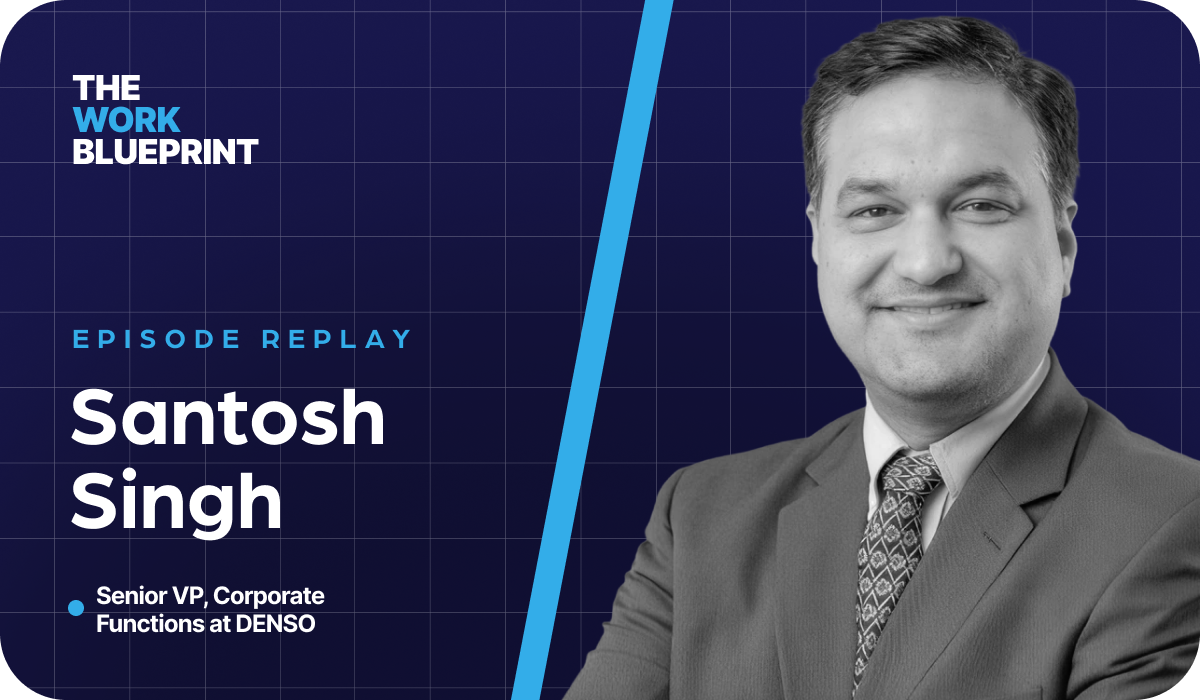

Santosh Singh on Work Architecture and AI
{height=150, max_height=150, max_width=200, oembed_response={provider_url=https://www.youtube.com/, width=200, height=150, html=, thumbnail_width=480, version=1.0, title=The Work Blueprint with Santosh Singh, provider_name=YouTube, type=video, thumbnail_height=360, author_url=https://www.youtube.com/@reejig, thumbnail_url=https://i.ytimg.com/vi/dYUIbQHNf6Y/hqdefault.jpg, author_name=Reejig}, oembed_url=https://youtu.be/dYUIbQHNf6Y, size_type=auto, source_type=oembed, width=200, supported_oembed_types=[video, link]}
Blog Post Body
Table of contents
Catch The Work Blueprint live
Hear how leaders are redesigning work across people and AI. Join us for the next episode.
For Santosh Singh, understanding how work changes and helping people develop belong in the same conversation.
At DENSO, that meant building a detailed picture of what people actually do. Skills-based career planning needed a connection to the work itself: the tasks, responsibilities and decisions that would shape what employees needed to learn next.
As Senior Vice President, Corporate Functions: HR, Legal, Corporate Communications, Santosh was helping establish that foundation in North America. In his conversation on The Work Blueprint with Siobhan Savage of Reejig, he described an approach connecting work architecture, AI work design and career development.
His starting question puts the purpose of that work plainly: “Of course, there's efficiency to be gained, but towards what end?”
Human judgment starts with understanding the work
Santosh’s perspective developed long before this AI work began. An engineer by training, he spent six to seven months early in his career on a production floor, building a machine from its individual parts.
The experience taught him to combine technical knowledge with the expertise of the people doing the work. Later roles across process improvement, business transformation and HR reinforced that connection.
He points to the manufacturing principle of genchi genbutsu: going to the place of work to observe and understand what is happening. An experienced person can notice an abnormality that a performance measure alone might miss.
That ability matters in work supported by AI. For Santosh, judgment and discernment are skills organizations need to develop deliberately. People need practical experience, an understanding of why work happens and opportunities to test their observations against reality.
Build the foundation with the people who know it
DENSO began with pilots in a couple of functions, working with leaders and practitioners to define work at task and subtask level. Reejig supported that process.
Validation was central. Leaders checked whether the descriptions reflected what employees actually did and the effort involved. This gave the business a direct role in shaping the information that would inform later decisions.
Santosh reported that, in some functions, “the work output aligned 90% of the time to what people actually did.”
That was an early proof point about the representation of work. It gave DENSO a foundation for examining responsibilities and connecting them to skills.
The participation mattered as much as the detail. People familiar with the work could challenge the descriptions, confirm what was accurate and help establish a shared understanding before redesign moved further.
Look across functions before deciding what to change
Mapping tasks opened up a larger question: how should work happen across the organization?
Santosh described DENSO’s intention to extend the exercise into other functions and examine how their work connects. Improving an isolated task could miss the delays, dependencies or unnecessary effort elsewhere in the process.
His process improvement background offered a method: define the problem, validate it, understand the causes, make improvements and establish ownership for what happens afterward. AI could support a solution developed by the people who understood the problem.
The design also needed to make responsibilities explicit. Where would people lead? Where would they supervise AI-supported tasks? Where could people and AI create something together?
Those decisions would shape both the work and the support employees needed to do it well. Santosh saw an opportunity to use improved efficiency to invest in people and reskilling.
Turn work insight into a direction for development
The next step was to translate the task and subtask information into job profiles and career pathways.
DENSO was also working to add a five-year strategic workforce planning view. Comparing existing work and skills with the organization’s direction would help identify where AI could support work and where employees would need to build or develop skills.
This would strengthen an existing development approach. Santosh described how DENSO used skills mapping and individual development plans as its industry evolved, including toward more software-defined vehicles.
Work architecture could make those plans more specific by clarifying the skills expected. It could also help employees understand why particular development mattered and how it connected to where the business was going.
At the time of the conversation, activating career pathways for functions that had completed the foundational work was a priority.
Make employees participants in what comes next
For Santosh, sharing insight about changing work depends on how people have been involved.
Asked whether employees should see task-level information, he emphasized bringing them into the problem-solving journey and explaining its purpose. With that trust established, people could use the insight to make decisions and contribute ideas.
“This is a trust curve,” he said.
His concern also extends to the next generation: how will people develop judgment if they lack opportunities to practice, observe and solve problems?
That question gives leaders a concrete responsibility. As they redesign work, they also need to design the experiences and development that prepare people to lead it. At DENSO, connecting work architecture with career planning is the foundation Santosh is building toward that goal.
Explore more pioneer stories and practical guides to help you redesign work across people and AI.
Speakers


Siobhan Savage
CEO & Co-Founder of Reejig


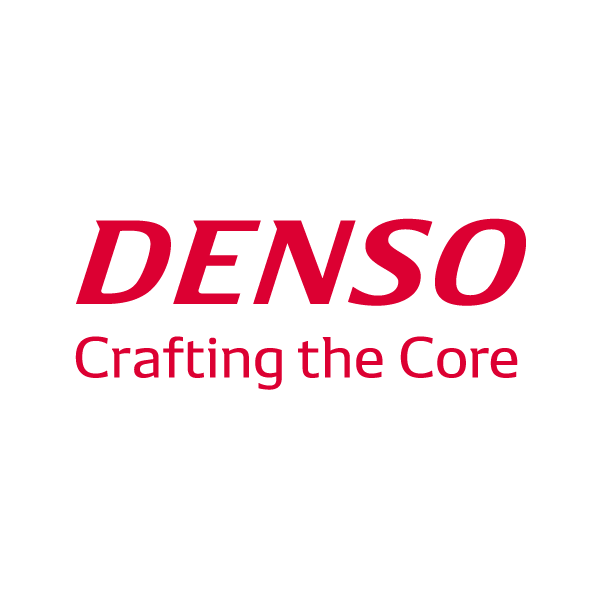
Santosh Singh
Senior VP, Corporate Functions at DENSO
Siobhan Savage: Welcome everyone to the Work Blueprint. I am so excited today to have Santosh with me from Denso. Santosh, welcome! Hey, how are you? I'm great. So folks, a little bit about Santos. So my guest today has spent nearly 25 years helping the world's largest industrial companies transform
Siobhan Savage: how they lead, how they grow and develop talent. Santos joined DENSO in 2021 to strengthen the company's collaborative culture and reimagine the future of work across North America today. As senior vice president, he oversees human resources, legal,
Siobhan Savage: corporate communications, all while shaping the people, culture and leadership strategies behind one of the world's leading mobility companies. And I think one of the things that like fascinates me. So Denso as a company, is one of the world's largest Japanese automotive technology companies.
Siobhan Savage: So, folks, if you have driven a car, there is a really good chance that Denso has built something inside that car. They are Japanese company that got over 160,000 employees globally. Santosh, thank you so much for giving us your time today.
Santosh Singh: No, it's my pleasure. Thank you for inviting me and an opportunity to share with you, you know, where the world is shaping towards the work blueprint. So thank you. I'm excited to. My pleasure.
Siobhan Savage: So, folks, the thing that's really awesome about Santosh, his career is it's very different.
Siobhan Savage: So Santosh, the thing that when we met that I was really into was your background. So why don't you tell folks a little bit about your background and high sort of the whole thing has come around with your career and how did you end up in HR?
Santosh Singh: Thank you for asking that. You know, I I've always been curious about work since I graduated. I'm an engineer by trade, and I have had this mindset that you have to be at work at the place of work to understand how work gets done.
Santosh Singh: In my early career, I was a design engineer. I developed products for mining construction equipment, and I had to be on the production flow for 6 to 7 months, building a machine from nuts and bolts, an entire entire machine. And that is part of our development program that instilled this behavior,
Santosh Singh: that it's important to ensure that you bring your knowledge to work, but you also rely on people's experience on the production floor to get things done. And from there, I, you know, I moved across multiple functions, including Six Sigma process excellence.
Santosh Singh: I had a startup in India for a global engineering design center. And then you're coming to your question on HR. I was transforming a business and somebody tapped me on my shoulder and said, you know, we would like someone who has delivered business outcomes to lead HR.
Santosh Singh: And I said, yes, as I've done throughout my career. And that led me to human resources. And that gave me a different perspective about how work gets done is not just by technology or tasks, but how how it gets done
Santosh Singh: is by with people and how we enable people through this transformation. So an engineer transform to HR professional, and I think I owe it to the experiences that I've had over across continents, Asia and then currently in the US.
Siobhan Savage: Do you know, the thing that I think is really important about your background is like systems thinking. So like right now when you think about the role of HR, we're kind of in this position where there's this new kind of expertise that's forming, which is a reinventing of work itself. And really like work is programable not when you think about like work itself
Siobhan Savage: done to the task. It's programable it's systems thinking. And that's kind of where I've really enjoyed sort of working with you is the way that your brain thinks is very systems first, and then you get to it. So I think that's kind of where you are a little bit of a rare breed in the sense that you have both, you know, those expertise sets at the same time, which is great.
Siobhan Savage: Yeah.
Santosh Singh: I owe it to the experience that I've had, and I'm happy that it comes naturally because of the experiences that we have had and how we can think about the work first and outcomes first, and then how we enable it to people. Yeah. And I think one of the things like you and I are both kind of seen across sort of our peer group, the sea otters that are, you know,
Santosh Singh: leading sort of the most complex transformations is that everyone is right at the front of their kind of like everyone has like a clear destination where they're wanting to go, which is like AI driven without leaving people behind.
Siobhan Savage: The one thing that has been really impressive about your sort of leadership style, and this is the culture that your company is also bringing to this moment, it's not just about AI first. So why don't you like, talk a little bit about that? Because I think that's been really like connected to the values that we have as a company by being really bold but also being really responsible.
Siobhan Savage: Tell us a little bit about that, because I think that's going to be something that I think politically is starting to shift in the industry right now. Yeah, absolutely.
Santosh Singh: And I think that that comes as an advantage for any organization whose culture is grounded on valuing human skills and realizing human potential. And that's that's what Denso stands for in terms of ensuring that every associate is part of the change curve and change journey,
Santosh Singh: and is deeply engaged in those opportunities. So that's what has made us 75 years strong and still going. And we invest in our human capital. We invest in our people. And and for any large change, we don't go tool. First we go, you know, what's the purpose?
Santosh Singh: What's the what are we trying to solve? And therefore, I think it's an advantage that we have as an organization where change was not difficult in terms of why we're doing this, you know, reinvention of work and work architecture, it was more important to understand
Santosh Singh: that humans are always going to be at the center of Denso. Yeah.
Siobhan Savage: And I think it's really true, because a lot of the conversations I have with customers right now is where everyone's talking about this, like agent first, no human in the loop. And I'm like, the most complex organizations in the world are not going to like vibe. Kodaka. They're not going to vibe Kota Bank. They're not going to vibe code medicine.
Siobhan Savage: So the reality will be that there will always be human in the look for the most complex organizations in the world, right? Especially when it comes to safety and regulation. And you fall into that category of like that as well. So human in the loop is not only like the right thing to do, but also like
Siobhan Savage: the chances of like us going to fully AI is just I don't think it's real. I think it's a little bit like made up. Yeah. Let me take a leave out of manufacturing as an example. Right. In, in in organizations which are lean manufacturing focused,
Siobhan Savage: generally what you've seen is there is a principle called Genki Gambit. So what Italy translates to is onsite verification, meaning you go to the floor and you use all your senses to discern what's going on, which is innately human,
Siobhan Savage: because it's not about verifying if the KPIs are being met.
Santosh Singh: It's understanding, sensing, and feeling if there are any abnormalities in the line.
Siobhan Savage: That's really interesting. Yes, and I think that's at the core of understanding how human in the loop cannot be eliminated, in fact, has to be strengthened in the age of AI. Because I was reflecting on, like you mentioned, about the future of automotives and self-driven cars,
Siobhan Savage: you know, there comes a point where if self-driven cars. What do humans do in a fully self-driven car?
Santosh Singh: What do the what do they how do they use their time during that moment? So while it's a comfort, convenience, safety, humans are known to apply judgment, and a few humans probably feel tentative about writing a self-driven car.
Santosh Singh: And I think, where does that come from? It comes from the core of the human nature to discern things, to make decisions based on what they observe and what they sense. So I think we should lose sight of that. And human in the loop is always going to be relevant.
Siobhan Savage: It's really interesting. How did you what was the word that you described that thing as that when, when you feel it. What's that called? Actually, gemba means a place of work, so means going to the place of work. Go see, go see, feel, sense and act. Okay, that's really interesting.
Siobhan Savage: I might steal that because I have a I think I talk to my team, I can feel the creeks of the floorboard in my company. I don't know how to describe it. I just know it. I can feel certain things that don't feel right. And then I kind of lean in a little bit and I find things aren't going well. Exactly. And I think the key aspect is many people have tried to replicate
Siobhan Savage: that principle without teaching how to do it. Meaning you need to teach people that how you go and look at abnormalities, not from a what's the outcome? You should sense it based on what you're observing and what does your judgment tell you. And then that skill is kind of innately human.
Siobhan Savage: And I believe the future generations have to be probably educated on those aspects more than and of course, the fundamentals of physics are necessary so that we don't lose our next generation to, you know, automation and AI,
Siobhan Savage: without understanding the concept of why we do what we do. It's it's one of the things. So I use like quite a lot of AI, as you can imagine. And one of the things that's going to be really interesting is that AI can be so arrogant and say something like, it's a true expert,
Siobhan Savage: and if you don't have expertise and challenge it, it will sign like so real that it's true that if you don't have that feeling, that taste, that judgment, you're going to be shipping stuff that isn't true because it sounds so believable. Like, I've even got to the point where Claude and I are fighting a lot now
Siobhan Savage: because Claude says things so like, clear. And I'm like, no, no, you're wrong, because I know the answer. Because I'm checking all the work. And it's like, it's not saying I'm wrong, but it's like, well, I only did it like this. So it's arguing back a little bit with me or wrong like that. Now imagine the amount of people that are going to be using AI
Siobhan Savage: that don't have expertise or like that feeling that judgment are shipping rubbish because they think that it look it sounds so believable. So I think expertise is going to be really important for us to figure out what is real, what is not real, because AI has the incredible power of like gaslighting us.
Siobhan Savage: So the signs like really real. And that's where I think, like the human AI component is if we're not talking about startups, we're talking about the most complex orgs in the world who power, you know, all of the things that we all that are interact with, use banks, cars, all of those medicines, etc.
Siobhan Savage: I think that's going to be really important. And I think that's the tricky part, where it's like the way that you've been thinking about it is not AI for the sake of AI. It's like, where will we use AI? And then what does that mean in terms of our people and the impact?
Siobhan Savage: And how do we amplify our people so that we're which is like a really great way to think about structuring the design process of where you go. Absolutely. And I think, you know, you hit the nail on the head. Discernment is a is a skill. You know what what you get as a response. It's important to discern it.
Siobhan Savage: And I think most complex organizations are taking a holistic view. Like, you know, we are working on looking at our work and how work gets done and organizations that have not been successful in deployments and have been AI first have quickly understood that bolt on AI
Siobhan Savage: in in antiquated processes is not the solution. It's an opportunity for all organizations to redefine how they think about work. And that means the easiest part is to buy a software. Yeah, because it's a it's a line atom in the budget. But the difficult part is building trust with employees
Siobhan Savage: to make sure that they understand what's the implication and how we develop them towards the future, like the skills of discernment, judgment, or upskilling them towards a stronger skills that only humans are expected to lead, and that creates
Siobhan Savage: a sense of trust where they are able to participate in work reinvention. So I think that's that's the part that's most important. And we we are trying to work our way through such a methodology. Do you know what's really funny, like going a little bit off script here and topic.
Siobhan Savage: But I was at the CIO private lunch maybe two weeks ago. And CIOs from top organizations that we all know and, you know, we know the names of the companies, right? And I don't know how I ended up at this table, but I'm at this table. And one of the series was saying that
Siobhan Savage: basically AI, our young people love it. They're going to be the best adopters. There was this whole like, oh, AI is going to take all our jobs and like, it's going to be great. And like, our people love it. And I was like, I was sitting quiet. And that's, you know, that's pretty unusual for me to sit like when I've got like I was sitting there
Siobhan Savage: and I was like, hold on a second. Like, are you guys all really sitting around this table saying that, like, our young people, just because they're young are going to automatically adopt AI? So then I was like, when it came. Right? Like, if we're doing this kind of talking thing, circle thing, it was a hosted thing. I was like, are you guys like on social media?
Siobhan Savage: Does anyone pay attention to what's going on in the real world? Because the employees of your companies do not trust AI, they do not trust the leadership around AI. They are booing people in the graduation like this generation is. Actually, I read somewhere they're more against AI than they've seen,
Siobhan Savage: sort of in against in a political form before, which tells you like there is this like complete distrust and not want to adopt. And I think the way that your company and the way your leadership is driving bold and responsible is meaning that your people are much more likely to actually adopt. So I think there was like this like I was like, hold on a second.
Siobhan Savage: You guys are like completely in your ivory tower right now and not listen to your people, because I can tell you right now, your people, you're going to spend millions of dollars on technology, you're going to buy all of these AI tools, and then you're going to ask for the ROI. And by the way, your people are going to have to use the AI for you to get the value. Because remember, your companies don't
Siobhan Savage: allow full agent end to end, which means getting your people wanting to adopt. This new way of working is going to be the most critical thing of our, you know, journey, and you are all thinking that they love it. Okay, okay, this is going to be really interesting. 18 months to watch. Like the panic in the system come down the chain, right?
Siobhan Savage: Yeah. And I think to your point, it's about the vision and purpose of deployment of AI. You know, I think when you when you talk about we all have watched the graduation ceremonies and people walking out. Well, apparently we did, but they didn't. Yeah. But the point is, you know, what are they trying to signal?
Siobhan Savage: And who are they working out on? Their walking out on people who actually have claimed that AI can solve efficiency and replace humans? So that's the that's the message for organizations to think about that the purpose should be very clear, and it depends on the purpose of your organization and ethos of your organization,
Siobhan Savage: where we are augmenting our humans or making humans enabling humans through AI. Yeah, and enabling humans to make better decisions with use of AI, but not augmenting them, not replacing humans. And I think when you're you're on to something,
Siobhan Savage: the future of education might have to change. Because you know what I've been thinking about? Of course we need we need people who know the fundamentals. And we do. We do need a deep science experience. If you are discerning something, but about judgment
Siobhan Savage: and human skills are going to be absolutely critical. I was reading report, I think it was by Gartner, that the human span of attention as reduced to the span of attention of a goldfish with with intermediate. Yeah. Yes.
Siobhan Savage: It's like seven 7 seconds or 9 seconds. So we have headwinds. So we may have to make sure that our education system reimagines how we build skills of staying still, observing, forming judgments and ensuring that,
Siobhan Savage: you know, you proof test or that judgment against the reality. And I think those skills are going to be very critical, be it AI or be it any solution in the future. When you drive efficiency, you cannot take human out of that process. In fact, you need to ensure that the humans keep pace with that evolution.
Siobhan Savage: I think the other thing that folks also don't factor in, which kind of I've been thinking about a lot, is like when you look at manufacturing, we're not just talking about AI, we're also talking about robotics too, right? And if you look at like the like in China and all these other countries where they have like light side
Siobhan Savage: factories, we're not just talking about AI, we're also talking about robotics, which means that I believe in that kind of like domain education. And and I wouldn't I actually think the learning space, I'm pretty I feel the way that we talk about learning is so old school.
Siobhan Savage: Actually, what we need to do is make sure that people understand, like what the impacts will be to our jobs, what jobs will still be important. What do I need to be able to know and learn to be to complete that work? And like that's where like, you know, your first phase of like, reskilling and pivoting education comes.
Siobhan Savage: But there's this one thing that I'm like, most obsessed with right now, and we've shipped it into the product, and I'll show you it the next time we catch up. So if you imagine that, I go and I reinvent. So I've told you all of your work, I give you a GPS that says where to go. Most people stop at that from a product perspective and go, oh, that's great.
Siobhan Savage: That's just insight that just tells you where to go. Then, you know, we take the workflow, we break it down into all of the subtasks and we capture the last mile of context. So the handoffs, like all the critical stuff. And we recommend whether you're using copilot or whatever your, your your agent of choices,
Siobhan Savage: we're then recommending like what agents all of that going really good where I see this big drop and like a cliff is most customers that I've seen and the narrative that's come from everyone was like, everyone has to do prompt training, and everyone's view is that that now means that they've got AI literacy and suddenly they're going to be able to do that.
Siobhan Savage: The problem is that whenever you roll out this new way of working, and I talk about this example which I seen, which as we redesign the invoice and how we pay the invoice, we've got 100 people that do this. They've only been given prompt training, and suddenly we're expecting people
Siobhan Savage: to actually know how to pay the invoice in a new way and they all fall off a cliff. And by the way, it's not the employees fault. It's because no one has actually shown the employee actually hard to be successful and how to pay the invoice in the new way. So what's really interesting is there's this like and I don't I hate the whole like in the flow of work, like in the flow learning.
Siobhan Savage: It's it's actually like just on time learning. It's the ability for you to give folks the skilling, to teach them how to complete the thing ahead of them. And when you can, like rapidly, like teach people that fast, you're kind of like it's more like ambient constant, like in, in,
Siobhan Savage: in practical use of completion of tasks and showing them high. That's where I think there is big change coming, because, you know, when you bring in an agent, you take away tasks, but you're introducing new tasks that you haven't done before, which means you need to be able to teach. So like that's and we talk about this like stealth management thing.
Siobhan Savage: You know, we've been talking about stealth change management and that whole how do we do that. That's kind of where I think I don't know whether you call it learning, but it's definitely enablement for the employee to be able to work in a new way. Yeah. I think, you know, your spot on. I think it's gone beyond learning. It's enablement.
Siobhan Savage: But in in the past, like your example of automation, robotics in the past, automation or robotics, you know, has automated tasks that were clearly boundaries were drawn when someone saw robotic arm, they could tell that, well, this is to
Siobhan Savage: take care of the complex roles so that I am safe as a human. But with with the redesign and redeployment of workflows. It's not just about automation of task anymore, it's about automation of work in a way that there is a
Siobhan Savage: of not only automation for a certain purpose, but also discernment and judgment to certain extent. And I think the line has to be drawn ahead of this redesign as to how do we reimagine the work and where are humans going to lead?
Siobhan Savage: Where are humans going to rely on AI, where it's it's possible for AI to do tasks better, but humans are still supervising it. And where is it that we'll have humans in AI co-create things? If that's clarified and we bring our people along?
Siobhan Savage: And as I said earlier, it's judgment comes from experience, and many organizations are not investing in that experience. And probably this is why early career talent is not the graduation ceremonies example that you gave. They they're seeking they're seeking real life experiences.
Siobhan Savage: And it's actually a positive sign that they're actually seeking to be belong to a workforce that actually welcomes them. Versus says that even before you join, you're going to teach you prompt. And by the way, why we're teaching you prompt is because we just want you to do mechanical work without thinking about why you're doing what you're doing.
Siobhan Savage: So it goes back to a full circle on our role is going to be very important for us to be able to enable people to understand the purpose of why we are redesigning the work, towards what end and what role do they play, and do they have the skills
Siobhan Savage: to play that role, and how are we going to invest in that development? So they build their skills so that in a world that has AI enablement, humans become more autonomous to do things that they really should be doing. I do think there's going to be a I can feel the feeling
Siobhan Savage: of like a political shift in the market, where the AI frontier firms are pulling back a little bit from their aggressive language of like everyone's jobs going, like, you see Sam Altman and the the anthropic folks like their whole narrative was everyone won't have a job and neither getting ready for IPO.
Siobhan Savage: They're not pulling back a little bit on that. And they're basically like, oh, we kind of were a bit like too dramatic. And I think that's because they're realizing that, you know, most people are stepping back and the getting the booze. And I think they've been to, I don't know in their in their bid
Siobhan Savage: to like sell a tool, they're actually cannibalizing their ability to even sell more because there's terrifying people. And if people don't adopt their tools, like you can buy a tool, as you know, and if no one adopts it, that becomes shelf wear and eventually turns right. At what point does a company continue to pay hundreds of millions of dollars
Siobhan Savage: for AI without seeing the ROI of the AI itself? And look at the amount of, like, kind of terrifying articles right now where, like, you see the stories of like CFOs now saying that they're spending more money on tokens than the people they let go in the first place.
Siobhan Savage: I mean, if all of that isn't like a really clear message to leaders to kind of like regroup, because what I seen sort of happening, sort of what in market there's like the shift now where they're starting to be more positive. And I think it's because one their IPO.
Siobhan Savage: But to their realizing that the CEOs of these companies are going to be held to account. And by the way, if you're redesigning work in a complicated organization, remember your humans are still going to be needed in the loop of work. Therefore, if they don't adopt it and they kick back at you, you are going to go backwards and productivity and you will not make money because you need those people.
Siobhan Savage: So I think there's this like recognition right now that hold on a second. We need to tone it down a minute. And then I think the other part that's really interesting, Santosh as well is like like if we are buying AI and we're spending more on the tokens than the people that we had in the first place, doesn't this whole thing
Siobhan Savage: kind of defeat the whole point of what everyone, you know what I'm saying? Like, it's kind of like that's a big thing. And then the third thing, I think there's a leadership thing right now where CEOs and leaders have when I said, everyone build these like token boards, where you get a leadership of who's spending the most tokens like that is just nonsense.
Siobhan Savage: You're driving people to go and build technology with no outcome, no goal, no clear like requirement of why it needs to the business. And it's costing you so much money, so it doesn't make any sense. So I think this is why the employees are getting like the shits to be honest, because they're actually like seeing all of this play out in front of them. Yeah.
Siobhan Savage: And I think if you think, think about larger organizations, that seems to be a bias in some. And I'm speaking on from my observation and my personal capacity is. Short term short
Siobhan Savage: term gains or flash in the Pan approach versus what do organizations really stand for and humans in the future if they are not developed in a certain way, they cannot, you know, even confirm the normality, as I mentioned in the first place.
Siobhan Savage: So there is, you know, while short term it might seem like a large capacity unlock and an efficiency gain towards what end is unclear and and in the future I, you know, I want to draw a parallel to organizations
Siobhan Savage: having business continuity plans or emergency response plan. Well, what happens if electricity shuts down? What if there's natural calamity? I think we may need to have a similar approach in organizations trying to do a mock drill to say, imagine a world five years from now
Siobhan Savage: going at the pace that we are going without, if if we don't have structured thinking on how we redesign work and bringing humans along with us. Imagine your workforce then and then try to do a business continuity plan. Yeah, if AI shuts down, that's really good idea.
Siobhan Savage: How many, how many humans would have the ability to discern and problem solve. And therefore it's better positioned to bring them along and ensure that the fundamental skills of discernment and process discipline is understood deeply and AI helps us.
Siobhan Savage: But I've heard that there are certain organizations that are doing like a Friday where let's test out without AI and see what happens. But I don't think it's that kind of a test. It needs to be a continuous cycle where it's an integral part of what you call enablement, you know, or giving people experiences, rotating them across
Siobhan Savage: multiple functions faster so they have the judgment skills developed sooner to see the upstream and downstream impact of of their processes to their clients or stakeholders. You've just freaked me out a little bit because I'm thinking because I'm the chairman of my board and I'm like, maybe I should be thinking about this
Siobhan Savage: for my company because, like, you know, I'm building \$1 billion company with 100 people right now, and we're halfway there. And the way that we're able to work is because we are so AI amplified. But I've never even thought about the world or what if it didn't exist? And the risk register, like every board needs to have a risk register, right.
Siobhan Savage: And that is like a true risk. So thank you. You're giving me nightmares. It's like. How you look after the legal department as well in your company. So thank you for for that I think I think it helps. I've been thinking about
Siobhan Savage: okay okay. This is this is great. So if we think about we're we're all kind of like clear on the unknowns of the unknowns of what AI is going to do. I think the thing that you have done really well is you've been through so many different types of transformations in other organizations
Siobhan Savage: where you've, like, built real physical products, not just software. You've been redesigning work itself, even pre AI. One of the things I want everyone to get out of this is the steps that folks need to take. Like most people haven't got to the point that you've got to. Right. So I think like imagine you were starting from scratch
Siobhan Savage: and we call you up and we're like, okay, how do I do it? What is the most important steps that I need to go through to actually do it? Talk us through a little bit of that. Yeah. I lean on my past experience in Six Sigma. Right? I've been thinking about it as I was beginning to think of having
Siobhan Savage: this conversation with you is if you think of any process, process improvements has, have has been around for a long time, especially in large manufacturing industrial companies. Any process, including transactional processes, can be simplified or improved. But the difference was you define
Siobhan Savage: there's a business case, you define the problem, what the sponsor defines the problem by saying, here's a real problem that we have are as an example, our sales has remained flat irrespective of our revenues going up. There seems to be some underlying issue which I'm not sure of what it is. Let's put a team together. Six months project.
Siobhan Savage: You know, in Six Sigma they would call it a define, measure, analyze, improve and control process dMarc. So you define the problem, put a team together. They go out and measure and understand if and validate if the problem is real. And then analyze with root cause analysis. And then they address the root cause with improvements.
Siobhan Savage: Now here's where the improvements can be. Many false improvements can be your your re organizing the process, simplifying the process using tools which can be digital solutions or now AI. And then the key part was control.
Siobhan Savage: Once you establish the process, you need to put it in a governing structure. You have governance where a process owner monitors the process after the team hands that process over to them and ensures that the process doesn't reverse back to the old ways. Because humans have a tendency to practice work a certain way,
Siobhan Savage: but also continues to take ownership of continuous improvement. Yeah. So why I share this framework is I think it's relevant in work redesign now even more than before, because what we are talking about is a team of people coming together, bringing their experiences from the process to solve issues
Siobhan Savage: versus now for organizations like ours, we are thinking the same. As I explained, you know, think about the work first, think about the issue, think about why. And I think this framework would be an important one for people to remember. The improve the improvement is or the augmentation is a tool,
Siobhan Savage: but the solution is actually a brainchild of a collective collaborative team. And I think we need to form probably smaller teams like that, build trust, understand the end game, and and then probably use AI as an augmented tool that enables people. Yeah. The thing.
Siobhan Savage: So you you're in our what we would describe as pioneers club which is like our early our early customers. And you got it when we, when when I met you as a Gartner. Right. Like it was in Orlando, I think when we met you and we were like so early in the task
Siobhan Savage: conversation like task subtask for me was like, my background is workforce optimization, right? So I don't have an engineering background, but I think about squeezing and like the I think about work as a programable sense. And you can like break it up and reprogram.
Siobhan Savage: And what was really interesting was you instantly got Task Subtask as the critical core unit of work to for any reinvention that was like critical for you. So talk a little bit about sort of what you've learned,
Siobhan Savage: like the stuff that we've been doing among tasks like quality of tasks like so that folks understand that before they run towards reinvention, they have to have like a visibility of the work that's actually happening in the company. Right? Yeah. I want to tell everyone that, you know, the one thing that stuck with me when I met you first time is when you mentioned
Siobhan Savage: not only work ontology, you said task subtasks. And you said work has tasks, people have skills. And I think that connection is very important to make that many. There are many solutions out there where people have talked about skills based career, but without a connection to the work.
Siobhan Savage: And I think this connection was very important. And I was glad that, you know, your organization was making that connection. And the way we have gone about it is we have we are working on defining our work, and we're doing it very diligently with our leadership team, with meaning. The people who are actually the practitioners of work are
Siobhan Savage: we are doing a pilot run with a couple of functions, but when we have a task, subtask level decisions made and tasks validated, you know, as as Regent came as a partner to us in helping us through the process, in some of the functions we have seen the work output
Siobhan Savage: aligned 90% of the time to what people actually did. And and so it was a journey, but it was a change journey for us as well. And I think our change management is effective when we bring our leaders along and they validate that this is the effort that it takes to do this task.
Siobhan Savage: And this is really what our, our associates do. And that's the first step. Our future vision is that we also have a language of skills that's coming out of this. And how do we prepare, enable this task subtask language into a job profile
Siobhan Savage: and activate career for our employees to enable them to understand that, you know, today this is the human skills they have. These are the technical skills they are, they have and where are we going. So we're working on adding a strategic workforce planning element
Siobhan Savage: where we define our five year outline. We define our five year vision for where we want to go. And then this input plus you know the delta would tell us where do we need to augment, where do we need to kill and reskill our employees. And that's our first priority. Yeah, I think for folks as well.
Siobhan Savage: Just listening, I'm going to click in a little bit to what Santosh is saying because like task is really important. Subtask is the most important. And the reason that subtask like if you wanted to go and get tasks of a job description, just go put it into ChatGPT or Claude and you can get that. And that's like
Siobhan Savage: and you get an AI percentage on that based on who knows whatever model it's pumping out. But if you truly want to understand the work that happens in your company and understand like how workflows within your company, there's kind of like three different levels. There is the task, there is the subtask, and then there is like the handoffs,
Siobhan Savage: the connection points, the way I describe it as like work context. That's the third level when you really get to reinvention. So if you're only sitting at a high level task, that's just insight. It doesn't enable you to take action. So you went through task subtask and not give you action. Now you're in like actual architect the intelligence. Sorry.
Siobhan Savage: Now you're moving into like actual action and reinvention, which is where you kind of like break it down, re-engineer it, think about where AI comes in, what tasks are being removed, what tasks are being added in. So that's kind of like a like the phase one of getting to there.
Siobhan Savage: The other thing I would say that we have noticed to become really critical, and sometimes you and I will see this play out the deeper we get into reinvention. If you go to the business and you give them task data, without the subtask data, they just dismiss it as a HR project. And the reason that they will dismiss
Siobhan Savage: it is because the business has to see themselves in this work. And if they don't believe the thing that you were really strict with us on is like, you want to validate all of this with the business, because if they don't believe it and see themselves in that work, they will never take any of that intelligence or feedback or strategy off you.
Siobhan Savage: If the critical foundation isn't right and that they haven't like bought into that. And I think that was kind of where you were really early in that like journey of like, like critical step is build an infrastructure and an architecture that the business like has that foundation and then everything will come after we have that.
Siobhan Savage: So I think that's where you did really well. It was painful, I think, for everybody in the sense of like you were early in that thinking, but now you have like over 90% approval rating from the business in your tasks, which is, you know, like I don't think many other situations you can actually like put a stamp on that and say that,
Siobhan Savage: which means when you go into meetings, you're not trying to push a HR project. You're actually you've built with the business infrastructure and an architecture to wire their house. So now you can start to kind of like think about how you move the furniture around. You know what I mean?
Siobhan Savage: Like that's the that's the difference between and the one lesson that I learned from my first career building, like Reejig, was very focused on skill when we first started, and it always felt like I was dragging people over the hill, that it was a HR thing that the business didn't care about. And my career before was like, weird because I was here, but I wasn't.
Siobhan Savage: I was a workforce optimization person who sat in the business, and when I was doing the skills work in our first version, it always just felt like a HR project, and that the business kind of felt like it was a vitamin versus a painkiller, whereas this is like a business problem, like work is basically how we all make money,
Siobhan Savage: like it's how your business does its thing. Right. So I think that was like a big learning from Santosh and watching him like kind of the leadership here was get visibility to the work, to the depth that the business believes in and trusts it. Make sure that they have a say in like co-creation of that and editing,
Siobhan Savage: and then have those validation results so that you have it's kind of like when you get your ISO certification, you know, like we know I have this percentage of like review and validation, which means that like you're never selling that to the business. That's the business of saying that's our data. Like. So I think that was a really big lesson. Yeah.
Siobhan Savage: And I've had, you know, the fortune of having a good peers. Right. They're very collaborative. And once you have the proof point and we we co-create a solution. The one thing I'll add shown is that we have to make sure to reimagine work, because we're doing by function.
Siobhan Savage: It's not task and subtask level automation. So we are pausing to think wanted to think about, you know, not just workflow optimization, but because each of the functions work with each other. Yeah. And so we want to do this exercise for all of the functions. We're doing it for other functions this year and beyond.
Siobhan Savage: And then see how work gets done orchestrated across the organization. And I think that's where we will probably do a deeper dive in working with the business to understand that. How can we reimagine the work rather than automate tasks in our current state processes?
Santosh Singh: Because we have an opportunity and insight now to redefine drive efficiency, unlock capacity to invest in our human capital and reskill them for a brighter future. So I think that's the that's that's what we are focused on. So this year, it'll be more about taking the language for those functions
Santosh Singh: that have completed the work and activate career pathways. So that's our primary work that, you know, it's a foundational aspect of his work design and activating people's career.
Siobhan Savage: It's really interesting because I just signed off on our quarter next quarter drop, product drop. So exactly what you just said. So right now we take the work, we reinvent the workflow, we go to subtask, we match the agent, we give them the agent blueprints to go and build. We track the changes.
Siobhan Savage: What we're seeing is customers now are getting more adventurous. So they don't just want to do that level, they want to look at horizontal. So processes and work streams. So like let's say onboarding or I think things that sit across multiple streams of the business. Then you've got your like vertical which is your like
Siobhan Savage: task workflow that sits within like pain and invoice that sits within a division. And it's kind of boxed off. That's kind of playing out. And then the third thing I'm seeing is now customers are going, okay, in both of those scenarios, give me a version that can show me what I'm allowed to do with the agents that I've got, with the compliance
Siobhan Savage: and everything that we know about your company, and then they want to completely reejigged version. What like think about like day zero if you were to completely sketch up how work runs. So we've now got that releasing in our next product drop which I sent you after like the thickness of it. But you'll see like this is like this is where it's coming.
Siobhan Savage: And that comes from a level of maturity in the customer base where people are starting to know, I get a little bit of game tape and they're like, okay, rather than just subtask level, let me take out the whole thing and think about redesign. And that goes back to your point about the Sigma, like how you think about that whole process. Exactly. Yeah.
Siobhan Savage: It's a it's not workflow by by verticals.
Santosh Singh: But as you mentioned, the entire value chain, it used to be called in manufacturing values team mapping. Yeah. You know used to map values teams and say where are the delays. Where are the bottlenecks. Yeah. And if this is exactly that, it just so happens that the tool that we might end up using is an AI tool. Yeah.
Santosh Singh: But it's a value stream mapping at scale. But for a large complex organization this has to be done across all functions to realize the benefit.
Siobhan Savage: I'm thinking of calling it work streams only because processes feel so like 1980s. And so I'm thinking like I think work streams and then workflows are kind of like how I'm structuring it, but like, yeah, keen keen to see what you think.
Siobhan Savage: When I really set out to you, I think one of the the other things that, you know, you're by far stand up passionate about is like, I'm doing that, but I also want the governance and the trigger of the data. So back to the point, folks. So you go and you reinvent work stream or workflow.
Siobhan Savage: You take away tasks, you remove work, you introduce new work that you haven't done before. So you see all that work that Santosh was doing at the start, where he built the wiring of the company and built the architecture that's going to be constantly changing. So there's the governance layer now where you kind of do both things on the one data framework,
Siobhan Savage: which means that as he's going on and he's reinventing his work, that it triggers back to the architecture that says, oh, by the way, we've now impacted 30% of the software engineer rules or seals rules, which means that, you know, I have the information to act on preventing any impact to that individual rule.
Siobhan Savage: So the way you're structuring it is like, okay, I've done this whole like reimagine. Talk me a little bit now about, okay, we go out and reinvent, talk to me about then like how you're thinking about how that links to career and what you're going to do in terms of like the design for the sort of being responsible, looking after your folks. Yeah.
Santosh Singh: And this is not new to us, and we call it power shift. Meaning we always have believed that, you know, our associates need, need to be developing towards the future of where we are going. And we are a large tier one supplier. So we have to take cues from our, our customers.
Santosh Singh: So as the industry evolves, you know, vehicles are becoming more software defined vehicles in the future. So capabilities also evolve. So we are you know, we look at our inventory mapping of our skills. We look at, you know, starting with engineering as an example.
Santosh Singh: We then invest in our people's growth. And there is an individual development plan that we put in place. And with this information that we are getting from our work architecture, this augments that and makes it more real, because now we know this are the skills expected.
Santosh Singh: And if we are able to extrapolate and reimagine in our workforce, plan that what were the future of work look like then that enables us to be more proactive and and share that with our employees and make sure
Santosh Singh: that they understand the the why behind why they're being developed. And I think that piece is very important to build trust. As I said before, this is not a technology curve. This is a trust curve. And once you establish the trust and you know where we are going with
Santosh Singh: absolute clarity towards our future purpose and vision, and we we also want to make sure that our employees understand that as to the investments we make in them are pertinent to the future.
Siobhan Savage: Do you think that like and I don't know the answer to this and I don't know what to do. Do you think because I've got all the task data and I can tell you the impact of the task, and I can tell you like what to do next, do you think I should expose that task data to the employee? Like, do you think there's a world or would that freak everybody?
Siobhan Savage: I like, like, what do you think is the the best thought? What do you think I should do?
Santosh Singh: Yeah, I think I think it depends on if employees have been brought in to in the problem solving journey or not. So if the work has been defined or the business case has been defined to say, we would like to redefine the work for this purpose, which is
Santosh Singh: enabling humans for a stronger future. And when the trust is built, yes, I think then employees should know the insights so that they can make even better, stronger decisions and actually contribute. Everybody brings a fresh perspective and contribute to newer ideas.
Santosh Singh: Yeah, yeah, because I like the thing that I kind of struggle with, like just morally or, I don't know, like like I don't want to be building a company that's going to be taking people out of jobs, right.
Siobhan Savage: Like, that's not like I absolutely want to be bold and responsible at the same time. And I always think about like, what? What's my role to play? And I sit on, as you know, the biggest, largest source of data in the world, specifically in this for each industry. So it's like, do I make that publicly available for folks
Siobhan Savage: so that they can come and see themselves, or does the company do that? Like what? Whose responsibility is it? You know, like is it like that's the part where I'm kind of trying to figure out how like, what's my role? What's the company's rule like? Is it the company's rule when the impact people to make sure that they're being rescaled?
Siobhan Savage: Or is it the employees rule like that's I think it's actually a dual rule is my personal opinion.
Santosh Singh: I think initially, because every company has its own drive and intention. So probably if for organizations that are more responsible, it's it's a organizations role because they have a methodical approach to how to bring employees along.
Santosh Singh: And so I think, I think starting with it should be an organization's role to define the purpose is, is the right way to start it. And I would like to say, you know, bold and responsible is a good phrase, bold in solving issues and and problems
Santosh Singh: that hinder associates or employees to bring their full potential and being responsible in bringing them along. The change journey is what I would like to expand. So that people know. Bold doesn't mean optimization. Bold world means that optimization to a cause
Santosh Singh: which takes away from our humans to realize their full potential.
Siobhan Savage: Yeah, I like that. I do, I do think I think that's that's really important. And given you've done like, you know, your career has been transformations, large scale, you know, like what are the things when you look around the market or your peer group or other companies that you think folks are just not understanding or they're getting wrong?
Siobhan Savage: Like, what are the things like the watch out for people?
Santosh Singh: I think one and I'm, I'm just sharing it based on I think many of my peers and many are doing what's right for their organization. But I feel the, the. What, what the risk I see or the
Santosh Singh: concern is treating this as a tool purchase as a budgetary item versus a cultural change is the largest risk. Again, prioritizing short term for the long term.
Santosh Singh: I agree it is a risk. I feel if they clarify the long term purpose and probably pressure tested, the business continuity plan that we talked about, probably they will they would have a better clarity on why they want to implement what they want to implement. Of course there's efficiency to be gained.
Santosh Singh: But towards what end. Yeah. And I think defining that might take a longer time within the organization. But for our for us it was easier because our purpose was very clear and alignment was there. From that point of view. It was more about how do we get there?
Santosh Singh: So I think that's something that people should watch out for that it's a it's a it's a how you build trust is by being authentic about why you want to deploy such a solution. Yeah. And it's so true what you're saying.
Siobhan Savage: Like if you look at everybody, I don't know, it's kind of crazy because in the market you've got this like I think there's this like boardroom conversation that's happening right now where everyone's looking at these examples which aren't really true, and that setting the expectation that they need to be going faster. And it's aggressive.
Siobhan Savage: But I think like people are treating this like it's like a, like a short term tool project and versus like a long term destination and like I think, even if you look at companies that are like standing up these multi multi-million
Siobhan Savage: dollar transformation programs where they're going after like certain things, that's a bridge. It's not a destination. Right. Like it's, it's and I think the thing that I think that you have learned and I have learned and like customers we're starting to see or seeing the same thing. This is a destination and you need to have the capability
Siobhan Savage: in your business to build this forever. It's not a one time thing and it's not a tool purchase. It's a it's a, it's a it's an evolution of how you work and it's going to keep happening forever. So you need to have leaders like you on board who are thinking about the bigger picture of the destination and wiring up the company on that journey,
Siobhan Savage: because I look at all of these programs that are happening right now and I'm like, you can tell that most of these are going to feel you can just tell, like, I can sit around the side of a project. No. And I'm like, that's not going to work because there's so many things that tell me, like, what did you call that word? Where you just can feel it like, like I'm going into these companies, like
Siobhan Savage: like I can see that that's gonna break, that's gonna break, that's gonna break. Exactly. But I think, I think your point is like, true. It's the it's the true bigger picture. It's a cultural shift. It's a completely new muscle for the company. And the one thing that I'm kind of obsessed with right now. So, you know,
Siobhan Savage: when you're like, on your phone, you get like the iPhone upgrade, right? Like and like when you get an upgrade and you just know that, like, things are changing your phone, like, I believe it'll get to the point in our companies where it becomes like an Apple iPhone upgrade that work. How you pay that invoice will change every six months,
Siobhan Savage: or maybe sooner because the tool gets stronger. So it's how do you build the culture also in your business that they're accepting that and that they are able to like, adjust to the constant evolution of work? I think that's a really important like stealth change management component that we've talked about, because I think that culture, the enablement,
Siobhan Savage: the stealth change management, the treating your people with like transparency and, you know, like like whether you're telling them that their impact, the part that you made that I keep thinking about just in my, in my head, well, while we're going through this is like your point is that the company is responsible at this point of like knowing the impact.
Siobhan Savage: You are right, because the company does know where they're going. You know, they know where they're going. They know I have the data that can tell them. If they do that, then this. Therefore, that means that they're going to know the impact back into their workforce. So I think like your point on that is really strong as well. Yeah.
Siobhan Savage: And that comes with the responsibility as a, as a partner, right.
Santosh Singh: For you to make sure that, you know, you let organizations decide it. And over a period of time when it becomes a way of doing work, architecture and redesign in a few years, probably, that's when, you know, everybody thinks it's it's logical and everybody should have access to what they do.
Santosh Singh: But everybody's purpose and intentions are very different at this point of time. And and I want to reiterate that, you know, it's it's more about how how do we prepare. There is the largest risk is for most organizations to think about is how you prepare the future generation or for the judgment and discernment. Yeah.
Santosh Singh: If you if you don't have that built into your work architecture, and if you don't have that built into your workforce plan. And I think that's a continuous flow of talent and pipeline and enabling them by building the core human skills. And that doesn't come. That comes only when you are on the floor
Santosh Singh: or your walking or your processing something. Maybe a clue is that we may have to do that at a higher pace and scale. That resonates with the the expectations of the early career generation.
Siobhan Savage: I love this, I mean, already I could package this up to be a book to teach everybody, but the core things that I think that I'm taking away from this, and I hope folks are taking away from one. Build your architecture. So start first with building your architecture. Understand your work done to task subtask level,
Siobhan Savage: to bring your business on the journey of them, making them feel like it's their data so they get to like rubber stamp it and make sure that they feel that that trust that data. And that's the critical infrastructure for both reinvention of work and also reinvention of career. Yes. Because that same data set has to feed those two motions.
Siobhan Savage: Think about work streams, which is like long processes and redesigning that as well as like workflows which are like isolated in a, in a in a vertical manner into your areas of work, looking after your people. So understanding, if I do this, what will be the impact on my people
Siobhan Savage: and have an open culture where we talk about it in our companies around like we are putting in place plans to make sure that we're not leaving you behind, which I love. And then go walk the go walk your factory, get in amongst it, keep feeling it out and making sure that there's
Siobhan Savage: that judgment built into your culture so that folks, like know that there is like actual like ability to see if this is nonsense or not like and actually be able to pick up that. And finally, Siobhan needs to go and do a risk assessment of why I'm building my company
Siobhan Savage: to make sure that, like, I think about that worst case scenario. Santos this was awesome. Like, thank you for one year leadership in the space. I love getting to work with you. I love getting to down With You on our product. You've been really early on the pioneering journey with us. Everyone. You can find Santosh online, on LinkedIn, you can follow him
Siobhan Savage: and see what he's up to. Hopefully we get to have more of these conversations for folks as well like we have given. There's so much learning that's coming in this space. I've built this kind of like out of the box course just so folks can actually start learning. So you can find it here. We can also send it to you after this as well.
Siobhan Savage: Santosh, thank you so much. Thank you everyone for listening. Take care folks.
Santosh Singh: Thank you. Thank you, Siobhan.
Catch The Work Blueprint live
Hear how leaders are redesigning work across people and AI. Join us for the next episode.