The taxonomy was elegant when it was built. Titles. Levels. Bands. Grade structures. It answered exactly the right question for its time: who does what, at what level, for what pay?
But the question has changed.
AI doesn't fit neatly into a system built around static roles and human-only work. Agents don't have titles. Workflows don't map cleanly to grade structures. And the organizations moving fastest right now are the ones whose infrastructure can actually see work as it happens across humans and AI together.
That is not what job architecture was designed to do. It was built for a world where people filled roles, work stayed relatively stable, and organizational structures changed slowly over time. It has no native model for tasks that shift between humans and agents, workflows that evolve every quarter, or work that looks fundamentally different six months after a new AI capability enters production.
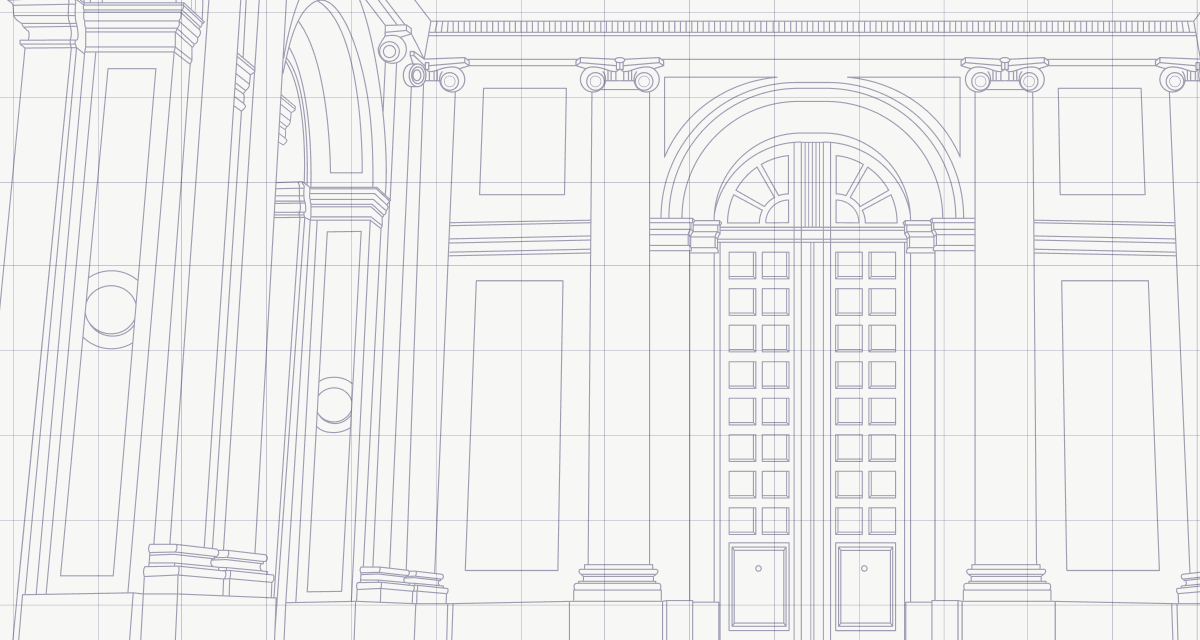
What most enterprises call a refresh is really a renovation of a museum. New lighting. Rearranged exhibits. Same building. It will not make your organization AI-ready. It will make it look like it tried.
The organizations leading AI transformation are not refreshing job architecture. They are replacing it with infrastructure built for the world that now exists: Work Architecture.
From Job Architecture to Work Architecture.
Work Architecture is the entity model that replaces static job architectures. Every department, job, level, role, workflow, task, subtask, and skill, structured for humans and agents together.
This distinction changes every AI decision that follows.
Problem 1: You don't know what work actually is
Ask a CHRO what the 500 most critical tasks in their organization are. Not jobs. Not competencies. Tasks. The granular units of work AI agents will augment, automate, or hand back to humans.
Most can't answer. Not because they haven't thought about it. Because the data doesn't exist.
Job descriptions don't capture tasks. Skills frameworks describe attributes, not activities. Org charts show reporting lines. None describe how work actually runs across 50,000 employees.
You cannot deploy AI into work you cannot see.
Work Architecture solves the visibility problem. It maps every role, workflow, and task inside an organization at the task and subtask level. Not as a consulting exercise. As live infrastructure. Built from enterprise systems, workflows, SOPs, and operational data — with 80% accuracy from day one.
Reejig's Work Operating System runs on top of that architecture. It shows, at the task level, which work should be automated, augmented, or kept human. In real time. Not as a point-in-time strategy exercise.
Visibility is not optional. It is the precondition for every AI decision that follows.
Problem 2: Static frameworks cannot keep pace with AI
Job architectures were built to last. That was their value. Stable taxonomies HR teams could depend on for years before the next redesign cycle.
The AI agent landscape changes in months.
A framework built for stability cannot govern work that changes every quarter. When a new AI capability arrives, work changes. Roles split. Tasks migrate. New workflows appear that never existed in the original structure.
A static job architecture has no way to absorb that change. It becomes obsolete the week an enterprise's first AI agent goes live.
Work Architecture is not static. It is a living infrastructure layer. When a new agent enters production, the architecture reflects the new task distribution. When workflows change, the structure changes with them.
From 7,000 jobs to 3,000. Same work. Half the architecture.
One enterprise on Reejig achieved exactly that. Not through a reduction exercise. Through understanding which tasks were duplicated, consolidated, automated, or no longer performed by humans at all.
That level of redesign precision is only possible with Work Architecture.
Problem 3: Fragmented systems are making workforce planning reactive
Most enterprise stacks contain a dozen systems that do not share a common language about work.
The HCM uses job codes. Learning systems use competencies. Talent marketplaces use skills taxonomies. AI workflows operate independently from all three. None agree on what work is, how it changes, or where AI should be deployed.
The result is a workforce planning function that is permanently behind. Data lives in silos. Analysis requires weeks of reconciliation. By the time decisions are made, the work has already changed.
Work Architecture becomes the common foundation every system anchors to.
When HCM systems, learning systems, AI workflows, and operational systems all point to the same Work Architecture, the reconciliation problem disappears. Skills map to tasks. Learning maps to task-level gaps. AI deployment maps to task-level opportunities. Workforce planning becomes a live capability, not a quarterly exercise.
That is not a feature. That is infrastructure.
Problem 4: Leaders are making AI decisions without real data
Enterprise executives are committing billions to AI transformation. Boards are asking for ROI. Most organizations are still reporting usage metrics. Licences activated. Prompts sent. Dashboard activity.
None answer the question the board actually cares about: is work running differently?
95% of organizations report zero return on AI investments (MIT, 2025). That is not primarily a deployment failure. It is a measurement failure.
Organizations have no baseline for how work operated before AI was introduced. They cannot prove what changed after.
Work Architecture creates the before. AI Impact Analysis measures the after.
When enterprises deploy AI into a task-mapped environment, Reejig captures the baseline and tracks change at the task level. ROI is measured through changes to tasks, velocity, capacity, and workflow performance. Not through software activity metrics.
This is what boards are demanding. And it is only possible when Work Architecture is the substrate every AI decision runs on.
Where to go next
Job architecture is not broken. It was built for a world that no longer exists.
The question is not whether to refresh it. The question is whether to replace it with infrastructure built for humans and agents together.
Three places to start:
The Work Architecture Blueprint lays out the full structure: what Work Architecture is, how it differs from job architecture, and what it takes to build one inside your organization. Start here before any other conversation.
AI Impact Analysis is the analytical layer that runs on top of a live Work Architecture. It identifies which tasks should be automated, augmented, redesigned, or retained by humans — in real time.
The Work Architect course at Reejig Academy is the structured program for HR leaders who are ready to lead this transition. Built for Architects who are done watching AI happen to their organizations and are ready to design what comes next.
The museum is closed. The architecture office is open.


 Platform Overview
The Work OS for AI-powered Work
Platform Overview
The Work OS for AI-powered Work
 Work Architecture
Live entity model of your enterprise
Work Architecture
Live entity model of your enterprise
 Map
Build the Work Context Graph
Map
Build the Work Context Graph
 Analyze
Your GPS for reinvention
Analyze
Your GPS for reinvention
 Build
Builder Studio · Workflows + agents
Build
Builder Studio · Workflows + agents
 Run
Deliver the new way of working
Run
Deliver the new way of working
 Measure
Track real, board ready ROI
Measure
Track real, board ready ROI
 Log
Source of truth · audit trail
Log
Source of truth · audit trail
 Update
Keep architecture current
Update
Keep architecture current